
About Jakov Sedlar
Born 1952. Jakov Sedlar is a Croatian film director and screenwriter, known for Gospa and Jasenovac – istina.
Jakov Sedlar (born 6 November 1952) is a Croatian film director and producer. A former cultural attaché during the 1990s in the Franjo Tuđman government, his documentaries promote Croatian nationalist views through propaganda. His 2016 documentary Jasenovac – The Truth sparked controversy and condemnation for downplaying and denying the crimes committed at the Jasenovac concentration camp by the Ustaše during World War II, instead focusing on crimes supposedly committed against Croats by communist Partisans at the camp following the war, while using alleged misinformation and forgeries to present its case, in addition to naming former and current Croatian officials, intellectuals, historians and journalists it dubs as "Yugoslav nationalists concealing the truth".
Biography Sedlar was born in Split, SR Croatia, Yugoslavia in 1952. In 1972, he moved to Zagreb, where he studied South Slavic languages, Western literature and philosophy at the University of Zagreb. After his graduation in 1977, he enrolled in the Academy of Dramatic Arts and studied theatre and film directing, graduating in 1981.
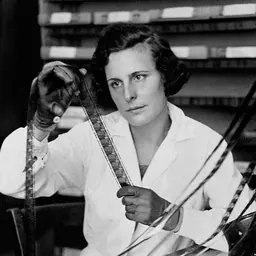
Sedlar was the Croatian Government's "official propagandist" during the Yugoslav Wars of the 1990s, according to the historian Vjekoslav Perica. Sedlar became known for films such as Gospa and Četverored, which portray the events of World War II and the Cold War from a Croatian nationalist perspective. He also made a number of documentaries glorifying wartime President Franjo Tuđman and his party, the right-wing Croatian Democratic Union (HDZ). In an apparent bid to increase their credibility abroad, several were filmed in the English language, with actor Martin Sheen narrating. In 1996, Tuđman persuaded him to accept the post of the first cultural attaché in the United States (New York), where he remained until 2000. During that time, he launched various projects and organized numerous events to promote Croatian culture. Joe Tripician, who was hired to write the official biography of Tuđman and co-directed the documentary Tudjman with Sedlar (though Tripician claims he barely worked on the film and was shocked when he saw his name on it), describes Sedlar as the "Leni Riefenstahl of Croatia — but without the talent."
After his return from the United States in 2000, the newly elected coalition government demoted Sedlar.
Controversies
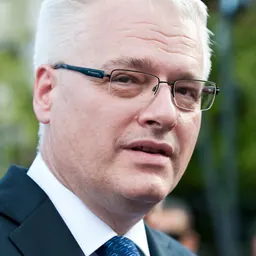
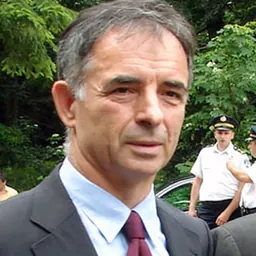
Sedlar was criticized for nationalism and politicization in his films. On 4 April 2016, his documentary Jasenovac – The Truth premiered. The documentary is about the alleged crimes committed by the communist authorities of the FPR Yugoslavia in the Jasenovac concentration camp between 1945 and 1951 following the World War II, which, as claimed in the documentary, were covered up. The film also downplays and denies the extent of the Holocaust in the Independent State of Croatia, as well as the World War II-era genocide of Serbs, contending that the number of victims were exaggerated through post-war Yugoslavian communist propaganda. At the end of the documentary, Sedlar leaves the alleged communist crimes, moves to the modern era and mentions various leftists who allegedly "cover up communist crimes" (naming Presidents Stjepan Mesić and Ivo Josipović, and Serb MP Milorad Pupovac) as well as various journalists who allegedly help them (Miljenko Jergović, Jurica Pavičić, Ante Tomić, Davor Butković and others), which was considered tendentious and irrelevant to the theme of the documentary, as well as a way of labeling people he considered inadequate. Slavko Goldstein said that the documentary was "full of half-truths, lies and forgeries", and that the end in which some public figures are named was a "direct arrest warrant and indictment against individuals."
Vladimir Matijanić wrote for the Slobodna Dalmacija that the documentary "does not prove that after the liberation, the Partisans carried out mass executions of the prisoners, or that the Jasenovac concentration camp was solely a 'working and internment camp'" (as claimed in the documentary). Another controversy connected to the documentary is the alleged title in the Vjesnik newspaper from 1945 stating that corpses tossed into the Sava were reaching Zagreb from the direction of Jasenovac. Shortly after the premiere, journalist Lovro Krnić went through the Zagreb state archives and examined all the May 1945 issues of Vjesnik and found that no such headline existed. Upon closer inspection, Krnić discovered that the headline seen in the documentary had been crudely doctored, likely using Photoshop. Attorney Veljko Miljević stated that Sedlar could end up in prison due to charges of falsification, denial of crime and hate speech against politicians and journalists.
In April 2017, the Simon Wiesenthal Center sent a letter to the Zagreb City Council it had received from Robert Rozett, the director of the Yad Vashem libraries. In it, Rozett apparently noted that having the films in the Visual Center is in no way an endorsement of their content. The Simon Wiesenthal Center urged the Zagreb City Council to deny Sedlar an award from the city, which was partially based on his films being available through Yad Vashem. Yad Vashem's apparent distancing from Sedlar did not deter him from continuing to use this example to legitimize the historic value of his work.
Legal issues In 2000, a police investigation was launched into several criminal offenses allegedly perpetrated by Sedlar. In an influential magazine, Nacional, Sedlar was described as "a publicly denounced forger, fraudster, manipulator and financial broker". In 2004, he was charged with evasion of prolonged parking ticket fines worth approximately HRK30,000 at the time (≈US$5,000). In 2018, Australia annulled his previously issued visa.
Filmography Feature films
Docudramas
Selected documentaries
Don’t just read it —
keep it.
Full-length biographies made to live with: read them, listen on the way to work, watch them tonight.
- E-book
- Audio
- Video
Instant download · yours to keep · every purchase keeps this site free
Important facts
Family & relationships
People in Jakov Sedlar's life
Named in this biography and alive at the same time


Related people
Same field, nearest in time


Contemporaries
People whose lives overlapped Jakov Sedlar's

Frequently asked questions
Who is Jakov Sedlar?
Croatian film director
When was Jakov Sedlar born?
Jakov Sedlar was born on 11 June 1952 in Split.
What is Jakov Sedlar's occupation?
Jakov Sedlar is a film director and screenwriter.
What is Jakov Sedlar known for?
Jakov Sedlar is known for Gospa and Jasenovac – istina.
What nationality is Jakov Sedlar?
Jakov Sedlar is Croatian.
Sources & further reading
Cite this page
APA: Biography.guide. (2026). Jakov Sedlar. https://biography.guide/jakov-sedlar/
MLA: "Jakov Sedlar." Biography.guide, https://biography.guide/jakov-sedlar/.
Chicago: "Jakov Sedlar." Biography.guide. https://biography.guide/jakov-sedlar/.
Data last updated: 2026-09-22 · Spot an error? Report a correction.
Page generated 2026-09-27 05:32 UTC