
About Jakob Christoph Heer
Lived 1859 – 1925 (aged 66). Jakob Christoph Heer was a Swiss journalist, writer, poet, teacher and editing staff.
Jakob Christoph Heer (17 July 1859, Winterthur – 20 August 1925, Zürich) was a Swiss novelist and travel writer.
Life and career His father, Christoph (1833-1913), was a fitter who served in the Winterthur city government. In 1879, he was awarded a teaching certificate from the Kantonsschule Küsnacht. He originally worked as a "vicar" (substitute teacher) in Glattfelden then, in 1882, found a permanent position in Dürnten. His first book, Holidays on the Adriatic, was published in 1888. He became the features editor for the Neue Zürcher Zeitung in 1892. The following year, he married Emma Karoline Gossweiler (1859-1936), daughter of Adolf Gossweiler, an engineer. From 1899 to 1902, he was an editor for Die Gartenlaube. After 1902, he worked as a freelance writer.
Works Heer's novels include:
1898, An heiligen Wassern 1900, Der König der Bernina 1901, Felix Notvest 1902, Joggeli 1905, Der Wetterwart 1908, Laubgewind 1918, Heinrichs Romfahrt 1920, Nick Tappoli 1922, Tobias Heider
Adaptations His two best known novels have each been adapted into movies twice.
Der König der Bernina (The King of Bernina) was originally filmed in the United States in 1929 (directed by Ernst Lubitsch and starring John Barrymore), under the title Eternal Love. It was filmed again in 1957 (Der König der Bernina) by a Swiss-Austrian coproduction company, and directed by .
An heiligen Wassern (On Holy Waters) was filmed in Germany in 1932 by Erich Waschneck, under the title Stürzende Wasser (Sacred Water), and again in 1960 by the Swiss director, Alfred Weidenmann (An Heiligen Wassern).
Memorials On a hill in Winterthur, there is a "Gedenkstein" (commemorative stone), donated by the city of Poschiavo. In Der König der Bernina the main character, Markus Paltram, is inspired by a hunter and gunsmith named Gian Marchet Colani, who was from that area. Heer is buried nearby. He had originally wanted to be buried in another location closer to town but, by the time he died, a slaughterhouse was being built near there.
A second stone was placed in Pontresina, on a spot with a view of the Piz Bernina.
Don’t just read it —
keep it.
Full-length biographies made to live with: read them, listen on the way to work, watch them tonight.
- E-book
- Audio
- Video
Instant download · yours to keep · every purchase keeps this site free
Important facts
People in Jakob Christoph Heer's life
Named in this biography and alive at the same time



Related people
Same field, nearest in time
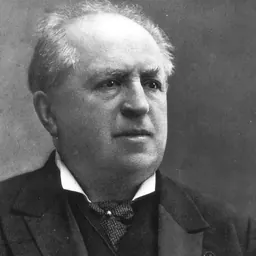
Contemporaries
People whose lives overlapped Jakob Christoph Heer's
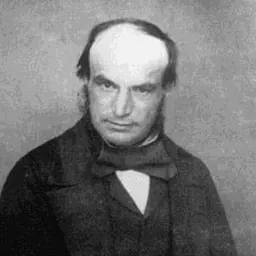
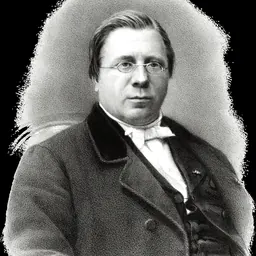
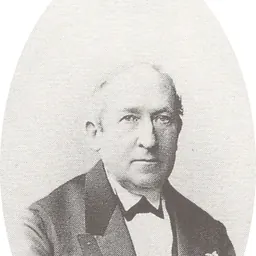


Frequently asked questions
Who was Jakob Christoph Heer?
Swiss writer (1859-1925)
When was Jakob Christoph Heer born?
Jakob Christoph Heer was born on 17 July 1859 in Töss.
When did Jakob Christoph Heer die?
Jakob Christoph Heer died on 20 August 1925 in Zurich.
What was Jakob Christoph Heer's occupation?
Jakob Christoph Heer was a journalist, writer, poet, teacher and editing staff.
What nationality was Jakob Christoph Heer?
Jakob Christoph Heer was Swiss.
Sources & further reading
· Wikipedia: Jakob Christoph Heer
· DBpedia: Jakob Christoph Heer
Cite this page
APA: Biography.guide. (2026). Jakob Christoph Heer. https://biography.guide/jakob-christoph-heer/
MLA: "Jakob Christoph Heer." Biography.guide, https://biography.guide/jakob-christoph-heer/.
Chicago: "Jakob Christoph Heer." Biography.guide. https://biography.guide/jakob-christoph-heer/.
Data last updated: 2026-09-25 · Spot an error? Report a correction.
Page generated 2026-09-27 05:11 UTC