
Jairzinho
Brazilian footballer and manager (born 1944)
About Jairzinho
Born 1944. Jairzinho is a Brazilian association football player, association football coach and beach soccer player.
Jair Ventura Filho (born 25 December 1944), better known as Jairzinho , is a Brazilian former professional footballer. A quick, skillful, and powerful right winger known for his finishing ability and eye for goal, he was a key member and leading scorer of the Brazil national team that won the 1970 FIFA World Cup.
Jairzinho was nicknamed "the Hurricane" in reference to the way his jersey would shake as he ran down the wing during his playing days. A versatile forward, he was also capable of playing in a variety of other attacking positions, as a main striker, second striker, or even as an attacking midfielder. He was known for his large afro towards the later stages of his career, as well as his burst of pace, dribbling, ball skills, finishing ability, shot power and physical strength due to his large muscular build. He is widely considered one of the greatest Brazilian players of all time and one of the greatest wingers of all time.
Due to the economic and political situation of the time, as well as the Sport Legislation, Jairzinho played most of his club football in South America where he spent eleven years at Rio de Janeiro club Botafogo. He went on to play in Europe for Marseille during the final years of his career, a common pattern for South American players until the 1980s, when the economic and political situation changed. Jairzinho replaced his footballing idol Garrincha in both the Botafogo and Brazil teams, and played in three consecutive World Cups: 1966, 1970 and 1974.
Early years Jair Ventura Filho was born on 25 December 1944 in Rio de Janeiro, Jairzinho's family left Duque de Caxias for Rio in the late 50s. Living on Rua General Severiano where he went through the youth setup at local club Botafogo.
Club career Botafogo
Jairzinho started his football career in 1958 aged 13 assigned to the Botafogo youth teams and working as a ball boy for the first team. He made his professional debut with the club as a striker at the age of fifteen in 1960. His idol Garrincha, whom he would eventually replace for both club and country, also played at Botafogo, albeit in Jairzinho's preferred position on the right wing. This resulted in Jairzinho spending most of his early games playing on the left wing or as a centre forward. However, he would fill in as a right winger, by far his strongest position, when Garrincha was injured.
Jairzinho finally established himself as a Botafogo regular in 1965 aged 21 and was seen as a rising star to the entire nation. During this young age he was already playing with Brazil and Botafogo superstars such as Gérson, Mario Zagallo and Garrincha.
After Jairzinho's excellent display in Mexico at the 1970 FIFA World Cup more eyes of the world were focused on his Botofogo side. In the final four years of his time at Botafogo, he would go on to cement himself as one of the club's most prolific goalscorers in the history of the club, scoring 186 goals in 416 appearances with a goals per game ratio of 0,45. He ranks sixth in all-time top goal scorers for Botafogo. One of his most standout performances came in 1972, in which he scored a hat-trick vs Flamengo during a famous 6–0 victory, one of the most memorable in Botafogo's history. In the same year, he would also receive the Bronze Award for the South American Footballer of the Year.
Marseille
In 1974, when the sports legislation in Brazil finally changed, Jairzinho made a 1,250,000 FF (€300,000, £250,000) move to Ligue 1 side Marseille, in October. It was one of the most expensive signings at the time, along with his Botafogo and Brazil teammate Paulo Cézar Caju.
Jairzinho would go on to score nine goals in only 18 league games, also notably delivering a memorable performance against Nantes in a victory 4–0 in the Coupe de France, scoring two goals. Though he made an impact with his goals and aura, his time at the French side turned out to be short-lived due to a scuffle in which both Jairzinho and Caju were allegedly found guilty of attacking one of the assistant referees, after a 2–2 draw in the first leg of the Coupe de France quarter-final against Paris Saint-Germain. The Groupement du football professionnel (the former LFP) suspended him and Caju for one year (plus one suspended), thus he ended up leaving in the summer of 1975.
Kaizer Chiefs According to Jairzinho, Kaizer Chiefs co-owner Ewert Nene invited him to play a few games in reaction to his Marseille departure. Jairzinho agreed a short-term deal until the start of 1976.
The stadium atmosphere each time he went on the pitch, the warm welcome, and the fact that he was "treated like a king" were the key reasons he agreed to sign, he subsequently said in an interview with the South African newspaper Soccer Laduma in 2018.
Cruzeiro After the end of Jairzinho's contract in South Africa, he would finally rejoin his home country and reestablish himself as the world class forward he was known for. Jairzinho signed with Cruzeiro at the beginning of 1976, just days before the season campaign started.
Jairzinho would score 31 goals in 43 games across all competitions, finishing second highest goal scorer in the 1976 Copa Libertadores with 12 goals in 12 appearances whilst also winning the trophy, the first one for the Brazilian club. Cruzeiro would then go on to play and ultimately be defeated at the 1976 Intercontinental Cup against Bayern Munich, losing the first leg 2–0 in Germany and drawing 0–0 at home.
Jairzinho would only spend a year at Cruzeiro, however a successful period.
Portuguesa Jairzinho, while aged 32 and still seen as a naturally gifted player, surprised his peers when joining Venezuelan side Portuguesa in 1977.
Jairzinho made Portuguesa one of the greatest teams in Venezuelan history, helping Portuguesa win a record 16 games in a row and their fourth of five championships. He scored 22 league goals within 24 games, including three hat-tricks.
quote="Jairzinho was our strength, our explosiveness. He was the Hurricane. The Hurricane of the cup" — Brazil legend and teammate Rivellino in a 1970 World Cup recap for FIFA His second goal in the team's second group match against Czechoslovakia was one of the most important goals of the tournament: he completed a game changing solo run, beating a total of four players, to unleash a low driven shot to ripple the bottom left corner, which goes down as one of the most memorable goals in World Cup history. During the semi-final match against Uruguay, in addition to scoring a goal, Jairzinho completed a record 13 dribbles; his record was broken in 1994 by Jay-Jay Okocha, who completed 15 in Nigeria's round of 16 tie with Italy.
quote="Jairzinho was a very strong player, and he just enjoyed a perfect World Cup. I don't think you can give him any less than a 10 out of 10. He was fantastic" — Former Brazil teammate Clodoaldo Tavares de Santana in a 1970 World Cup recap for FIFA Throughout the tournament, Jairzinho also completed the most dribbles: 47; this was a record for a single tournament, which was only broken by Argentina's Diego Maradona in 1986.
His finishing ability was regularly acclaimed by many coaches and teammates. He also possessed many shots with his left foot which acclaimed him as a complete forward.
Jairzinho was noted for his technical ability and offensive versatility. During open play, he was known to control passes within the penalty area to create shooting opportunities. His playmaking was demonstrated in the 1970 World Cup match against England, where he provided the cross for Pelé's header that resulted in a save by Gordon Banks. Because of his range of skills, sports journalists and historians frequently cite him as one of the most complete forwards in association football history.
Managerial career
After retiring as a footballer, Jairzinho became a coach and managed a number of youth teams in his native Brazil. He also worked in Japan, Saudi Arabia and the United Arab Emirates. In 1997, Jairzinho began his first journey as manager in Europe, being appointed at Greek Super League club Kalamata. He was sacked due to poor results, his side relegated at the end of the season. Jairzinho was named head coach of the Gabon national team. However, he was sacked by Gabon's Football Federation after a crushing defeat against Angola in a World Cup 2006 Qualifier held in Luanda. Perhaps his greatest achievement as a coach was spotting Ronaldo as a 14-year-old whilst he was coaching São Cristóvão. He kick-started the career of the future three-time FIFA World Player of the Year by recommending him to Cruzeiro, his former side, and the Brazil youth team.
Career statistics Scores and results list Brazil's goal tally first, score column indicates score after each Jairzinho goal.
Personal life Jairzinho's son, Jair Ventura, is also a former footballer who managed Corinthians, Botafogo and Santos.
In his retirement, Jairzinho runs a football school for underprivileged children in the favelas of Rio de Janeiro.
Honours Botafogo Campeonato Brasileiro: 1968 South American Player of the Year Bronze award: 1972 World Soccer: 27th Greatest Player of the 20th Century IFFHS Brazilian Player of the 20th Century (19th place) Brazilian Football Museum Hall of Fame International Football Hall of Fame: 16th place (1997)
Don’t just read it —
keep it.
Full-length biographies made to live with: read them, listen on the way to work, watch them tonight.
- E-book
- Audio
- Video
Instant download · yours to keep · every purchase keeps this site free
Important facts
People in Jairzinho's life
Named in this biography and alive at the same time
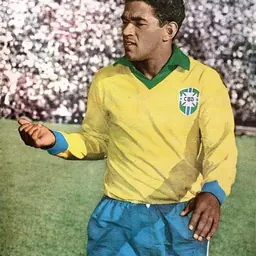
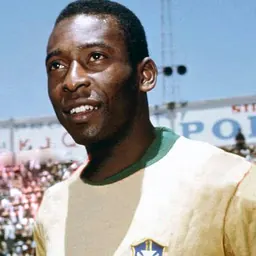



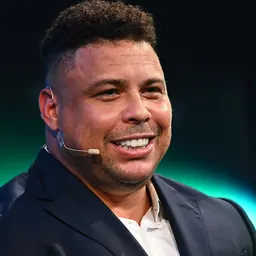

Related people
Same field, nearest in time





Contemporaries
People whose lives overlapped Jairzinho's



Frequently asked questions
Who is Jairzinho?
Brazilian footballer and manager (born 1944)
When was Jairzinho born?
Jairzinho was born on 25 December 1944 in Rio de Janeiro.
What is Jairzinho's occupation?
Jairzinho is an association football player, association football coach and beach soccer player.
What nationality is Jairzinho?
Jairzinho is Brazilian.
Sources & further reading
Cite this page
APA: Biography.guide. (2026). Jairzinho. https://biography.guide/jairzinho/
MLA: "Jairzinho." Biography.guide, https://biography.guide/jairzinho/.
Chicago: "Jairzinho." Biography.guide. https://biography.guide/jairzinho/.
Data last updated: 2026-09-20 · Spot an error? Report a correction.
Page generated 2026-09-27 05:24 UTC