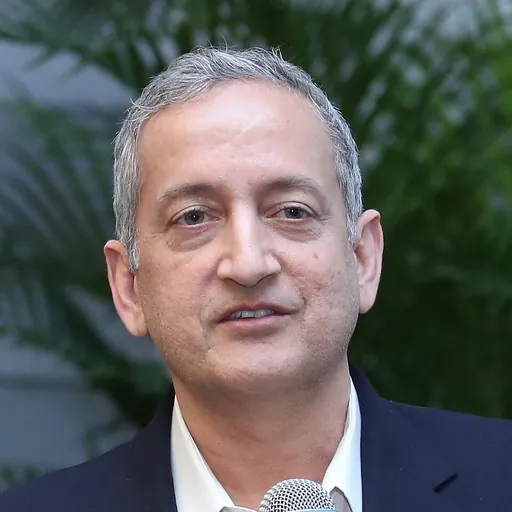
About Jainendra K. Jain
Born 1960. Jainendra K. Jain is an Indian physicist, screenwriter and university teacher, known for Composite fermions.
Jainendra K. Jain (born January 17, 1960) is an Indian-American physicist and the Evan Pugh University Professor and the Eberly Chair in Physics at the Pennsylvania State University. He received the Oliver E. Buckley Prize of the American Physical Society in 2002, was elected to the National Academy of Sciences in 2021, and was selected Foreign Fellow of the Indian National Science Academy in 2024. He was the co-recipient of 2025 Wolf Prize in Physics along with James P. Eisenstein and Mordehai Heiblum. Jain is known for his theoretical work on quantum many body systems, most notably for postulating particles known as the composite fermions.
Biography Jain received his primary, middle and high school education in a government school in the rural village of Sambhar, Rajasthan, his master's degree in physics at Indian Institute of Technology Kanpur published in 2007 by the Cambridge University Press. He co-edited with Bertrand Halperin a book Fractional Quantum Hall Effects: New Developments, published in 2020 by World Scientific. After being awarded the Wolf Prize in Physics, he recounted his journey as: “Looking back, it is hard to believe how incredibly fortunate I have been. Growing up in a poor village in India, traumatized by an accident that left me on crutches with a lifelong disability, I did not think I would ever walk again or attend college, let alone pursue my dream of becoming a physicist.” He credits Jaipur Foot with enabling him to continue education. Composite fermions are pictured as electrons dressed with magnetic flux quanta, and are predicted to experience a substantially reduced magnetic field. Thus, the strongly correlated 2D electrons in a high magnetic field become weakly interacting composite fermions at a reduced magnetic field. Composite fermions correctly predict the rich phenomenology of this system originating from a variety of strongly correlated states of electrons, including the fractional quantum Hall states, the Fermi-liquid like metallic states, superconductor-like paired states, and crystal states.
Jain theorized that the integer quantum Hall effect of composite fermions carrying 2p flux quanta shows as the fractional quantum Hall effect of electrons at fractions n/(2pn±1), where n and p are integers. These fractions, along with their hole partners 1 - n/(2pn±1), termed the Jain sequences, account for nearly all known fractional quantum Hall states, called the Jain states. Experimental evidence has been reported for four species of composite fermions, those with 2, 4, 6, and 8 flux quanta attached.
Jain also constructed ansatz wave functions They demonstrated that the excited composite fermions, also called "quasiparticles", exhibit fractional charge and anyon statistics. They generalized the composite-fermion framework to include the spin (or valley) degree of freedom and to bilayers, and successfully predicted the phase diagram of composite-fermion crystals. They further showed that the residual interactions among composite fermions can cause pairing of composite fermions at even-denominator fractions in higher Landau levels, in wide quantum wells, or with large Landau-level mixing. . Jain also is the originator the "parton" construction, which generates candidate fractional quantum Hall states beyond the Jain sequences and includes non-Abelian states.
Honors Fellow, John Simon Guggenheim Memorial Foundation, 1991. Citation: "For theoretical and experimental work establishing the composite fermion model for the half-filled Landau level and other quantized Hall systems" Elected member of American Academy of Arts and Sciences, 2008. Citation: "Evan Pugh University Professor and Erwin W. Mueller Professor of Physics. Predicted that electrons in the factional quantum Hall effect regime capture quantized vortices to form new particles, which he named composite fermions. Subsequently observed, composite fermions brought clarity to the subject and spawned new lines of theoretical inquiries and elegant new experiments." Distinguished Alumnus Award of IIT Kanpur, 2010. Elected to National Academy of Sciences, 2021. Appointed Holder of Eberly Family Chair, Pennsylvania State University, 2023. Citation: "Prof Jain predicted a new class of exotic particles, which he named “composite fermions,” and explained the fractional quantum Hall effect as the integer quantum Hall effect of composite fermions. In doing so, he accomplished a unification of the fractional and the integer quantum Hall effects, two Nobel prize winning phenomena. His discovery of composite fermions is recognized as a singular and transformative development in the realm of condensed matter physics." Wolf Prize in Physics, 2025 together with James P. Eisenstein and Mordehai Heiblum for "For advancing our understanding of the surprising properties of two-dimensional electron systems in strong magnetic fields".
Don’t just read it —
keep it.
Full-length biographies made to live with: read them, listen on the way to work, watch them tonight.
- E-book
- Audio
- Video
Instant download · yours to keep · every purchase keeps this site free
Important facts
People in Jainendra K. Jain's life
Named in this biography and alive at the same time

Related people
Same field, nearest in time


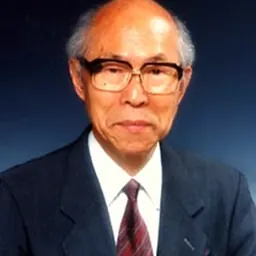
Contemporaries
People whose lives overlapped Jainendra K. Jain's


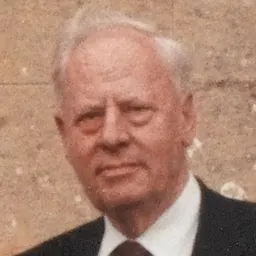
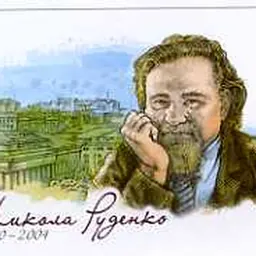

Frequently asked questions
Who is Jainendra K. Jain?
Indian physicist
When was Jainendra K. Jain born?
Jainendra K. Jain was born in 1960 in Rajasthan.
What is Jainendra K. Jain's occupation?
Jainendra K. Jain is a physicist, screenwriter and university teacher.
What is Jainendra K. Jain known for?
Jainendra K. Jain is known for Composite fermions.
What nationality is Jainendra K. Jain?
Jainendra K. Jain is Indian.
Sources & further reading
· Wikipedia: Jainendra K. Jain
Cite this page
APA: Biography.guide. (2026). Jainendra K. Jain. https://biography.guide/jainendra-k-jain/
MLA: "Jainendra K. Jain." Biography.guide, https://biography.guide/jainendra-k-jain/.
Chicago: "Jainendra K. Jain." Biography.guide. https://biography.guide/jainendra-k-jain/.
Data last updated: 2026-09-23 · Spot an error? Report a correction.
Portrait: Wikimedia Commons · author & licence
Page generated 2026-09-27 05:05 UTC