
About Jaime Guzmán
Lived 1946 – 1991 (aged 44). Jaime Guzmán was a Chilean lawyer and politician.
Early life
Jaime Jorge Guzmán Errázuriz was born on 28 June 1946 in Santiago, into a traditional family of the Santiago upper class. His father, Jorge Guzmán Reyes, was a sports director at the Catholic University, and his mother, Carmen Errázuriz Edwards, was a travel agent and a descendant of two of Chile's most prominent families, the Errázuriz and the Edwards. He had two sisters, Rosario and María Isabel, and spent much of his childhood in the company of his maternal grandfather, the conservative senator Maximiano Errázuriz Valdés. He attended the Colegio de los Sagrados Corazones from 1951 to 1962, where he was considered an outstanding student who assisted at school masses. From an early age he received a strong religious education; the priest and professor Osvaldo Lira had a marked influence on his development.
Political youth
Support for Jorge Alessandri and early political activism
At the age of 12, Guzmán participated in the political campaign of Jorge Alessandri, distributing propaganda.
Fiducia
From 1964, Guzmán became a frequent contributor to the magazine Fiducia, a conservative, reactionary publication inspired by the work of Plinio Corrêa de Oliveira.
Role during Chile's dictatorship (1973–1990)
After the 1973 military coup, Guzmán became a trusted advisor to General Augusto Pinochet and an influential policymaker in Chile. Just two days after the coup, Guzmán was tasked with studying the creation of a new constitution. On 26 September 1973, the Ortúzar Commission was formed to draft a new constitution; Guzmán was appointed as legal adviser by General Gustavo Leigh. The commission included Enrique Ortúzar (president), Alejandro Silva Bascuñán, Jorge Alessandri, Alicia Romo, Juan de Dios Carmona, Sergio Diez, and Guzmán himself, among others.
He was also a key participant in the drafting of Pinochet's Chacarillas speech of 1977, one of the founding texts of the military regime. While he initially had close contacts with Jorge Alessandri and espoused his political views, Guzmán eventually converted to the neoliberal economic policies supported by the Chicago Boys and distanced himself from Alessandri. He became closer to Pinochet and his minister Sergio Fernández.
Although Guzmán never held an official position in Pinochet's military dictatorship, he remained one of the closest collaborators, playing an important ideological role. He participated in the design of important speeches for Pinochet and provided frequent political and doctrinal advice and consultation. However, a secret 1976 DINA memorandum identified Guzmán as an intelligent and manipulative actor. The same document posited that Guzmán manipulated Pinochet and ultimately sought to displace him from power to lead his own government in collaboration with Jorge Alessandri. He served from 11 March 1990 until his death on 1 April 1991.
In the Senate he was considered the most important figure in the opposition to the left, according to a March 1991 poll by the Centro de Estudios de la Realidad Contemporánea (CERC). He was among the most vocal critics of the new government, accusing it, among other things, of insufficient rigor in combating left-wing extremism. He strongly opposed a constitutional reform bill that would have permitted the president to pardon terrorists — a position that provoked the Manuel Rodríguez Patriotic Front.
Guzmán continued to work as a professor of constitutional law in the Faculty of Law at the Catholic University of Chile until his death. He was known for his extensive knowledge of Scholasticism.
Death
On 1 April 1991, after finishing his constitutional law class at the Catholic University's Campus Oriente, Guzmán was awaited by his driver. At 6:27 p.m., at the corner of Batlle y Ordóñez and Regina Pacis avenues near the university exit, two gunmen opened fire on Guzmán, who was sitting in the front passenger seat of his car. His driver accelerated away from the shooting while the assailants continued firing. The driver took him first to UDI headquarters in search of help, then raced to the Military Hospital. Radio and national television quickly broadcast the news while family members, friends, colleagues, and supporters gathered at the hospital. Despite medical efforts, Guzmán died three hours after being shot, causing national shock.
The assassination was carried out by members of the far-left urban guerrilla movement Frente Patriótico Manuel Rodríguez - Autónomo (FPMR-Autónomo). The judicial investigation established that the material perpetrators were FPMR militants Ricardo Palma Salamanca and Raúl Escobar Poblete, while the intellectual authors were the movement's political-military leadership: Galvarino Apablaza, Mauricio Hernández Norambuena, and Juan Gutiérrez Fischmann.
Hernández Norambuena, also known as "Commander Ramiro," was the only one arrested and tried for Guzmán's murder. After serving less than three years in a Chilean prison, he escaped and sought refuge in Cuba. In 2002, Hernández was arrested in Brazil for the kidnapping of Brazilian businessman Washington Olivetto. He is currently serving a sentence in Chile.
The assassination of Guzmán led to the creation of the intelligence organization La Oficina by the Aylwin administration on 26 April 1991, to neutralize violent left-wing groups that had not accepted the premises of the Chilean transition to democracy.
Guzmán's sister and nephew postulate that Manuel Contreras and Pinochet had infiltrated the FPMR to induce the assassination. Under that theory, their motivation was Guzmán's alleged willingness to collaborate with Chilean justice to clarify human rights violations.
On 6 June 1993, Law 19,205 was promulgated authorizing the construction of two monuments in Guzmán's memory in the cities of Santiago and Valparaíso. A parliamentary commission chaired by Senator Carlos Bombal oversaw a public competition for the memorial design, attracting 140 projects.
Political views
Gremialismo and subsidiarity
Guzmán's political philosophy centered on Gremialismo, a doctrine he founded that defended the autonomy of intermediate social organizations — universities, trade unions, guilds, and business and youth groups — according to the principle of subsidiarity of the state. He argued that such bodies should focus exclusively on their own sphere of activity and not intervene in broader political matters. In his Escritos personales, Guzmán declared: "When a student organization pronounces on mining policy or labor problems, or when a trade union commits itself for or against a particular structure of the National Congress, or when a professional association judges a national economic policy in its entirety, we are no longer in any borderline zone, but in a manifest overstepping of its field of action." He firmly opposed the legalization of abortion in any form, which he viewed as unjustifiable homicide. On the subject he stated: "The mother must have the child even if it is born abnormal, was unwanted, is the product of rape, or if having it leads to her death. A person can never legitimately perform an abortion, because it is homicide, and all the negative or painful consequences constitute precisely what God has imposed on the human being."
A deeply religious man, Guzmán promoted ideas of "freedom of the spirit" against the "slavery of materialism." For scholars Claudio Arqueros and Carlos Frontaura, the principal forms of materialism Guzmán identified were Marxist collectivism and the individualism of consumer societies. His ethical principles were deeply concerned with the concepts of common good, family, marriage, tradition, and national identity.
There has been a dispute over whether or not Juan Vázquez de Mella influenced Guzmán's Gremialismo thought.
He was a passionate supporter of Club Deportivo Universidad Católica and, through his father's connections as a club director, frequently attended matches and personally met notable figures such as journalist Julio Martínez and goalkeeper Sergio Livingstone.
Controversies
Human rights
Guzmán's participation in the military dictatorship is the subject of major controversy, particularly regarding his knowledge of the human rights violations committed during that period, as evidenced in judicial documents. In his own words: "The civilians who were in the government realized that the military regime was a wild and runaway horse that needed to be reined in, so that it would not commit more human rights violations. (...) When we found out that there would be an execution or a disappearance we tried to prevent it, and in many cases we succeeded."
According to lawyer Nelson Caucoto, the gravity of this admission lies in the fact that, knowing such abuses were occurring — or about to occur — those involved did not report them to the courts, even as those courts were hearing habeas corpus petitions and denunciations of kidnapping filed on behalf of hundreds of Chileans who subsequently disappeared forever.
Colonia Dignidad
In June 2005, following the arrest of German Lutheran preacher Paul Schäfer and the evacuation of Colonia Dignidad, visitor records were discovered listing Guzmán among those who had accessed the restricted compound, alongside Andrés Chadwick, Hernán Larraín, and Carlos Bombal, among other politicians and religious entities.
Former justice minister Mónica Madariaga stated in an interview that Guzmán gave classes inside Villa Baviera (Colonia Dignidad) to young UDI leaders including Pablo Longueira and Andrés Chadwick: "Jaime Guzmán gave classes to Pablo Longueira, Luis Cordero and Andrés Chadwick inside Colonia Dignidad. [...] They were indoctrinated there; they were given classes. Jaime Guzmán instructed them in a Platonic style, walking through the fields while giving lectures. They all derived great benefit from Colonia Dignidad."
Cooperativa La Familia
At the beginning of 1977, judge Sergio Dunlop issued a travel restriction order against Guzmán during investigations into the financial scandal of the Cooperativa La Familia — founded by Gremialist leaders in 1975 — which was reversed 24 hours later.
Don’t just read it —
keep it.
Full-length biographies made to live with: read them, listen on the way to work, watch them tonight.
- E-book
- Audio
- Video
Instant download · yours to keep · every purchase keeps this site free
Important facts
People in Jaime Guzmán's life
Named in this biography and alive at the same time



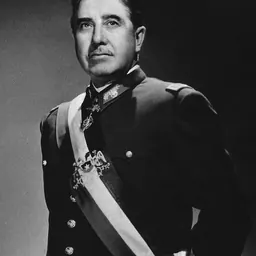
Related people
Same field, nearest in time
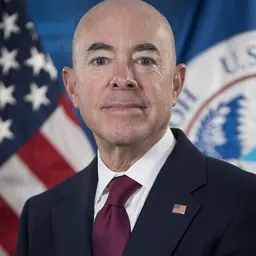

Contemporaries
People whose lives overlapped Jaime Guzmán's
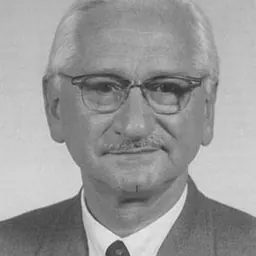
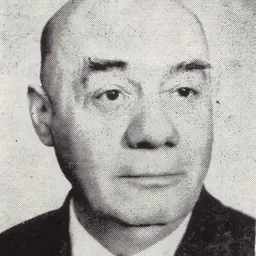


Frequently asked questions
Who was Jaime Guzmán?
Chilean politician (1946–1991)
When was Jaime Guzmán born?
Jaime Guzmán was born on 28 June 1946 in Santiago.
When did Jaime Guzmán die?
Jaime Guzmán died on 1 April 1991 in Santiago.
What was Jaime Guzmán's occupation?
Jaime Guzmán was a lawyer and politician.
What nationality was Jaime Guzmán?
Jaime Guzmán was Chilean.
Sources & further reading
Cite this page
APA: Biography.guide. (2026). Jaime Guzmán. https://biography.guide/jaime-guzman/
MLA: "Jaime Guzmán." Biography.guide, https://biography.guide/jaime-guzman/.
Chicago: "Jaime Guzmán." Biography.guide. https://biography.guide/jaime-guzman/.
Data last updated: 2026-09-24 · Spot an error? Report a correction.
Page generated 2026-09-27 05:04 UTC