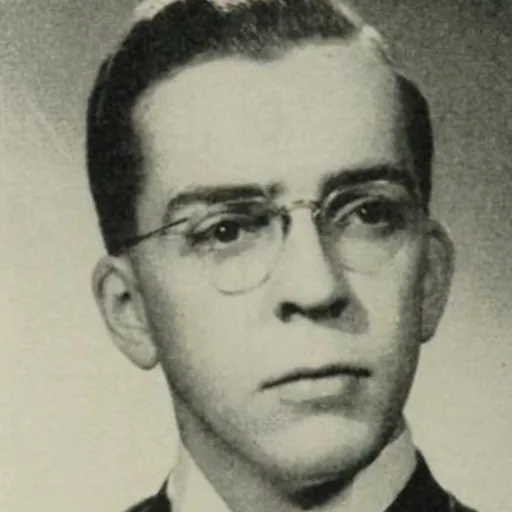
About Jacques Viau
Lived 1919 – 2003 (aged 83–84). Jacques Viau was a Canadian jurist and lawyer.
Jacques Viau (1919 – December 4, 2003) was a Canadian lawyer practising in Montreal, Quebec. He served as bâtonnier of the Barreau du Québec and the Bar of Montreal. He also served as president of the Canadian Bar Association from 1977 to 1978. During his term in office, he chaired a committee which produced a major set of recommendations for reform of the Constitution of Canada.
Early life and family Viau was born in 1919 in Lachine. He married Laurette Cadieux Viau. The couple had two children, Hélène and Jacques.
Legal career Viau earned his degree in Quebec civil law, a Licentiate of Laws, from the University of Ottawa. He was admitted to the Barreau du Québec in 1942. The government of Quebec appointed him Queen's Counsel ("conseillier de la reine" in French) in 1951.
Bâtonnier du Québec and bâtonnier of Montreal In 1973–74, Viau served simultaneously as the Bâtonnier of the Barreau du Québec (the provincial bar association), and as Bâtonnier of the Bar of Montreal. He was the last person to hold both offices at the same time. He was bâtonnier at a time of considerable change in the legal profession in Quebec. introduced by the government of Quebec in 1973, which substantially re-organised the system of professional regulation in Quebec. As a result, the position of bâtonnier would henceforth be elected by universal suffrage of the lawyers of Quebec.
During his time in office, Viau was also involved in the implementation of the new legal aid system, instituted by the government of Quebec in 1972, in response to new federal funding for legal aid programs across Canada.
Another of the major events of his time as bâtonnier was the reform of the examination system for the admission of new lawyers. When he took office, the examinations essentially required students to memorise large portions of the Civil Code and the Code of Civil Procedure and then regurgitate their memory work over a series of exams during a two-day period. The students protested that this was not a truly effective examination system for a professional discipline. Viau received their complaints and delegated the matter to his colleague on the executive committee, Michel Robert (subsequently bâtonnier and later Chief Justice of Quebec). Robert negotiated a new system of examinations which is still used today. He credited Viau with having the ability to delegate complex issues to others, and to accept the results with a generosity of spirit.
Canadian Bar Association
Early participation in the CBA Viau was active in the Canadian Bar Association throughout his career. He was president of the CBA's municipal law section from 1966 to 1968, and vice-president of the Quebec Branch of the CBA from 1969 to 1970.
Presidential term and the Quebec sovereignty issue Viau was national president of the CBA in 1977–78, a time of political turmoil in Canada. The year before, the Parti québécois had won the provincial general election in Quebec and formed the government, on a platform of separation from Canada. At the annual meeting of the CBA in the summer of 1977, the outgoing president, Boyd Ferris, proposed that the CBA should recognise the need for national unity and a strong federal government. A resolution to that effect was introduced by Paul Fraser, the president of the British Columbia branch of the CBA and seconded by Robert Lesage, the president of the Quebec Branch. The resolution proved controversial, since some members of the CBA did not think the organisation should take part in political issues, while members from Quebec thought that the motion was attempting to impose a particular view on the sovereignty issue as a condition of membership in the CBA. After considerable debate and negotiations, the resolution was amended on a motion by Yves Fortier, a past-president of the Quebec Branch, and Bryan Williams, the incoming president of the British Columbia Branch. The amendment removed the language calling for the CBA to support national unity and reject provincial separatism. Instead, the resolution created a committee to study and make recommendations on the Constitution of Canada.
CBA Committee on the Constitution
Mandate and composition The resolution called for the Constitution to be re-written "so as better to meet the aspriations and present-day needs of all the people of Canada and to guarantee the preservation of the historical rights of our two founding cultures." The resolution also set out the mandate for the committee, which was to undertake "the search for a definition of the essential constitutional attributes of a Canadian federalism", with a final report to be presented at the next Annual Meeting of the CBA in 1978. The members of the committee were drawn from each province of Canada, and included two future provincial premiers, a future Supreme Court justice, two future provincial chief justices, and a future Canadian Ambassador to the United Nations.
In addition to Viau, who acted as chairman, the members were:
John A. Agrios, Edmonton, Alberta, later a judge of the Alberta Court of Queen's Bench Douglas McK. Brown, Q.C., Vancouver, British Columbia, a leading civil litigator George D. Finlayson, Q.C., Toronto, Ontario, later on the Ontario Court of Appeal L. Yves Fortier, Q.C., Montreal, Quebec, later Canada's Ambassador to the United Nations Joseph A. Ghiz, Charlottetown, Prince Edward Island, later Premier of Prince Edward Island and then on the Supreme Court of Prince Edward Island William L. Hoyt, Q.C., Fredericton, New Brunswick, later Chief Justice of New Brunswick Robert Lesage, Q.C., Quebec City, Quebec, later on the Superior Court of Quebec David Matas, Winnipeg, Manitoba, a noted civil rights lawyer John P. Merrick, Halifax, Nova Scotia D.E. (Tom) Gauley, Saskatoon, Saskatchewan, a leading lawyer in Saskatchewan Clyde K. Wells, Q.C., Corner Brook, Newfoundland, later Premier of Newfoundland and then Chief Justice of Newfoundland.
The executive vice-chairman and director of research was Gérard V. La Forest, Q.C., of Ottawa, Ontario, later on the Supreme Court of Canada. The Director of Research was Joel E. Fichaud, later a judge of the Nova Scotia Court of Appeal. Funding came from the CBA itself, and also from the Donner Canadian Foundation, the Alberta Law Foundation, the British Columbia Law Foundation, and the Ontario Law Foundation.
Work of the Committee
The members of the committee met nine times over the course of the year, with one final marathon meeting for five days at Charlottetown, Prince Edward Island, the site of the first Confederation Conference in 1864. Speculation continued right up to the day before the report was released, with Viau stating that he had nothing personally against the monarchy, and noting that even Premier Lévesque had said much the same. However, Viau also commented that the idea of a Canadian head of state "... is really nothing new", noting that a joint Senate-Commons committee had suggested a Canadian head of state some years previously, in 1971.
The federal government had recently released its own draft amendments. Viau indicated before the report was released that he and the other committee members did not see anything in the federal proposals which would lead them to change their recommendations. In particular, Viau said he completely disagreed with the federal proposal that the upper house be chosen half by the federal government and half by the provinces. Earlier that year, with respect to the division of powers, he had said that in his opinion, the provinces had to be given near complete control over cultural and educational matters if Quebec was to stay in Canada. Another member of the committee, John Agrios, commented that the points in contention in their internal discussions were not really where he had expected them: "Language and so forth was not a difficult area, but the Senate was very, very difficult, and we spent a lot of time on the court system and international relations. 1986 - Grand Cross of the Maltese Order of Merit
Don’t just read it —
keep it.
Full-length biographies made to live with: read them, listen on the way to work, watch them tonight.
- E-book
- Audio
- Video
Instant download · yours to keep · every purchase keeps this site free
Important facts
People in Jacques Viau's life
Named in this biography and alive at the same time





Related people
Same field, nearest in time

Contemporaries
People whose lives overlapped Jacques Viau's


Frequently asked questions
Who was Jacques Viau?
Canadian jurist and lawyer (1919-2003)
When was Jacques Viau born?
Jacques Viau was born in 1919 in Lachine.
When did Jacques Viau die?
Jacques Viau died on 4 December 2003 in Montreal.
What was Jacques Viau's occupation?
Jacques Viau was a jurist and lawyer.
What nationality was Jacques Viau?
Jacques Viau was Canadian.
Sources & further reading
Cite this page
APA: Biography.guide. (2026). Jacques Viau. https://biography.guide/jacques-viau/
MLA: "Jacques Viau." Biography.guide, https://biography.guide/jacques-viau/.
Chicago: "Jacques Viau." Biography.guide. https://biography.guide/jacques-viau/.
Data last updated: 2026-09-22 · Spot an error? Report a correction.
Portrait: Wikimedia Commons · author & licence
Page generated 2026-09-27 05:03 UTC