
About Jacques Plante
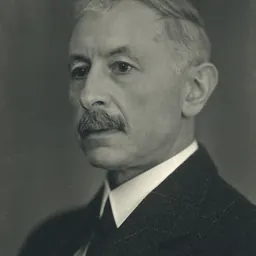
Lived 1929 – 1986 (aged 57). Jacques Plante was a Canadian ice hockey player, ice hockey coach and athlete.
Early life
Plante was born on a farm near Notre-Dame-du-Mont-Carmel, in Mauricie, Quebec, the first of 11 children born to Palma and Xavier Plante. The family moved to Shawinigan Falls, where his father worked in one of the local factories. In 1932, Plante began to play hockey, skateless and with a tennis ball, using a goaltender's hockey stick his father had carved from a tree root. As his playing progressed, Jacques received his first regulation goaltender's stick for Christmas of 1936. He impressed the coach and stayed on as the team's number-one goaltender.
Two years later, Plante was playing for five different teams — the local factory team, and teams in the midget, juvenile, junior, and intermediate categories. Plante demanded a salary from the factory team's coach after his father told him that the other players were being paid because they were company employees. The coach paid Plante 50 cents per game to retain him and maintain the team's popularity. Upon graduation, he took a job as a clerk in a Shawinigan factory. A few weeks later, the Quebec Citadels offered Plante $85 per week to play for them; he accepted, marking the beginning of his professional career.
Playing career
Minor leagues
Jacques joined the Quebec Citadelles in 1947. While playing for Quebec, Plante started to play the puck outside his crease, a technique he developed when he recognized that the team's defense was performing poorly. Fans found Plante's unconventional playing style to be exciting, but it angered his managers, who believed that a goaltender should stay in the net and let his players recover the puck. The same season, the Citadelles beat the Montreal Junior Canadiens in the league finals, with Plante being named the most valuable player on his team. The Montreal Canadiens' general manager, Frank J. Selke, became interested in acquiring Plante as a member of the team.
In January 1953, Plante was called up to play for the Canadiens. Bill Durnan, the goaltender who played for Montreal when Plante first began, had retired in 1950, and Gerry McNeil, their top goaltender, had fractured his jaw. Plante always wore one of his tuques while playing hockey, and after an argument with Irvin, all of Plante's tuques had vanished from the Montreal locker room. Even without his good luck charm, Montreal won that series and eventually, the Stanley Cup, and Plante's name was engraved on the Cup for the first time. Selke assigned Plante to the Buffalo Bisons of the American Hockey League so fans in the United States would get to know him. Plante was instantly successful; Fred Hunt, the general manager of the Bisons, told Kenny Reardon, Montreal's recruiting manager, "he's the biggest attraction since the good old days of Terry Sawchuk." In the spring of 1954, he underwent surgery to correct his left hand, which he had broken in his childhood. He could not move his hand well enough to catch high shots and compensated by using the rest of his body. The operation was successful.
On February 12, 1954, Plante was called up to the Canadiens and established himself as their starting goaltender – he did not return to the minor leagues for many years. Plante was the Canadiens' number one goaltender at the beginning of the 1954–55 NHL season. On March 13, 1955, with only four games left in the season, an on-ice brawl resulted in the suspension of Montreal's leading scorer, Maurice Richard, for the rest of the season and the playoffs. Four nights later, playing in Montreal in front of an angry crowd, Plante was witness to the riot that followed. The Canadiens subsequently lost to the Detroit Red Wings in the finals.
For the 1955–56 season, Plante was the unchallenged starting goaltender of the Canadiens; Gerry McNeil had not played the previous season and was sent to the Montreal Royals. Charlie Hodge, Plante's backup the previous season, was sent to the Seattle Americans, a Canadiens' farm team.
Later that season, Montreal won the Stanley Cup, the first of what would be five consecutive Stanley Cup championship seasons. For his part, Plante won the first of five consecutive Vezina Trophies. The next season, Plante missed most of November because of chronic bronchitis, a consequence of asthma that had affected him since childhood. During the 1957–58 NHL season, the Canadiens won their third straight Stanley Cup despite injuries to Plante and other members of the team. Plante's asthma was getting worse. He sustained a concussion with just a few weeks left in the season and missed three games of the playoffs. In the sixth game of the Stanley Cup finals, Plante's asthma was making him dizzy, and he was having difficulty concentrating; he collapsed at the end of the game after teammate Doug Harvey scored the series-winning goal. The Canadiens went on to win the Stanley Cup again at the close of the 1958–59 season.
Goalie mask
During the 1959–60 season, Plante wore a goaltender mask for the first time in a regular season game. Although Plante had used his mask in practice since 1956 after missing 13 games because of a sinusitis operation, However, on November 1, 1959, Plante's nose was broken when he was hit by a shot fired by Andy Bathgate three minutes into a game against the New York Rangers, and he was taken to the dressing room for stitches. When he returned, he was wearing the crude homemade goaltender mask that he had been using in practices. Blake was livid, but he had no other goaltender to call upon and Plante refused to return to the goal unless he wore the mask. Blake agreed on the condition that Plante discard the mask when the cut healed. The unbeaten streak stretched to 18 games. Plante did not wear the mask, at Blake's request, against Detroit on March 8, 1960; the Canadiens lost 3–0, and the mask returned for good the next night. That year, the Canadiens won their fifth straight Stanley Cup, which was Plante's last.
Plante subsequently designed his own and other goaltenders' masks. He was not the first NHL goaltender known to wear a face mask. Montreal Maroons' Clint Benedict wore a crude leather version in 1930 to protect a broken nose, but Plante introduced the mask as everyday equipment, and it is now mandatory equipment for goaltenders.
Trade to New York and first retirement Hampered by terrible pain in his left knee during the 1960–61 NHL season, Plante was sent down to the minor league Montreal Royals. Torn cartilage was found in his knee, and the knee was surgically repaired during the summer of 1961. The next season, Plante became the fourth goaltender to win the Hart Memorial Trophy, while winning the Vezina Trophy for the sixth time. The 1962–63 season was unsettling for Plante. His asthma had worsened, and he missed most of the early season. His claim was later confirmed as the result of a manufacturing error.
After the Canadiens were eliminated for the third straight year in the first playoff round during the spring of 1963, there was mounting pressure for change from their fans and media. Plante played for the Rangers for one full season and part of a second. He retired in 1965 while playing for the Rangers' AHL affiliate, the Baltimore Clippers. His wife was ill at the time, and he required surgery on his right knee.
Upon retirement, Plante took a job with Molson as a sales representative but remained active in the NHL. In 1965, Scotty Bowman asked Plante to play for the Montreal Jr. Canadiens in a game against the Soviet National Team. Honoured to represent his country, Plante agreed, and after receiving permission from both the Rangers (who owned his rights) and Molson, he began practising. The Canadiens won 2–1, and Plante was named first star of the game.
Comeback to professional hockey
At the beginning of the 1967–68 NHL season, Plante received a call from his ex-teammate Bert Olmstead seeking some help coaching the expansion Oakland Seals. Plante coached mainly by example, and after the three-week training camp, he returned home to Montreal. Plante also played an exhibition game with the Seals. Rumours swirled that Plante was planning a comeback.
In June 1968, Plante was selected in an intraleague draft by the St. Louis Blues and signed for $35,000 for the 1968–69 season. In his first season with the Blues, Plante split the goaltending duties with Glenn Hall. He won the Vezina Trophy that season for the seventh time, surpassing Bill Durnan's record. That game proved to be his last for the Blues, and he was traded in the summer of 1970 to the Toronto Maple Leafs. He led the NHL with the lowest goals against average (GAA) during his first season with the Maple Leafs. That season, he also tied a Leafs franchise record, winning 9 straight games. At season's end, he was named to the NHL's second All-Star team, his seventh such honour. Late in the 1972–73 season, Plante was traded to the Boston Bruins. While he had two shutouts in eight regular season games, Plante struggled in the playoffs, and after conceding 10 goals in two games, he was replaced as the starter.
Plante accepted a $1 million, 10-year contract to become coach and general manager of the Quebec Nordiques of the World Hockey Association in 1973. He was highly dissatisfied with his and the team's performance and resigned at the end of the 1973–74 season. Coming out of retirement once more, Plante played 31 games for the Edmonton Oilers of the WHA in the 1974–75 season. He made his debut in the broadcasting booth during his first retirement in the 1960s as a colour commentator for broadcasts of Quebec Junior League games alongside Danny Gallivan of Hockey Night in Canada fame. Radio Canada, the French language branch of the Canadian Broadcasting Corporation, brought Plante aboard as an on-air analyst for its television broadcasts of the 1972 Summit Series between the national team of the Soviet Union and a Canadian team made up of professional players from the NHL. Plante was one of the few North American analysts who dissented from the widely held belief in the superiority of the Canadian team.
Plante also wrote extensively on hockey. He wrote hockey columns starting early in his career and was published in La Voix de Shawinigan, Le Samedi, and Sport Magazine. He alienated local reporters by writing a column for the local paper during his time as coach of the Quebec Nordiques. His seminal work, On Goaltending, was published in 1972 in English, with the French edition (entitled Devant le filet) published in 1973. In his book, Plante outlined a program of goaltender development that included off-ice exercises, choice of equipment, styles of play, and game-day preparation. He also advised on best coaching methods for both young and advanced goaltenders. His book remained popular with coaches and players and was reprinted in both French and English in 1997, 25 years after it was first published.
Starting in 1967, Plante was one of the instructors at École moderne de hockey, a summer hockey school for young players. His reputation as a teacher spread, and he traveled to Sweden in 1972 at the invitation of the Swedish Hockey Federation, teaching the top goaltenders in the country and their coaches and trainers. During his first and second retirements, Plante also coached goaltenders and consulted for several NHL teams, including the Oakland Seals, Philadelphia Flyers, Montreal Canadiens and St. Louis Blues. He moved to Switzerland with his second wife, Raymonde Udrisard, but remained active on the North American hockey scene as an analyst, adviser, and goaltender trainer. He was inducted into the Hockey Hall of Fame in 1978. In the fall of 1985, Plante was diagnosed with terminal stomach cancer. He died in a Geneva hospital in February 1986 and was buried in Sierre, Switzerland. When his coffin was carried from the church following the funeral mass, it passed under an arch of hockey sticks held high by a team of young hockey players from Quebec, visiting Switzerland for a tournament. He also was one of the first to raise his arm on an icing call to let his defencemen know what was happening.
Plante was inducted into the Hockey Hall of Fame in 1978, and into the Quebec Sports Pantheon in 1994. The Jacques Plante Memorial Trophy was established in his honour as an award to the top goaltender in the Quebec Major Junior Hockey League. The former arena in Shawinigan, where Plante grew up and played his first organized games, was renamed to Aréna Jacques Plante.
His injury and subsequent donning of a mask were depicted in an installment of Canada's Heritage Minute series. as well as in a children’s book “That’s Not Hockey” written by Andre Poulin and illustrated by Felix Girard, published in 2018 by Annick Press (U.S.) Ltd.
Career statistics Regular season and playoffs Regular season Playoffs Season Team League GP W L T MIN GA SO GAA SV% GP W L MIN GA SO GAA SV% 1947–48 Montreal Royals QSHL 2 0 0 2 120 5 0 2.50 — — — — — — — — — 1947–48 Quebec Citadelles QSHL 31 18 11 1 1840 87 2 2.84 — 9 4 5 545 28 2 3.08 — 1948–49 Quebec Citadelles QSHL 64 42 12 10 3840 119 7 1.86 — 13 7 6 790 43 0 3.27 — 1949–50 Montreal Royals QSHL 58 27 22 9 3480 180 0 3.10 — 6 2 4 360 20 0 3.00 — 1950–51 Montreal Royals QSHL 60 28 29 3 3670 201 4 3.29 — 7 2 5 420 26 1 3.71 — 1951–52 Montreal Royals QSHL 60 30 24 6 3560 201 4 3.39 — 7 3 4 420 21 1 3.00 — 1952–53 Montreal Royals QSHL 29 20 8 1 1760 61 4 2.08 — — — — — — — — — 1952–53 Montreal Canadiens NHL 3 2 0 1 180 4 0 1.33 — 4 3 1 240 7 1 1.75 — 1952–53 Buffalo Bisons AHL 33 13 19 1 2000 114 2 3.42 — — — — — — — — — 1953–54 Buffalo Bisons AHL 55 32 17 6 3370 148 3 2.64 — — — — — — — — — 1953–54 Montreal Canadiens NHL 17 7 5 5 1020 27 5 1.59 — 8 5 3 480 15 2 1.88 — 1954–55 Montreal Canadiens NHL 52 33 12 7 3079 109 5 2.12 — 12 6 3 640 29 0 2.72 .914 1955–56 Montreal Canadiens NHL 64 42 12 10 3840 119 7 1.86 .930 10 8 2 600 18 2 1.80 .923 1956–57 Montreal Canadiens NHL 61 31 18 12 3658 122 9 2.00 .920 10 8 2 614 17 1 1.66 936 1957–58 Montreal Canadiens NHL 57 34 14 8 3386 119 9 2.11 .924 10 8 2 618 20 1 1.94 .936 1958–59 Montreal Canadiens NHL 67 38 16 13 4000 144 9 2.16 .925 11 8 3 669 26 0 2.33 .908 1959–60 Montreal Canadiens NHL 69 40 17 12 4140 175 3 2.54 .915 8 8 0 489 11 3 1.35 .950 1960–61 Montreal Royals EPHL 8 3 4 1 480 24 0 3.00 — — — — — — — — — 1960–61 Montreal Canadiens NHL 40 23 11 6 2400 112 2 2.80 .904 6 2 4 412 16 0 2.33 .910 1961–62 Montreal Canadiens NHL 70 42 14 14 4200 166 4 2.37 .923 6 2 4 360 19 0 3.17 .904 1962–63 Montreal Canadiens NHL 56 22 14 19 3320 138 5 2.49 .912 5 1 4 300 14 0 2.80 .899 1963–64 New York Rangers NHL 65 22 36 7 3898 220 3 3.39 .910 — — — — — — — — 1964–65 New York Rangers NHL 33 10 17 5 1938 109 2 3.37 .902 — — — — — — — — 1964–65 Baltimore Clippers AHL 17 6 9 1 1018 51 1 3.01 — 5 2 3 315 14 1 2.67 — 1968–69 St. Louis Blues NHL 37 18 12 6 2138 70 5 1.96 .940 10 8 2 589 14 3 1.43 .950 1969–70 St. Louis Blues NHL 32 18 9 5 1838 67 5 2.19 .918 6 4 1 323 8 1 1.49 .936 1970–71 Toronto Maple Leafs NHL 40 24 11 4 2323 73 4 1.89 .944 3 0 2 133 7 0 3.16 .901 1971–72 Toronto Maple Leafs NHL 34 16 13 5 1962 86 2 2.63 .917 1 0 1 60 5 0 5.00 .828 1972–73 Toronto Maple Leafs NHL 32 8 14 6 1713 87 1 3.05 .907 — — — — — — — — 1972–73 Boston Bruins NHL 8 7 1 0 480 16 2 2.00 .927 2 0 2 120 10 0 5.00 .841 1974–75 Edmonton Oilers WHA 31 15 14 1 1592 88 1 3.32 .890 — — — — — — — — WHA totals 31 15 14 1 1592 88 1 3.32 .890 — — — — — — — — NHL totals 837 437 246 145 49,514 1,960 82 2.38 — 112 71 36 6,646 235 14 2.12 —
Head coaching statistics Team Season Regular season Postseason G W L T Pts Finish Result QUE 1973–74 78 38 36 4 80 5th in WHA East Did not qualify
Awards and honours Award YearNHL Stanley Cup champion 1953, 1956, 1957, 1958, 1959, 1960 NHL All-Star Game 1956, 1957, 1958, 1959, 1960, 1962, 1969, 1970 NHL First All-Star Team 1956, 1959, 1962 Vezina Trophy 1956, 1957, 1958, 1959, 1960, 1962, 1969† NHL Second All-Star Team 1957, 1958, 1960, 1971 Hart Memorial Trophy 1962
†Shared with Glenn Hall.
Award YearOther Hockey Hall of Fame 1978 Canada Sports Hall of Fame 1981 World Hockey Association Hall of Fame 2010
Don’t just read it —
keep it.
Full-length biographies made to live with: read them, listen on the way to work, watch them tonight.
- E-book
- Audio
- Video
Instant download · yours to keep · every purchase keeps this site free
Important facts
People in Jacques Plante's life
Named in this biography and alive at the same time
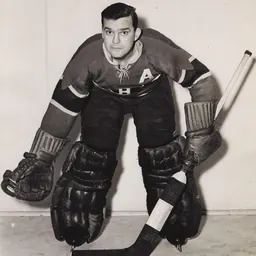





Related people
Same field, nearest in time
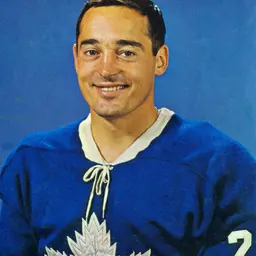

Contemporaries
People whose lives overlapped Jacques Plante's




Frequently asked questions
Who was Jacques Plante?
Canadian ice hockey player (1929–1986)
When was Jacques Plante born?
Jacques Plante was born on 17 January 1929 in Notre-Dame-du-Mont-Carmel.
When did Jacques Plante die?
Jacques Plante died on 27 February 1986 in Geneva.
What was Jacques Plante's occupation?
Jacques Plante was an ice hockey player, ice hockey coach and athlete.
What nationality was Jacques Plante?
Jacques Plante was Canadian.
Sources & further reading
Cite this page
APA: Biography.guide. (2026). Jacques Plante. https://biography.guide/jacques-plante/
MLA: "Jacques Plante." Biography.guide, https://biography.guide/jacques-plante/.
Chicago: "Jacques Plante." Biography.guide. https://biography.guide/jacques-plante/.
Data last updated: 2026-09-20 · Spot an error? Report a correction.
Page generated 2026-09-27 05:34 UTC