
About Jacques Lacornée
Lived 1779 – 1856 (aged 76–77). Jacques Lacornée was a French architect.
Jacques Lacornée (20 April 1779 – 5 February 1856) was a French architect. He is best known for his work on the Palais d'Orsay and his association with the building for the French Ministry of Foreign Affairs ("Quai d'Orsay").
Early life and education Lacornée was born in Bordeaux on 20 April 1779. His father, Pierre Lacornée, was a stonemason. He began his artistic studies in Bordeaux, studying mathematics under Jacques-François Lescan, drawing under Pierre Lacour, and architecture under . During this time, he won first prizes in drawing from casts and live models. He moved to Paris in 1800 and entered the workshop of the government architect Jacques-Charles Bonnard.
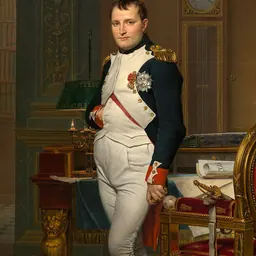
In 1802, he entered the École des Beaux-Arts (then the École spéciale d'architecture). He finished his studies there in 1808. During his time as a student, he won a departmental prize and several medals for projects including a health house, an arsenal, and a prytanée. He was even recommended as a promising student to Napoleon during the Emperor's visit to the school. Although he competed twice for the Prix de Rome, he did not win (got Médaille d'encouragement in 1810); his tendencies toward Renaissance architecture clashed with the Academy's strict preference for Roman antiquity.
Career Lacornée entered practical architecture in 1810 when he was placed in charge of the initial inspections for the Palais des Relations extérieures (unbuilt, the project eventually turned into Palais d'Orsay). From 1810 to 1818, he served as the first inspector of constructions for the Quai d'Orsay building, executing its layout, plans, and construction details. Over the next several years, he built private houses in Paris, including on the Rue du Bac and the , where his Renaissance-inspired style began to emerge.
Following the death of his teacher Bonnard in 1818, Lacornée was appointed by the Duc de Richelieu to take over the construction of the Palais d'Orsay. That same year, he was appointed inspector general of buildings for the administration of indirect contributions. The Palais d'Orsay, originally started under Napoleon for foreign affairs, had its purpose changed by Louis Philippe I, and Lacornée finally completed the building in 1840 to house the Conseil d'État and the Cour des Comptes.
Throughout the 1820s, Lacornée managed numerous prominent commissions. Between 1820 and 1825, he built houses in the Bois de Boulogne, in Auteuil, and in Bapeaume (in the Seine-Inférieure department). He completed the Château de Sassetot (referred to in some sources as Jasselot) in Seine-Inférieure, repaired the Château de Saint-Just in the Eure department(property of the Duke of Albufera), and prepared the Hôtel Thellusson for the Russian ambassador.
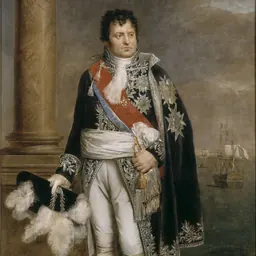
He also built, expanded, or inspected multiple tobacco manufacturing facilities and warehouses across France, including the in Paris (1827) and other establishments (some while acting as an architect for the Indirect Tax Administration) in Lille, Havre, Lyon, Bordeaux, Strasbourg, Saint-Pol (or Saint-Lô), and Toulouse. Additionally, he designed the tomb of Denis Decrès at Père Lachaise Cemetery.
Lacornée is also closely linked to the design of the Ministry of Foreign Affairs building at 37 Quai d'Orsay (the Hôtel du ministre des Affaires étrangères). A gilded floor plan of the ministry is featured on the side of his tomb.
Personal life and honors
During his career, Lacornée lived and worked at 36 Rue de Lille in Paris. He was married to Hélène Marcion, who was born in Paris on 8 September 1792 and died on 24 July 1855. For his architectural achievements, he was made a Knight of the Legion of Honour in 1840, and he was promoted to the rank of Officer in 1854. He died in Paris on 5 February 1856 at his home on the Rue de Vaugirard. He was buried alongside his wife in the .
Lacornée became a member of Société centrale des architectes français (founded in 1840, now Académie d'architecture) in 1844.
Don’t just read it —
keep it.
Full-length biographies made to live with: read them, listen on the way to work, watch them tonight.
- E-book
- Audio
- Video
Instant download · yours to keep · every purchase keeps this site free
Important facts
People in Jacques Lacornée's life
Named in this biography and alive at the same time

Related people
Same field, nearest in time


Contemporaries
People whose lives overlapped Jacques Lacornée's




Frequently asked questions
Who was Jacques Lacornée?
French architect
When was Jacques Lacornée born?
Jacques Lacornée was born in 1779.
When did Jacques Lacornée die?
Jacques Lacornée died in 1856.
What was Jacques Lacornée's occupation?
Jacques Lacornée was an architect.
What nationality was Jacques Lacornée?
Jacques Lacornée was French.
Sources & further reading
Cite this page
APA: Biography.guide. (2026). Jacques Lacornée. https://biography.guide/jacques-lacornee/
MLA: "Jacques Lacornée." Biography.guide, https://biography.guide/jacques-lacornee/.
Chicago: "Jacques Lacornée." Biography.guide. https://biography.guide/jacques-lacornee/.
Data last updated: 2026-09-20 · Spot an error? Report a correction.
Page generated 2026-09-27 04:58 UTC