
About Jacques Chenevière
Lived 1886 – 1976 (aged 90). Jacques Chenevière was a Swiss writer and librettist.
Jacques-Louis-Edmond Chenevière (17 April 1886, Paris – 22 April 1976, Bellevue GE, Switzerland), commonly known as Jacques Chenevière, was a Swiss poet, librettist and novelist from a Patrician family in Geneva. For more than sixty years, he also served as a humanitarian official in top-positions of management and organisation at the International Committee of the Red Cross (ICRC).
The award-winning author, whose father Adolphe Chenevière (1855–1917) was a critically acclaimed man of letters as well, wrote in French and became most famous for his works of psychological fiction. The external contexts of the plots were mostly set in Paris, Geneva or Provence. His Œuvre comprises ten novels, two books of poems as well as several essays, lyrics and novellas. He was widely considered to be one of the most important representatives of literature from Romandy in the 20th century.
Shortly after the beginning of the First World War, Chenevière took up a leading role in the International Prisoners-of-War Agency (IPWA). In 1919 he was elected as a member of the ICRC and in 1923 became its director-general. During the Second World War he was appointed the director of the Central Information Agency on Prisoners-of-War as well as of the Central Bureau of the ICRC. In 1945, he rose to be its vice-president for the first time. Within the ICRC leadership he belonged to the legalistic group which prevented a public denounciation of the Nazi-terror regime. In recent years, the ICRC has recognised that its silence about the holocaust was «the greatest failure» in its history.
Chenevière remained a regular member of the ICRC for half a century, which made him the one with the second-longest term of office in the history of the organisation. Upon his retirement in 1969 he was made an honorary member. A decade earlier he had been appointed as the first ever honorary vice-president of the ICRC.
Life
Family background Jean-Jacques-Caton Chenevière, ca. 1870, from the collections of the Centre d’iconographie de la Bibliothèque de Genève (BGE) Chenevière's paternal family originated from L’Arbresle near Lyon. Since many of his forefathers were Protestant pastors, it may be assumed that they like many other Huguenots fled to Geneva because of the French Wars of Religion. In 1631, the Chenevières obtained Genevan citizenship. Their descendants are thus officially amongst the ten oldest families of the city.
Jacques Chenevière's grandfather Arthur Chenevière (1822–1908) worked at the Banque Bonna & Cie which became what is today the private bank Lombard Odier & Co, one of the biggest players in the Swiss financial sector. In 1868, he founded the Banque Chenevière & Cie and later also became a board member of BNP Paribas and other banks. At the same time, he was the controversial leader of the Parti indépendant («Independent Party»). During a feud about election results in 1864 some of his supporters even had a bloody shoot-out in the city centre with followers of a rival party. Between 1864 and 1871, he led the treasury of the canton of Geneva, before serving as a member of the Grand Council of Geneva until 1888 and as a member of the National Council from 1878 until 1884. Arthur Chenevière was married to Susanne-Firmine Munier, a daughter of the influential theologian David-François Munier (1798-1872). A street in Cologny, one of the wealthiest municipalities in Switzerland, is named after the couple. The plot of land, where the Villa Chenevière used to be, is nowadays the seat of the World Economic Forum (WEF).
While two sons of Arthur and Susanne-Firmine became bankers as well and their daughter married the founder of the Union Bank (later UBS), their brother Adolphe did not pursue his career as an advocate but instead became a novelist and essayist. The four siblings thus embodied the development of their Patrician class, which «turned to banking and philanthropic activities at the end of the 19th century, after losing control of the major public offices in Geneva.» Adolphe moved to Paris around 1880, where he worked as a literary critic at the prestigious Revue des Deux Mondes, which is today the oldest still existing cultural magazine in Europe. Jacques’ mother Blanche (1865–1911), née Lugol, originated from an area close to Nîmes, where her family owned the wine-growing estate of Campuget. In his youth, Jacques Chenevière spent much of his holidays in Provence and Languedoc, which evidently inspired his literary works. The critic Charlotte König-von Dach argued that Jacques' mother gave him «the sparkling verve, the luster, and the mobility of poetic intuition as gifts from the Midi de la France, in contrast to the heavier calvinist-protestant blood of Geneva». Jacques Chenevière grew up as a de facto single-child, since his younger brother André Alfred died in 1888 shortly after birth.
Education and early career
Chenevière spent his childhood and youth in Paris during the cultural heyday of the Belle Époque. Thanks to his privileged family background he had access to gatherings of artists like the famous salon of the painter Madeleine Lemaire (1845–1928). At a young age already he thus had personal encounters with luminaries like novelist Marcel Proust (1871–1922), the composer Reynaldo Hahn (1874–1947) and the stage actress Sarah Bernhardt (1844–1923). Meanwhile, he received his secondary school education at the elitist Lycées Carnot and Condorcet. He subsequently graduated from Sorbonne Université with a degree in humanities.
When Chenevière's mother suddenly died in late 1911 from an embolism at the age of 46 years, he increasingly turned towards Geneva, which he only knew from the holidays he spent there. the founder of Dalcroze eurhythmics. Chenevière wrote the lyrics for the chorus of Jaques-Dalcroze's miming piece Eco e Narciso («Echo and Narcissus»), which premiered in 1912 at Jaques-Dalcroze's newly opened Hellerau Festival House near Dresden.
In 1913, Chenevière published his second book of poems: La chambre et le jardin («The chamber and the garden»). Many of the poems were also syndicated to the Revue de Paris, the Revue des Deux Mondes, for which his father worked, and to Swiss papers. In early 1914, Chenevière and his father moved from Paris to Geneva. He was joined by his father. The Austrian writer and pacifist Stefan Zweig described the situation during those early days at the agency as follows:«Hardly had the first blows been struck when cries of anguish from all lands began to be heard in Switzerland. Thousands who were without news of fathers, husbands, and sons in the battlefields, stretched despairing arms into the void. By hundreds, by thousands, by tens of thousands, letters and telegrams poured into the little House of the Red Cross in Geneva, the only international rallying point that still remained. Isolated, like stormy petrels, came the first inquiries for missing relatives; then these inquiries themselves became a storm. The letters arrived in sackfuls. Nothing had been prepared for dealing with such an inundation of misery. The Red Cross had no space, no organization, no system, and above all no helpers.» However, by the end of 1914 there were already some 1,200 volunteers working at the IPWA which was then housed inside the Musée Rath. Amongst them was the French novelist and pacifist Romain Rolland, who was given his initial tasks by Chenevière. Upon the suggestion of his co-director Cramer they established a system, which could cope with the flood of incoming information through index cards and catalogues.
At the same time, Chenevière established himself further in the cultural life of Geneva. Most notably, he joined the child psychologist Édouard Claparède (1873–1940) and his brother-in-law Auguste de Morsier (1864–1923), a prominent proponent of women's suffrage, to collect funds for Jaques-Dalcroze who was thus able to found his own institute in October 1915. The academy still exists today in the Eaux-Vives quarter of Geneva in the building which was purchased at the time from those donations.
Moreover, Chenevière continued to work on his own literary career: in 1917, his first novel was published under the title L’île déserte («The lonely island») by Éditions Bernard Grasset, one of the most important literary publishing companies in France. The plot about a Parisian man and a woman who get stranded on a polynesian atoll and gradually overcome their mutual resentments, was a scandalous affront for large swaths of the Calvinist-puritan upper-class. It is a striking example of Chenevière's «biting satire of the Genevan society which was imprisoned in its corset of moralism».
At the end of 1917, just a few months after Chenevière's father Adolphe had died at the age of 63 years,
Between the World Wars
In November 1919, the ICRC assembly voted for Chenevière to become its member. He subsequently worked in several commissions of the organisation, e.g. the one which decided upon the foreign missions of delegates and those which conducted negotiations with the newly founded League of National Red Cross and Red Crescent Societies. The bride, who was thirteen years younger than the groom, had graduated in the previous year with a diploma from the Institut Jaques-Dalcroze. The couple moved into the luxurious Villa Hauterive («High Shore») in Cologny. The estate had originally been owned by the Turrettini family of prominent theologians. Before the Chenevières it had hosted other famous tenants, amongst them the Austrian-Hungarian composer Franz Liszt (1811–1886), the Swiss landscape painter Barthélemy Menn (1815–1893) and the French landscape painter Jean-Baptiste Camille Corot (1796–1875), as well as the French artillery officer Alfred Dreyfus (1859–1935) after his acquittal in the Dreyfus affair.
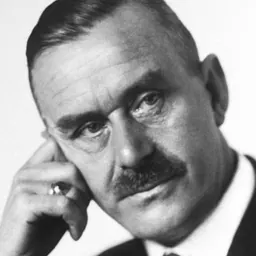
In 1923, ICRC president Ador – who was Chenevière's nextdoor neighbour in Cologny he especially promoted the revival of literary exchanges between the German- and French-speaking worlds. In this context they managed, for instance, to make the works by Thomas Mann and Rainer Maria Rilke socially acceptable in France again. The monthly magazine was published until 1930.
In May 1930, the Swiss Schiller Foundation awarded Chenevière for his novel Les messagers inutiles («The useless messengers»). At the same time, he was nominated by the Federal Council to serve as its representative on the board of that foundation, which he remained a member of for a quarter of a century.
In the years before the Second World War, Chenevière increased his activities at the ICRC. On the one hand side, he dealt with issues surrounding humanitarian assistance during the Spanish Civil War (1936–1939).
World War II
On 1 September 1939 – the very day of the invasion of Poland by Nazi Germany and the Soviet Union – the Revue de Paris published an essay by Chenevière on the occasion of the 75th anniversary of the first Geneva Convention in which he stressed that the ICRC and the whole Red Cross and Red Crescent Movement was ready and prepared for humanitarian interventions with regard to the lingering conflicts. Two weeks later, the ICRC opened the Central Agency for Prisoners of War. As the successor of the IPWA from WWI its mandate was based on the 1929 Geneva Convention. The ICRC leadership appointed Chenevière as its director.
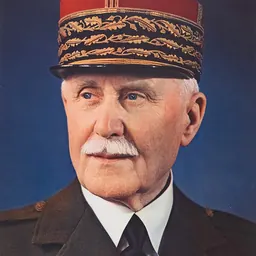
In November 1941, Chenevière travelled to Vichy, where he discussed the situation of the French POWs in the German Reich with Marshal Philippe Pétain. At the same time, Chenevière received a first report about the so-called Final Solution, the genocide of European Jews by Nazi Germany and its collaborators. The Swiss ambassador in Bucharest, René de Weck (1887–1950), who as a romand poet and novelist was an old friend of Chenevière's, sent a private letter to him with an alarming message:«Dear Chenevière, As I am sure you are aware, the Jews of Romania have for some time, particularly since the country's declaration of war against the USSR, been the object of systematic persecution, compared to which the massacres in Armenia which aroused such indignation in Europe at the dawn of our century seem as harmless as children's games. [..] inhuman acts of violence, despoilments of every kind, deportations, executions and massacres which have taken place.» De Weck strongly suggested that the ICRC send a delegate under the pretext of another mission to Romania where he could then gather relevant information. De Weck was certain that thanks to the reputation of the ICRC the Romanian government would not ignore the resulting recommendations: «Thousands of lives now under threat could thus be saved.» However, despite the urging, Chenevière only replied more than a month later that «we do not feel able to resolve the question which you put to me». In the same year, he took over the editorship of the book review page at the Journal de Genève, a liberal daily newspaper, which had contributed to the founding of the ICRC by publishing a report by Dunant about the Battle of Solferino. He kept that position for about a decade.
By the autumn of 1942 the ICRC had received more reports about the ongoing holocaust. In the plenary session on 14 October a clear majority of its members – led by Marguerite Frick-Cramer, Suzanne Ferrière and Lucie Odier – supported as the ultimate intervention a public denouncation of the genocide. However, the top-leaders around Burckhardt, who chaired the meeting since president Huber had fallen ill, and Philipp Etter, who was not only a member but also the powerful President of the Confederation, rejected this proposal steadfastly. Chenevière sided with his friend Burckhardt, (Etter was widely considered to be a disciple of Gonzague de Reynold). The legalists argued that an open protest against the Nazi-terror regime would jeopardise the charitable activities of the ICRC. Chenevière warned on several other occasions as well about the consequences of any extension of its protection efforts and insisted that the ICRC should stick to its traditional operations, especially taking care of POWs. While the plot does not refer directly to the catastrophes of the Second World War,
In late 1944, the Norwegian Nobel Committee announced that it awarded the ICRC its second Nobel Peace Prize after 1917. As in World War I, it was the only recipient during the war years. The jury in Oslo credited the ICRC with its Central Agency, led by Chenevière, for «the great work it has performed during the war on behalf of humanity.»
Post-WWII
In June 1946, Chenevière published a lengthy article in the Revue de Paris about the ICRC activities during WWII. Towards the end of the essay he also dealt with the question why the ICRC remained silent about the Shoa. However, he deliberately failed to mention the fact that his friend de Weck had suggested to him in 1941 a promising way to obtain independent information:«People have expressed surprise that the ICRC did not protest publicly while there was still time. But what could it have protested about? Its own powerlessness? But all the states that were signatories to the Conventions knew the reason and yet failed to make any protest themselves. Could it have protested against the brutal treatment the deportees claimed they were suffering from? But the ICRC had no way of confirming, even partially, such statements. Besides, experience proved that public protests by the ICRC not supported by observations of its own were fruitless, doing more harm than good. In the absence of hard proof they were taken by the accused country as evidence of a priori bias, and put in jeopardy the other activities which the Red Cross was duty bound under the Conventions to carry out.
Protest can be the last resort of the weak. Or they can be a quick way of salving our conscience and giving us the illusion of having done something. Even then, anyone indulging in them needs to be totally free of obligations that imply effective action. Some will always say 'the public must be told'. But that often amounts to a call for reprisals, and the Red Cross must never take the risk of stoking a fire that is ever ready to flare up. So it was in silence, though with all its strength, that the ICRC laboured on behalf of the deportees.
The afore-mentioned is the description of a tragic problem and not an act of self-justification.» and henceforth every three years to honour artists who had increased the reputation of Geneva.
Upon the occasion of the 30th anniversary of his ICRC membership, the ICRC assembly awarded Chenevière at the end of 1949 the gold medal of the organisation. At the same time, Chenevière remained active at the top of the organisation as a member of the presidential council, as chairman of the commission for external affairs and from 1950 until 1952 once more as vice-president. He thus continued to participate both in daily politics and strategic decisions, especially with regard to the humanitarian crises in Algeria, Greece, Indochina, Indonesia, Korea, Palestine / Israel, Syria, and Tunisia.
In early 1955, Chenevière retired from the board of the Swiss Schiller Foundation, Chenevière's old friend Two years later, Chenevière received the award of the foundation for his own complete works.
In late 1959, upon the 40th anniversary of Chenevière's membership, the ICRC assembly appointed him honorary vice-president. The title was created especially for him. In 1968, the Académie française once again honoured Chenevière, almost six decades after awarding him as one of the best newcomers in poetry, with the Prix du Rayonnement de la langue et de la littérature françaises.
In November 1969, Chenevière retired for age reasons as ICRC member after half a century. In the history of the organisation only Ador served longer than him. At the same time, the ICRC assembly appointed its honorary vice-president also honorary member. ICRC president Marcel Naville praised Chenevière's constant commitment as well as his«unique discernment» The ICRC published in its journal Revue internationale de la Croix-Rouge an encomium that borrowed heavily from the apologia which Chenevière published in 1946, arguing that the ICRC could only work silently behind the scenes and try to convince the actors so that it would not jeoparidise its position as a neutral mediator. Since the public apology of its president Cornelio Sommaruga (* 1932) in 1995, the ICRC had acknowledged that its silence about the holocaust was «the greatest failure» in its history.
In 1991, Chenevière's widow Marguerite died at the age of 92 years.
In 1992, Chenevière's masterpiece Les captives was reissued. In the same year, the Fondation Jacques et Marguerite Chenevière was established in Geneva. Its stated purpose was to spend the income from its capital partly or completely on supporting recognised institutions which assist elderly people, especially women, in need.
The graves of Chenevière and his wife Marguerite, who did not have children, of Marguerite's mother Marie (1864–1957) as well as those of his parents Adolphe and Blanche at the cemetery of Collonge-Bellerive are scheduled to be levelled in 2022.
List of works
Autobiography Retours et images, Éditions Rencontre, Lausanne 1966
Biographies and essays In French
La comtesse de Ségur, née Rostopchine, Gallimard, Paris 1933 Campagne Genevoise, Éditions du Griffon, Neuchâtel 1950 Eloge de Gonzague de Reynold : lauréat du grand prix de la Fondation Schiller suisse, Zurich 1955 In German
Laudatio für Gonzague de Reynold, gesprochen bei der Übergabe des grossen Preises der Schweizerischen Schillerstiftung im Rathaus Zürich am 5. VI. 1955, Zürich 1955 Genfer Landschaft, Éditions du Griffon, Neuchâtel 1961
In English
Countryside Around Geneva, Éditions du Griffon, Neuchâtel 1963
Books of poems Les beaux jours, Éditions Alphonse Lemerre, Paris 1909 La chambre et le jardin, Éditions Alphonse Lemerre, Paris 1913
Libretti La forêt bleue, A. Durand, Paris 1911 Les premiers souvenirs, Impr. de la Tribune de Genève, Geneva 1918 La fête de la jeunesse et de la joie, Foetisch Frères, Lausanne 1922
Novels and novellas In French L’île déserte, Éditions Larousse, Paris 1917 Jouvence; ou, La chimère, Éditions Grasset, Paris 1922 Innocences, Éditions Grasset, Paris 1924 Les messagers inutiles, Éditions Grasset, Paris 1926 Daphné, Éditions du Sagittaire, Paris 1927 La jeune fille de neige, Calmann-Lévy, Paris 1929 Les aveux complets, Calmann-Lévy, Paris 1931 Connais ton cœur, Calmann-Lévy, Paris 1935 Valet, dames, roi, Calmann-Lévy, Paris 1938 Les captives, Éditions du Milieu du Monde et la Guilde du Livre, Geneva 1943 Le bouquet de la mariée, R. Julliard, Paris 1955 Daphné ou, L’école des sentiments, Éditions Rencontre, Lausanne 1969 In German
Die einsame Insel, Verlag Theodor Knaur, Berlin 1927 Bube, Damen, König: Lehrjahre der Liebe, Fretz & Wasmuth, Zürich 1939 Erkenne Dein Herz, Christian Wegner Verlag, Hamburg 1939 und 1948 Herbe Frucht, Christian Wegner Verlag, Hamburg 1949
Don’t just read it —
keep it.
Full-length biographies made to live with: read them, listen on the way to work, watch them tonight.
- E-book
- Audio
- Video
Instant download · yours to keep · every purchase keeps this site free
Important facts
People in Jacques Chenevière's life
Named in this biography and alive at the same time




Related people
Same field, nearest in time





Contemporaries
People whose lives overlapped Jacques Chenevière's






Frequently asked questions
Who was Jacques Chenevière?
Swiss writer and humanitarian activist (1886-1976)
When was Jacques Chenevière born?
Jacques Chenevière was born on 17 April 1886 in Paris.
When did Jacques Chenevière die?
Jacques Chenevière died on 22 April 1976 in Bellevue.
What was Jacques Chenevière's occupation?
Jacques Chenevière was a writer and librettist.
What nationality was Jacques Chenevière?
Jacques Chenevière was Swiss.
Sources & further reading
· Wikipedia: Jacques Chenevière
Cite this page
APA: Biography.guide. (2026). Jacques Chenevière. https://biography.guide/jacques-cheneviere/
MLA: "Jacques Chenevière." Biography.guide, https://biography.guide/jacques-cheneviere/.
Chicago: "Jacques Chenevière." Biography.guide. https://biography.guide/jacques-cheneviere/.
Data last updated: 2026-09-26 · Spot an error? Report a correction.
Page generated 2026-09-27 05:15 UTC