
About Jacques Abeille
Lived 1942 – 2022 (aged 79). Jacques Abeille was a French novelist, professor, painter, poet and writer.
Jacques Abeille (; March 17, 1942 – January 23, 2022) was a French writer. Influenced by the surrealist movement, in which he participated in the 1960s and 1970s, he is best known for the novel cycle set in an imaginary universe that started with the publication of. He has also written several collections of poetry and short stories, and is the author of erotic literature, published in part under the pseudonym Léo Barthe.
Jacques Abeille was born on March 17, 1942, in Lyon. An illegitimate child, he was raised by his paternal uncle after his father's death in 1944. During the 1960s he was part of certain circles in Bordeaux that were related to the surrealist movement. In his early 20s he discovered that he suffered from color blindness and such incapacity prevented him from becoming a painter like he originally intended since childhood. He then decided to become a writer instead, at one point expressing "I am a writer on the basis of [being] a failed painter."
Abeille started his literary career in 1971 with the publication of his first erotic fiction, , which he published under the pseudonym "Bartleby." He published various erotic stories throughout his life using different pseudonyms.
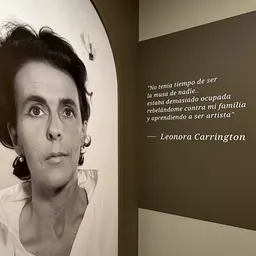
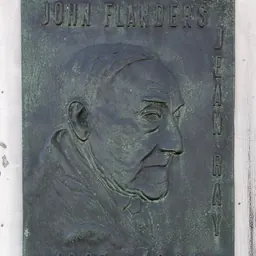
In 1982, Abeille published the novel , which would become the first installment in the novel cycle , the work for which he is known for in France. This was followed by in 1986 and seven other books in the series in the following years (the last one, , being released in 2020). He has named a number of influences in his overall writing and storytelling including Gérard de Nerval, Blaise Pascal, Leonora Carrington, Jean Ray, Gustav Meyrink, and Julien Gracq.
Abeille originally wanted to study ethnology but he mentioned his economic conditions and the state of the field at the time as the reasons for which he chose psychology instead and in turn leaving that for philosophy. He was a teaching assistant of philosophy for ten years and later passed the competitive agrégation exam in plastic arts, earning admission to full teaching status. His teaching career ended in 2002.
In 2010 Abeille received a lifetime achievement award from the Wepler Prize for his work, as well as the 2015 Jean-Arp Prize for French language literature and the 2021 Grand prix de l'Imaginaire.
Early life Jacques Abeille was born on March 17, 1942, in the 6th arrondissement of Lyon, the child of an illegitimate relationship. His father, Valentin Abeille (1907-1944) - involved in the French Resistance and opposed to the Vichy regime - was the grandson of a senator sub-prefect. In order to recognize his son (illegal at the time), Valentin Abeille had a family certificate forged by the Resistance network to which he belonged.
After his father's death in 1944, Valentin Abeille's twin brother took in Jacques, raising him "in many ways [...] like the ghost of my father" in the words of the writer.
Once the war was over, Jacques Abeille accompanied his uncle, a high civil servant, to his postings.
After having spent some time in Guadeloupe, the Abeilles settled in Bordeaux in 1959. The shock of the contrast between this city and the seaside environment where he had lived before, associated with literary reminiscences of Kafka's and especially Gustav Meyrink's Prague, was key to the creation of Terrèbre, the capital of the empire of the Contrées, as it appears in (1986).
In October 1969, three years after the death of André Breton, Jean Schuster declared the end of "historical" Surrealism in "Le Quatrième chant", published in the newspaper Le Monde. Jacques Abeille was one of those who refused to dissolve the group, and he joined the editorial committee of the Bulletin de liaison surréaliste, which was formed around Micheline and Vincent Bounoure and Jean-Louis Bédouin. Jacques Abeille wrote a total of four articles for the ten issues of the journal published between 1970 and 1976.
However, his activity in the surrealist movement left few traces: while he is mentioned in the index of Gérard Durozoi's 1997 Histoire du mouvement surréaliste, as well as in Robert Sabatier's L'Histoire de la poésie française du xxe siècle, where he is mentioned as a surrealist author, he is, on the other hand, absent from the Dictionnaire du surréalisme et de ses environs edited by Adam Biro and René Passeron (1985), as well as from the database of the Mélusine site of the Centre de recherches sur le surréalisme of the University of Paris III.
From painting to literature Abeille explains having felt the "throbbing desire to be an artist" from childhood, a desire thwarted by "a confused, indecisive and anxious shyness", an incapacity and vague obstacle. He finds the key to unlock it at the end of adolescence, when at the age of twenty-one or twenty-two, while practicing psychology, Abeille discovers he is color blind. "It was a great crisis and an immense sorrow" explained the author in an interview in 2007, In the course of writing, noting the absence of women in the tale, which seemed incongruous for a text dealing with artistic inspiration, Abeille came to imagine a story taking place in statuary gardens, from which women, cloistered, are physically excluded, kept as they are in reserved quarters and inaccessible to men or relegated to hotels that are in reality brothels.
Les Jardins statuaires was to be published by Régine Desforges, with whom the publishing contract had been signed. But the bankruptcy of the publishing house L'Or du temps prevented it. Abeille then entrusts the typescript of the novel to Julien Gracq, who then gives it to José Corti, historical editor of surrealist publications. But the typescript seems to have been lost and never reaches Corti's hands. It is finally Bernard Noël who, several years later, discovers another typed copy of the novel and undertakes to publish it at Flammarion, where he is then editor. But a delay in production of the book hinders its release, which also suffers from the departure of Bernard Noël from his position in 1983. Various other events delay publication of the novel, which inaugurates the Cycle des Contrées, acquiring the status of a cursed novel.
Abeille nevertheless publishes in 1986, still with Flammarion, a second novel: Le Veilleur du jour. Becoming a novelistic cycle, this second instalment is the counterpart of Jardins statuaires: the action of the two novels is more or less simultaneous, and that of the last one is situated at the other end of the empire imagined by Abeille, in the capital city of Terrèbre. A third novel, the first draft of which dates from 1977, evokes the period following the barbarian invasion, in the expectation of which the inhabitants of Terrèbre as well as those of the statuary gardens live. Initially titled Un homme plein de misère, in reference to Pascal's famous formula, After having considered making it the first volume of another novel project entitled "Le Cycle des chambres", La Clef des ombres was finally reintegrated into the "Cycle des contrées" when it was reissued by the Tripode publishing house in 2020, the year in which La Vie de l'explorateur perdu was also published, the last novel of the Cycle des contrées in which Brice Cléton, the protagonist of La Clef des ombres, reappears.
The cycle also includes three collections of short stories: Les Voyages du fils (published for the first time in 2008 and in an expanded edition in 2016), Les Chroniques scandaleuses de Terrèbre (1995), a collection of erotic short stories signed by Léo Barthe and featuring the characters of Le Veilleur du jour, and finally Les Carnets de l'explorateur perdu, published for the first time in 1993 and then in 2020 in an expanded edition. In addition, two shorter texts, "La Grande danse de la réconciliation", whose narrator is the same as that of the short stories in Voyages du fils (2016) and which was then included in the new edition of Les Carnets de l'explorateur perdu, as well as Les Mers perdues (2010) are included in the cycle.
Late recognition The work of Abeille has long remained little-known. The author even called himself an obscure writer, This situation changed in 2010, when publisher Attila undertook to reissue the novels of the cycle and, struck by the proximity they detected between Abeille and the Belgian cartoonist and scenographer François Schuiten, the publishers contacted him and offered to illustrate the cover. After reading the novel, Schuiten accepted and even proposed that Abeille write a text to accompany a series of unpublished drawings. This collaboration gave birth to Les Mers perdues, considered by Abeille as a coda to the Cycle des Contrées. It is the simultaneous publication of the two works, the one elaborated with Schuiten and the reedition of Les Jardins statuaires, which according to Abeille allowed his work to emerge from the obscurity in which it had been confined until then. and in 2021 by the Grand prix de l'Imaginaire.
Professional career After having begun studies in ethnology, Jacques Abeille pursued studies in psychology and then in philosophy, a subject that he taught for ten years as a teaching assistant, and later passed the competitive agrégation exam in plastic arts,
Writing On the edge of the French aesthetic and authorial tradition In his speech written in 2015 on the occasion of the Jean-Arp Prize for French Language Literature, Abeille specified what, in his opinion, differentiates his aesthetic from what he considered dominant in France since the classical period, exemplarily embodied by Nicolas Boileau's L'Art poétique: the fundamental value given to verisimilitude - of which propriety is a corollary - is assimilated to a censorship rejected by Abeille, noting that this work is situated outside of all verisimilitude, places its action in an indeterminate time and does not even care to maintain a unity of action. This refusal to be "on the same level" as Abeille is not a reason for the author to be in the same position. According to Abeille, the refusal to register "on the ground of reality" and to mark "against the dictatorship of the verisimilitude and the novelistic canvas" explain why his books "took so much time before collecting a weak echo." Recalling a remark by Gaëtan Picon on this subject, Abeille explains in a 2013 interview that works of pure imagination are only well received in France if written by foreign authors, such as Alice in Wonderland (1865) by Lewis Carroll or Gulliver's Travels (1726) by Jonathan Swift.
Stylistically, Abeille's absence of litotes, favored by classical authors, and the overabundant presence of redundancy, banished by these same writers, signal another point of divergence from what Abeille calls "the dominant ideology in France."
Le Cycle des contrées
(1982) (1986) (1991) (2008) (2008) (2010) (2011) (2011) (2016) (2020)
Don’t just read it —
keep it.
Full-length biographies made to live with: read them, listen on the way to work, watch them tonight.
- E-book
- Audio
- Video
Instant download · yours to keep · every purchase keeps this site free
Important facts
People in Jacques Abeille's life
Named in this biography and alive at the same time




Related people
Same field, nearest in time

Contemporaries
People whose lives overlapped Jacques Abeille's



Frequently asked questions
Who was Jacques Abeille?
French writer
When was Jacques Abeille born?
Jacques Abeille was born on 17 March 1942 in 6th arrondissement of Lyon.
When did Jacques Abeille die?
Jacques Abeille died on 23 January 2022 in Libourne.
What was Jacques Abeille's occupation?
Jacques Abeille was a novelist, professor, painter, poet and writer.
What nationality was Jacques Abeille?
Jacques Abeille was French.
Sources & further reading
Cite this page
APA: Biography.guide. (2026). Jacques Abeille. https://biography.guide/jacques-abeille/
MLA: "Jacques Abeille." Biography.guide, https://biography.guide/jacques-abeille/.
Chicago: "Jacques Abeille." Biography.guide. https://biography.guide/jacques-abeille/.
Data last updated: 2026-09-20 · Spot an error? Report a correction.
Page generated 2026-09-27 05:05 UTC