
About Jacopo Sadoleto
Lived 1477 – 1547 (aged 70). Jacopo Sadoleto was a catholic priest and catholic bishop.
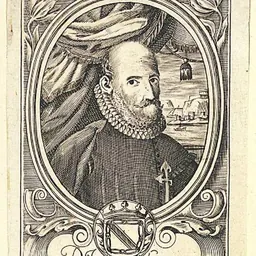
Jacopo Sadoleto (July 12, 1477 – October 18, 1547) was an Italian Catholic cardinal and counterreformer noted for his correspondence with and opposition to John Calvin.
Life He was born at Modena in 1477, the son of a noted jurist, he acquired reputation as a Neo-Latin poet, his best-known piece being one on the group of Laocoön. In Rome, he obtained the patronage of Cardinal Oliviero Carafa and adopted the ecclesiastical career. Pope Leo X chose him as his secretary along with Pietro Bembo, and in 1517 made him bishop of Carpentras (Provence.)
A faithful servant of the papacy in many negotiations under successive popes, especially as a peacemaker, his major aim was to win back the Protestants by peaceful persuasion and by putting Catholic doctrine in a conciliatory form. Sadoleto saw little of his diocese until the death of his master in 1522. Pope Clement VII recalled him to Rome a year later. Leaving Rome a few months before it was sacked, he diligently ruled his diocese, where he was greatly loved. Pope Paul III recalled him once more and made cardinal in 1536, given the titular church of San Callisto.
In 1539 Cardinal Sadoleto wrote to the people of Geneva, urging them to return to the Catholic faith. John Calvin had been asked to leave Geneva the previous year, and was living in Strasbourg, but the Genevans still asked Calvin to write a response to Sadoleto, which he did.
In 1541, Sadoleto engaged with the Vaudois (Waldensians) in his dioscese after the Parlement of Provence issued the "Arrêt de Mérindol". He found that "it seems to me, that there are many words in [your Articles], which might well be changed without prejudice to your confession," and their anti-clerical rhetoric could be toned down, but that otherwise the allegations of violent heresy made against them could not be sustained. This stalled the effort at persecution until 1545, when the French king finally ordered what became the Mérindol massacre.
Sadoleto died in Rome in 1547, aged 70.
Works Sadoleto's collected works appeared at Mainz in 1607, and include, besides his theological-ironical pieces, a collection of Epistles, a treatise on education (first published in 1533), and the Phaedrus, a defence of philosophy, written in 1538. The best collection is that published at Verona (1737–1738); it includes the life by Fiordibello.
His chief work, a Commentary on Romans, meant as an antidote against the new Protestant doctrines, gave great offence at Rome and Paris:
Don’t just read it —
keep it.
Full-length biographies made to live with: read them, listen on the way to work, watch them tonight.
- E-book
- Audio
- Video
Instant download · yours to keep · every purchase keeps this site free
Important facts
People in Jacopo Sadoleto's life
Named in this biography and alive at the same time


Related people
Same field, nearest in time


Contemporaries
People whose lives overlapped Jacopo Sadoleto's

Frequently asked questions
Who was Jacopo Sadoleto?
Catholic cardinal (1477-1547)
When was Jacopo Sadoleto born?
Jacopo Sadoleto was born on 12 July 1477 in Modena.
When did Jacopo Sadoleto die?
Jacopo Sadoleto died on 18 October 1547 in Rome.
What was Jacopo Sadoleto's occupation?
Jacopo Sadoleto was a catholic priest and catholic bishop.
Sources & further reading
Cite this page
APA: Biography.guide. (2026). Jacopo Sadoleto. https://biography.guide/jacopo-sadoleto/
MLA: "Jacopo Sadoleto." Biography.guide, https://biography.guide/jacopo-sadoleto/.
Chicago: "Jacopo Sadoleto." Biography.guide. https://biography.guide/jacopo-sadoleto/.
Data last updated: 2026-09-20 · Spot an error? Report a correction.
Page generated 2026-09-27 05:30 UTC