
About Jacob Saphir
Lived 1822 – 1885 (aged 62–63). Jacob Saphir was a Russian rabbi, writer, traveler and ethnographer.
Jacob Saphir (; 1822–1886), often pronounced Yaakov Sapir, was a 19th-century writer, ethnographer, researcher of Hebrew manuscripts, a traveler and emissary of the rabbis of Eastern European Jewish descent who settled in Jerusalem during his early life.
Background Saphir was born in Ashmyany in the Russian Empire (now Belarus) and immigrated to Ottoman Palestine as a child with his family in 1832. His parents, who were from the Perushim community, settled in Safed. Within a year his father died and a month later his mother died. At the age of 12, he witnessed the attack by the Arabs of the Galilee on the Jews of Safed in the lunar month of Sivan, 1834. He moved to Jerusalem in 1836.
In 1848, he was commissioned by the Jewish community of the latter city to travel through the southern countries to collect alms for the poor of Jerusalem. In 1854 he undertook a second tour to collect funds for the construction of the Hurva Synagogue in the Jewish Quarter, which led him in 1859 to Yemen, British India, Egypt, and Australia.
The result of this journey was his momentous ethnographic work, entitled `Even Sapir, a travel diary and vignette of Jewish life and history in Yemen. Saphir published also Iggeret Teman (Epistle to Yemen) (Wilna, 1868, consciously titled after Rambam's letter of the same name from centuries earlier), a work on the appearance in Yemen of the pseudo-Messiah Judah ben Shalom, and which was largely responsible for ending Judah ben Shalom's career. Saphir died in Jerusalem in 1886.
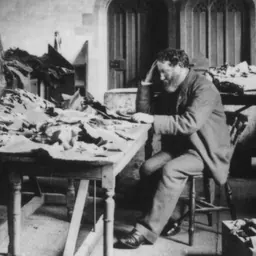
Saphir was the first Jewish researcher to recognize the significance of the Cairo geniza, as well as the first to publicize the existence of the Midrash ha-Gadol, both later studied by Solomon Schechter.
Sapir also did extensive research and writings on Yanover, Israeli and Greek etrogs. He dedicated a collection of poetry to Sir Moses and Lady Montefiore.
In the years 1833–1885, Saphir helped print the book Ḥemdat Yamim (reprinted Jerusalem 1977) by the arch-poet of Yemen, R. Shalom Shabazi, and even added an introduction to it.
Don’t just read it —
keep it.
Full-length biographies made to live with: read them, listen on the way to work, watch them tonight.
- E-book
- Audio
- Video
Instant download · yours to keep · every purchase keeps this site free
Important facts
People in Jacob Saphir's life
Named in this biography and alive at the same time

Related people
Same field, nearest in time



Contemporaries
People whose lives overlapped Jacob Saphir's




Frequently asked questions
Who was Jacob Saphir?
Russian rabbi and ethnographer (1822–1885)
When was Jacob Saphir born?
Jacob Saphir was born in 1822 in Ašmiany.
When did Jacob Saphir die?
Jacob Saphir died on 19 June 1885 in Jerusalem.
What was Jacob Saphir's occupation?
Jacob Saphir was a rabbi, writer, traveler and ethnographer.
What nationality was Jacob Saphir?
Jacob Saphir was Russian.
Sources & further reading
Cite this page
APA: Biography.guide. (2026). Jacob Saphir. https://biography.guide/jacob-saphir/
MLA: "Jacob Saphir." Biography.guide, https://biography.guide/jacob-saphir/.
Chicago: "Jacob Saphir." Biography.guide. https://biography.guide/jacob-saphir/.
Data last updated: 2026-09-20 · Spot an error? Report a correction.
Page generated 2026-09-27 05:20 UTC