
About Jacob Hiegentlich
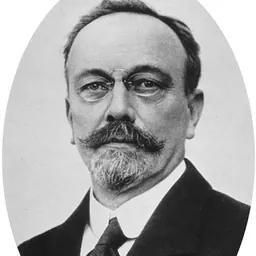
Lived 1907 – 1940 (aged 32–33). Jacob Hiegentlich was a Dutch poet and writer.
Jacob Hiegentlich (30 April 1907 – 18 May 1940) was a gay Dutch poet of Jewish descent. He committed suicide in 1940, at age 33, days after the German invasion of the Netherlands.
Biography Hiegentlich was born on 30 April 1907 in Roermond, one of five children of Rosalie Egger (d. 1927) and Sallie Hiegentlich, a trader in textiles. Four of the children and the father did not survive World War II. Jacob grew up in the Catholic city of Roermond in what he later called "a confusing mix of Roman Catholicism and Jewishness". He attended gymnasium at the , but did not graduate—he had problems with math. Still, while they were nominally granted the same rights as non-Jews, they were nonetheless marked as different, insulted, and ostracized; Hiegentlich sketches their position in the partly autobiographical novella Mirjam.
He wrote and published his first novel at age 17, under the pseudonym David Jozua de Castro; Het zotte vleesch. Roman van 't Limburgse volk ("The foolish flesh: novel of the people of Limburg") featured an unflattering portrait of a friend of his father, who bought up the entire printing. At his father's insistence he got a degree in Dutch in Amsterdam, graduating on 17 November 1930. In that city he was a member of the Nederlandse Zionistische Studenten-Organisatie (NZSO), and hung out with artists and bohemians, in a group named the Reynderskring for a café on the Leidseplein. On the evening of 14 May 1940 he took poison, and was taken, unconscious, to the Wilhelmina Gasthuis, where he died on 18 May, at age 33.
Literary works Hiegentlich's early work covers the period until 1930, when he was 23. It includes a collection of German poems, Die rote Nacht ("The red night", 1923), the novel Het zotte vleesch ("The foolish flesh", 1925), a play, Gaat u zitten ("Please sit down", produced in 1927), and an anthology of Louis Couperus, Werk van Louis Couperus (1929), an author he greatly admired.
His early (German) poetry is described as "typical puberty poetry of a precocious boy", reminiscent of Willem Kloos and Heinrich Heine. His best and best-known poems are "Kerstmis aan de bar" ("Christmas in the bar", published in Elsevier in 1935), a poem about people who appear to be enjoying life but are tortured by hidden grief, and "Sonnet", published in Helikon (1932), a poem inspired by Death in Venices Tadzio.
In 1935 he published a short story collection, Het vochtige park ("The wet park", Maastricht, A.A.M. Stols, 1935). Stories of his were also published in De Nieuwe Gids, Nederland, and De Stem, but by 1949 they had not been collected and published separately. During the period 1930–1940 he wrote a number of novels touching on the threats posed by the Nazis, by antisemitism, and by Dutch nationalism. Onbewoonbare wereld ("Uninhabitable world", 1937), is a psychological novel whose main character is the son of the editor of the National Socialist Movement in the Netherlands (NSB) magazine; he plans to kill his father for spreading antisemitic ideas, but ends up killing himself—a suicide which the NSB exploits for its own purposes. The world of the novel has become "uninhabitable" for any person of sensibility. The main character of Schipbreuk te Luik ("Shipwreck in Liège", 1938), Alex Moser, resembles Hiegentlich in many ways, having been brought up a Jew in Limburg and becoming estranged from Germany because of Nazism. Met de stroom mee ("With the current") was published posthumously in 1946, and follows the life of an actor, Lode Wolff, a talented but coldhearted man who ends up as an agent for the Gestapo in Flanders. One more novel, preserved in manuscript, is Taboe ("Taboo"), whose main character, Emile Moser, is a thinly veiled version of the author.
Legacy He is remembered with a plaque at his brother's house, on Markt 27 in Roermond. He makes an appearance in the novel Sunken Red by Jeroen Brouwers, who also devoted a chapter to him in his De laatste deur ("The last door"), a study of Dutch writers who committed suicide.
Don’t just read it —
keep it.
Full-length biographies made to live with: read them, listen on the way to work, watch them tonight.
- E-book
- Audio
- Video
Instant download · yours to keep · every purchase keeps this site free
Important facts
People in Jacob Hiegentlich's life
Named in this biography and alive at the same time

Related people
Same field, nearest in time


Contemporaries
People whose lives overlapped Jacob Hiegentlich's


Frequently asked questions
Who was Jacob Hiegentlich?
Dutch poet, 1907–1940
When was Jacob Hiegentlich born?
Jacob Hiegentlich was born in 1907 in Roermond.
When did Jacob Hiegentlich die?
Jacob Hiegentlich died in 1940 in Amsterdam.
What was Jacob Hiegentlich's occupation?
Jacob Hiegentlich was a poet and writer.
What nationality was Jacob Hiegentlich?
Jacob Hiegentlich was Dutch.
Sources & further reading
· Wikipedia: Jacob Hiegentlich
Cite this page
APA: Biography.guide. (2026). Jacob Hiegentlich. https://biography.guide/jacob-hiegentlich/
MLA: "Jacob Hiegentlich." Biography.guide, https://biography.guide/jacob-hiegentlich/.
Chicago: "Jacob Hiegentlich." Biography.guide. https://biography.guide/jacob-hiegentlich/.
Data last updated: 2026-09-20 · Spot an error? Report a correction.
Page generated 2026-09-27 05:07 UTC