
Jacob Gould Schurman
American diplomat (1854-1942) and Cornell University president
About Jacob Gould Schurman
Lived 1854 – 1942 (aged 88). Jacob Gould Schurman was an American diplomat, university teacher, politician, university president, writer and ambassador.
Jacob Gould Schurman (May 2, 1854 – August 12, 1942) was a Canadian-American educator and diplomat, who served as President of Cornell University and United States Ambassador to Germany.
Early life and education Schurman was born at Freetown, Prince Edward Island, Canada, on May 2, 1854 the son of Robert and Lydia Schurman. Schurman lived on his parents' farm as a child, then in 1867 took a job at a store near his home, which he held for two years.
At the age of fifteen, Schurman entered the Summerside Grammar School on Prince Edward Island, and in 1870 he won a scholarship to study at Prince of Wales College for two years. After Prince of Wales College, he studied for a year and a half at Acadia College in Nova Scotia. from which he received a BA degree in 1877 and an MA in 1878. Schurman also studied in Paris, Edinburgh, Heidelberg, Berlin, Göttingen, and Italy.
Career He was professor of English literature, political economy and psychology at Acadia College from 1880 to 1882, and the Sage professor of philosophy (Sage professor) at Cornell University from 1886 to 1892,
In 1892, he became the third president of Cornell University, a position he held until 1920. He received an LL.D (honoris causa) from the University of Edinburgh in March 1902.
Cornell University president As president of Cornell University, Schurman helped invent the modern state-supported research university. Under the Morrill Act, states were obligated to fund the maintenance of land grant college facilities, but were not obligated to fund operations. Subsequent laws required states to match federal funds for agricultural research stations and cooperative extension.
In his inaugural address as Cornell's third president on November 11, 1892, Schurman announced his intention to enlist the financial support of the state. Cornell, which had been offering a four-year scholarship to one student in each New York assembly district every year and was the state's land-grant university, was determined to convince the state to become a benefactor of the university.
In 1894, the state legislature voted to give financial support for the establishment of the New York State College of Veterinary Medicine and to make annual appropriations for the college. This set the precedents of privately controlled, state-supported statutory colleges and cooperation between Cornell and the state. The annual state appropriations were later extended to agriculture, home economics, and following World War II, industrial and labor relations.
New York State College of Forestry at Cornell
In 1898, Schurman persuaded the State Legislature to found the first forestry college in North America, the New York State College of Forestry. The College undertook to establish a demonstration forest in the Adirondacks, funded by New York State. However, the plans of the school's director Bernhard Fernow for the land drew criticism from neighbors, and Governor Benjamin B. Odell vetoed the 1903 appropriation for the school.
In response, Cornell closed the school. Subsequently, in 1911, the State Legislature established a New York State College of Forestry at Syracuse University, and the remains of Cornell's program became the Department of Natural Resources in its Agriculture College in 1910.
In 1911, Schurman ruled in favor of admitting two Black female students to Sage Hall despite 269 of their white female peers petitioning to deny them residency.
International and governmental career
He was the chairman of the First United States Philippine Commission in 1899, and wrote a part of the official report to Congress and Philippine Affairs--A Retrospect and an Outlook (1902). With J. E. Creighton and James Seth he founded in 1892 The Philosophical Review. He also wrote Kantian Ethics and the Ethics of Evolution (1881); The Ethical Import of Darwinism (1888); Belief in God (1890), and Agnosticism and Religion (1896).
During World War I he insisted that American rights be respected; after the sinking of the Lusitania he pointed out that the action threatened to erase the distinction between combatants and non-combatants. In 1917 he was appointed a member of the New York State Food Commission, but resigned in June 1918 to go to France as lecturer to American soldiers. In 2021, the Cornell Filipino Association sought to discredit Schurman due to the work of the Philippine Commission and demanded that his name be removed from the building. After hearing from both sides, Cornell President Martha Pollack rejected the move. In 1967, Jacob Gould Schurman III endowed the Schurman professorships in his honor. Cornell describes them as "one of the most prestigious chairs at the university."
Personal life Schurman married Barbara Forrest Munro (1865–1930) in 1884; Schurman's father-in-law was George Munro; in 1881, he endowed Schurman the chair in English literature and philosophy at Dalhousie University, where Munro was the principal benefactor.
Don’t just read it —
keep it.
Full-length biographies made to live with: read them, listen on the way to work, watch them tonight.
- E-book
- Audio
- Video
Instant download · yours to keep · every purchase keeps this site free
Important facts
People in Jacob Gould Schurman's life
Named in this biography and alive at the same time




Related people
Same field, nearest in time
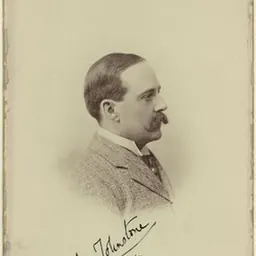

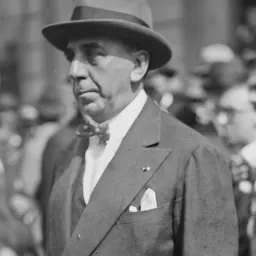
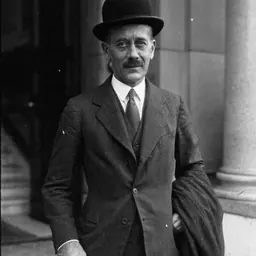
Contemporaries
People whose lives overlapped Jacob Gould Schurman's
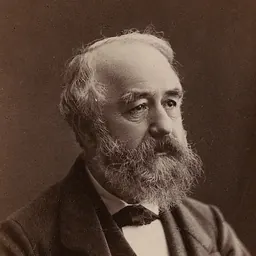



Frequently asked questions
Who was Jacob Gould Schurman?
American diplomat (1854-1942) and Cornell University president
When was Jacob Gould Schurman born?
Jacob Gould Schurman was born on 22 May 1854 in Prince Edward Island.
When did Jacob Gould Schurman die?
Jacob Gould Schurman died on 12 August 1942 in Bedford Hills.
What was Jacob Gould Schurman's occupation?
Jacob Gould Schurman was a diplomat, university teacher, politician, university president, writer and ambassador.
What nationality was Jacob Gould Schurman?
Jacob Gould Schurman was American.
Sources & further reading
· Wikipedia: Jacob Gould Schurman
· DBpedia: Jacob Gould Schurman
Cite this page
APA: Biography.guide. (2026). Jacob Gould Schurman. https://biography.guide/jacob-gould-schurman/
MLA: "Jacob Gould Schurman." Biography.guide, https://biography.guide/jacob-gould-schurman/.
Chicago: "Jacob Gould Schurman." Biography.guide. https://biography.guide/jacob-gould-schurman/.
Data last updated: 2026-09-20 · Spot an error? Report a correction.
Page generated 2026-09-27 05:29 UTC