
Bernhard Fernow
American forester and dendrologist
About Bernhard Fernow
Lived 1851 – 1923 (aged 72). Bernhard Fernow was a German and American forester, university teacher and dendrologist.
Bernhard Eduard Fernow ( ; January 7, 1851 – February 6, 1923) was the third chief of the U.S. Department of Agriculture's Division of Forestry of the United States from 1886 to 1898, preceding Gifford Pinchot in that position, and laying much of the groundwork for the establishment of the United States Forest Service in 1905. Fernow's philosophy toward forest management may be traced to Heinrich Cotta's preface to Anweisung zum Waldbau (Instruction in Silviculture) or Linnaeus' ideas on the "economy of nature." Fernow has been called the "father of professional forestry in the United States." Olivia actively helped him in the many aspects of his work. His main policy goals were the establishment of a national forest system and introduction of scientific forest management. He produced many scientific reports while working toward the creation of national forests to protect watersheds. Displays that Fernow prepared for the forestry exhibit at the 1893 Chicago World's Fair played a prominent role in generating public support for establishing a Prussian-style national forest service and system for educating professional foresters in the United States.
Cornell University In 1898 Fernow left the Division of Forestry to become the first dean of the New York State College of Forestry at Cornell, the first four-year forestry school in the United States. The program's life was short, being closed in 1903 following a veto of state appropriations by New York governor Benjamin Barker Odell, Jr. in response to a conflict over the direction and management of the School's experimental forest in Franklin County, New York. In his veto message Governor Odell said: "The operations of the College of Forestry have been subjected to grave criticism, as they have practically denuded the forest lands of the State without compensating benefits. I deem it wise therefore to withhold approval of this item until a more scientific and more reasonable method is pursued in the forestry of the lands now under the control of Cornell University."
As the university's director, Fernow played a central role in this controversy. He had organized a plan to demonstrate how the northern hardwood forests of the area, which had previously been logged of their large spruce and white pine timber by former owners, the Santa Clara Lumber Company, could be replanted with higher-value conifers, especially white pine. The plan drew criticism from adjacent landowners who successfully lobbied the State to oppose it because it involved clearcutting a total of of forestland at the rate several thousand acres per year to prepare for planting conifers. Smoke from the burning of brush and logging slash, along with Fernow's arrogant disposition toward landowners from nearby Upper Saranac Lake further alienated the public.
In 1899, 1903, and 1908, forest fires inflicted damage in the Adirondacks, consuming tens of thousands of acres. Most fires were started by sparks flying from coal-burning locomotive stacks and landing on logging slash. Louis Marshall, with a summer residence at Knollwood Club on Saranac Lake, branded locomotives as "instruments of arson." The worst sin of the lumbermen was the fire menace that they left behind, and which caused incalculable destruction. Nevertheless, Fernow had a long railroad spur built from Axton to Tupper Lake in order to deliver logs to the Brooklyn Cooperage Company facility. The management plan had the backing of Cornell's president Schurman, and was found to be technically sound, if imperfectly carried out, by Fernow's contemporaries who practiced forestry in Europe and America. Still, the controversy resulted in Fernow's most notable professional failure, and has been seen in retrospect as evidence of his weakness at operating in the public arena to gain public and political support for forest management.
Subsequent positions
In 1907, he became the first professor of forestry in a four-year baccalaureate degree program at the Pennsylvania State University, in State College. After teaching the 1907 spring semester at Penn State, Fernow left to become the first head of the Faculty of Forestry at the University of Toronto. He gave as a reason for leaving Penn State an argument with Joseph Rothrock, head of the Pennsylvania State Forest Academy, over the future of that school.
In 1907, Fernow became the founding Dean of the University of Toronto's Faculty of Forestry, Canada's first university school devoted to forest science. He served as editor-in-chief of the Journal of Forestry, which he had started at Cornell in 1902, until his death in 1923. He became a member of the Commission of Conservation of Canada on its organization in 1910.
Legacy Fernow's reputation and legacy may have suffered because of the success and efforts of Pinchot and others who did not share Fernow's Prussian-style vision for professional forestry in America; Nonetheless, Fernow was among the pioneers of forestry education in America. The curriculum he set up at Cornell served as the model for professional forestry programs in North America.
Fernow's most enduring contributions were his work on the Forest Reserve Act of 1891 and the Organic Act of 1897 for the United States Congress. in Chelan County, was named for Bernhard Fernow by Albert H. Sylvester. According to the Washington Placenames database, there is second, smaller Mount Fernow, in King County; and a series of five lakes in Washington state, also named after Fernow. Fernow Hall at Cornell University was built in 1912 and named after Fernow. The Fernow Experimental Forest, a outdoor laboratory and classroom run by the United States Forest Service, was established in 1934 near Parsons, West Virginia and named for Fernow. A plaque honoring Fernow is placed at within Fernow Forest, a 68-acre (27.5 ha) remnant of the plantings from the failed experimental forest in what is now the Adirondack Park. A self-guided nature trail can be followed through the forest that includes specimens of Eastern White Pine and Norway Spruce planted as a part of the Cornell Demonstration Forest.
Works The White Pine (1899) Report upon Forestry Investigations of the United States Department of Agriculture 1877-98 (1899) Economics of Forestry (1902) History of Forestry (1907) The Care of Trees (1911)
In addition, he issued many other official reports and bulletins as part of his work for the USDA.
Don’t just read it —
keep it.
Full-length biographies made to live with: read them, listen on the way to work, watch them tonight.
- E-book
- Audio
- Video
Instant download · yours to keep · every purchase keeps this site free
Important facts
People in Bernhard Fernow's life
Named in this biography and alive at the same time

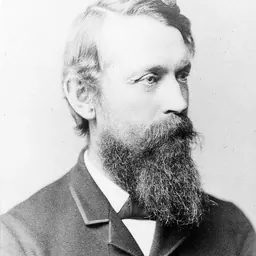
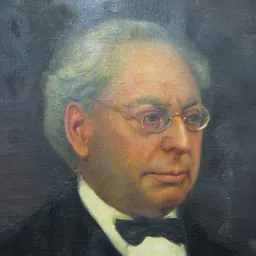
Related people
Same field, nearest in time
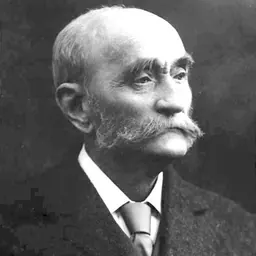
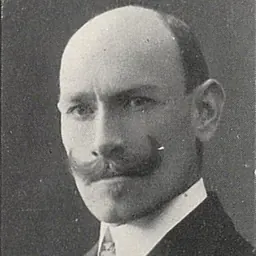


Contemporaries
People whose lives overlapped Bernhard Fernow's


Frequently asked questions
Who was Bernhard Fernow?
American forester and dendrologist (1851-1923)
When was Bernhard Fernow born?
Bernhard Fernow was born on 7 January 1851 in Inowrocław.
When did Bernhard Fernow die?
Bernhard Fernow died on 6 February 1923 in Toronto.
What was Bernhard Fernow's occupation?
Bernhard Fernow was a forester, university teacher and dendrologist.
What nationality was Bernhard Fernow?
Bernhard Fernow was German and American.
Sources & further reading
Cite this page
APA: Biography.guide. (2026). Bernhard Fernow. https://biography.guide/bernhard-fernow/
MLA: "Bernhard Fernow." Biography.guide, https://biography.guide/bernhard-fernow/.
Chicago: "Bernhard Fernow." Biography.guide. https://biography.guide/bernhard-fernow/.
Data last updated: 2026-09-20 · Spot an error? Report a correction.
Page generated 2026-09-27 05:26 UTC