
About Jacob Golos
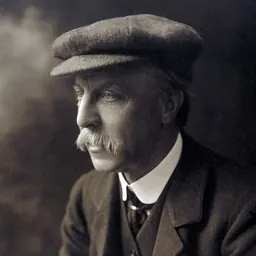
Lived 1889 – 1943 (aged 54). Jacob Golos was a Russian and American spy, politician and printer.
Jacob Golos (born Yakov Naumovich Reizen, Russian: Яков Наумович Рейзен; April 24, 1889 – November 27, 1943) was a Ukrainian-born American Bolshevik revolutionary who became an intelligence operative in the United States on behalf of the USSR. A founding member of the Communist Party of the United States of America (CPUSA), circa 1930 Golos became involved in the covert work of Soviet intelligence agencies. He participated in procuring American passports by means of fraudulent documentation, and the recruitment and coordination of activities of a broad network of agents.
Early years
Yakov Naumovich Reizen was born April 24, 1889, in Ekaterinoslav, Russian Empire, since 2016 known as Dnipro in Ukraine, to a Jewish family. Yakov's father worked as a shop assistant.
A revolutionary from a young age, Reizen joined the Russian Social Democratic Labor Party (RSDLP) in 1904, becoming active in the group's Bolshevik wing headed by V.I. Lenin. He participated in the 1905 Revolution, serving as a member of the first soviet of Ekaterinoslav, the city known today as Dnipro.
Golos returned to California in 1917, where he supported himself by working for fruit picking and packing firms. He also worked as an organizer for the Socialist Party of California.
In his personal history and personnel forms written in Moscow in 1926, Golos dated his work as a member of the Central Committee of the Russian Section (New York) as from 1919 to 1925. In December 1922, Golos was elected to the nine-member Bureau of the Russian Federation of the Workers Party of America, the "legal" public face of the then-underground Communist Party of America.
In 1926 Golos traveled to the Soviet Union as a participant in the American "Kuzbas" (Kuzbass Autonomous Industrial Colony), located near the Russian city of Kemerovo. Originally started as an economic venture intended to help subsidize the Communist Party's press, Golos remained in charge of the passport operation until turning the job over to Hungarian party functionary J. Peters, who also served as a link with the Soviet intelligence in 1930s. According to Peters' biographer the transfer took place in 1932.
Throughout the 1930s Golos was a member of the CPUSA's Central Control Commission, a body in charge of party discipline, background investigations, and audits. Upon his return to the United States in January 1938, Golos confirmed at a session of the governing Political Committee of the American Communist Party that there was indeed a mass secret police operation in effect in the USSR.
From 1940 onward Golos was subject to the Foreign Agent Registration Act. While he did not curtail his NKVD activities, he had to assume he was under FBI surveillance. Moscow became nervous at the risk of him being arrested and made attempts to convince him to return to Russia. Fully aware of Stalin's purges and terrified that returning to the Soviet Union would mean being sent to the Gulag or shot, Golos not only refused to share his sources with other NKVD officers, but he also told them that he had hidden a sealed envelope containing the details of the USSR's espionage operations in America.
In 1941, Golos had set up a commercial forwarding enterprise, called the U.S. Shipping and Service Corporation. He assigned Elizabeth Bentley, his assistant, courier and lover, as one of its officers. The pair occupied a suite in the Commodore Hotel, in New York City, across the street from Amtorg.
In 1942, Golos transferred a Communist cell of engineers recruited by Julius Rosenberg into direct contact with Soviet intelligence operatives in New York. The cell provided information on newest developments in electrical and radio engineering to the XY Line of the NKGB foreign intelligence. The XY Line accordingly began efforts to infiltrate the Manhattan Project, in an operation code-named ENORMOUS (ENORMOZ).
Sometime in November 1943, Golos met in New York with key figures of one of the so-called "information groups" of the CPUSA, which would come to be known as the Perlo group. Its members worked in several government departments and agencies in Washington, D.C. and provided classified information to the USSR through Earl Browder, the General Secretary of the Communist Party USA.
Death and legacy
Golos suffered a series of heart attacks during the first years of the 1940s. On November 27, 1943, a fatal heart attack ended his life while he was sleeping with Elizabeth Bentley. Immediately Bentley began a search for a secret file that Golos had kept to protect himself from being recalled to Russia; she destroyed it. Following his death, Bentley took over Golos's espionage operations.
The code name Zvuk (Sound) appears in the Venona decryptions as a Soviet source; this has been identified as Jacob Golos. In these decrypts, Golos is identified as an "illegal colleague," generally meaning a Soviet officer or professional agent who operated without the protection of diplomatic or official status with a Soviet embassy or consulate. Soviet officers with the latter status were said to be "legal."
Footnotes
Don’t just read it —
keep it.
Full-length biographies made to live with: read them, listen on the way to work, watch them tonight.
- E-book
- Audio
- Video
Instant download · yours to keep · every purchase keeps this site free
Important facts
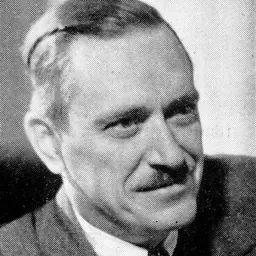
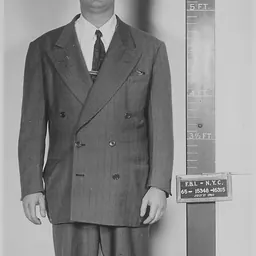
People in Jacob Golos's life
Named in this biography and alive at the same time

Related people
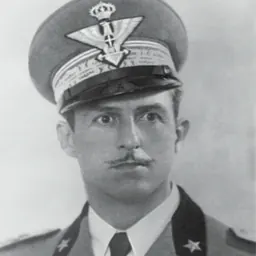
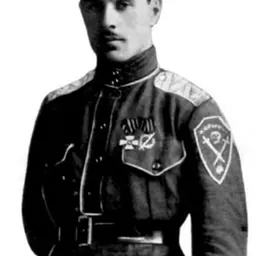
Same field, nearest in time


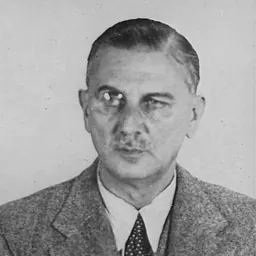
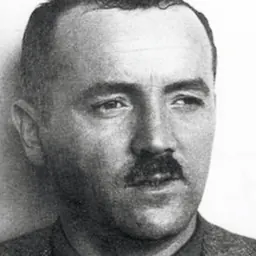
Contemporaries
People whose lives overlapped Jacob Golos's
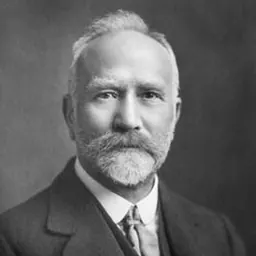


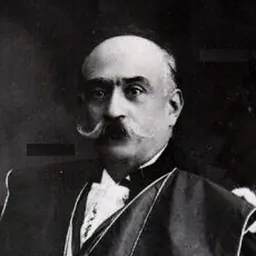
Frequently asked questions
Who was Jacob Golos?
revolutionary and soviet spy (1889–1943)
When was Jacob Golos born?
Jacob Golos was born on 24 April 1889 in Dnipro.
When did Jacob Golos die?
Jacob Golos died on 25 November 1943 in New York City.
What was Jacob Golos's occupation?
Jacob Golos was a spy, politician and printer.
What nationality was Jacob Golos?
Jacob Golos was Russian and American.
Sources & further reading
Cite this page
APA: Biography.guide. (2026). Jacob Golos. https://biography.guide/jacob-golos/
MLA: "Jacob Golos." Biography.guide, https://biography.guide/jacob-golos/.
Chicago: "Jacob Golos." Biography.guide. https://biography.guide/jacob-golos/.
Data last updated: 2026-09-20 · Spot an error? Report a correction.
Page generated 2026-09-27 05:19 UTC