
About Jacob Dircksz de Graeff
Lived 1569 – 1638 (aged 68–69). Jacob Dircksz de Graeff was a Dutch politician.
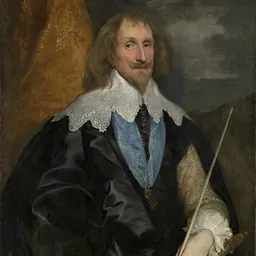
Jacob Dircksz de Graeff, free lord of Zuid-Polsbroek (Emden 1571 – Amsterdam, 6 October 1638) was an illustrious member of the Dutch patrician De Graeff family. He belonged to States Faction and was an influential Amsterdam regent and burgomaster (mayor) of the Dutch Golden Age.
De Graeff was known for his "free-thinking", "republican" attitude but also for his "fame-seeking". Together with his nephew Andries Bicker, he campaigned for the recognition of the Remonstrants in Amsterdam. After the political collapse of Reynier Pauw in 1627, the management of the city government fell into the hands of the "Arminian clique" around De Graeff and Bicker, who contollef the city's politics in close cooperation to each other. This also gave new impetus to the republican "states party", which had been weakened since the murder of Johan van Oldenbarnevelt, and was able to determine Amsterdam politics up to the crisis of the Rampjaar in 1672. However, De Graeff was not a principled anti-orangist, because he honored the legacy of his father, Dirck Jansz Graeff, who was on friendly terms with William "the Silent" of Orange. His sons were influenced by their father's antagonistic attitude towards political issues. The proponents of the De Graeff family has shown they had an eye for national politics and tried to find some balance between the House of Orange and the Republicans. They were against too much influence of the church on political issues.
Family
Jacob Dircksz de Graeff was born in Emden, Lower Saxony, the Exile of his parents Dirck Jansz Graeff and Agnies Pietresdr van Neck. He grew up in Emden and later in Amsterdam, at the house De Keyser in the Niezel, a small street not far from the Oude Kerk. In 1597 he married Aaltje Boelens Loen Cornelis de Graeff (1599–1664), regent and burgomaster of Amsterdam, Dutch statesman Dirk de Graeff (1601–1637), Vroedschap and Schepen of Amsterdam Agneta de Graeff van Polsbroek (1603–1656), married her full cousin Jan Bicker; her daughter Wendela Bicker married Johan de Witt, while her daughter Jacoba Bicker married her full cousin Pieter de Graeff Wendela de Graeff (1607–1652), married to Willem Schrijver (son of the important philologist Petrus Scriverius), painted by Rembrandt for his painting Jacob Blessing the Sons of Joseph Christina de Graeff (1609–1679), lady of Engelenburg (heiress to her uncle Pieter Dircksz Graeff) married in 1642 with her full cousin Jacob Bicker and in 1648 to Pieter Trip Andries de Graeff (1611–1678), regent and burgomaster of Amsterdam, Dutch statesman
Feudality
On September 18, 1610, Jacob Dircksz de Graeff acquired the High Lordship of Zuid-Polsbroek from Charles of Aremberg, which was freely inheritable and sellable as an allod. Their acquisition increased the reputation and contributed to the aristocratization of the family, in which De Graeff and his heirs could be addressed as Vrijheer(en) van Zuid-Polsbroek ever since. De Graeff was also from 1604 Ambachtsheer (Lord of the manor) of Sloten, Sloterdijk, Nieuwer-Amstel, Osdorp and Amstelveen, but not the owner of these glories. Rather, the city of Amsterdam bought them in 1529 from Reinoud III van Brederode, and then gave it in fief to one of their council members. He was also chieflandholder of the Zijpe- en Hazepolder, Watergraafs- and Wiemermeer. Jacob Dircksz de Graeff studied Classical language at Leiden University. During his student days he lived in the house of professor Rudolf Snellius. In 1591 he undertook a grand tour of France, Italy and Germany with his friend Justus Lipsius and then lived in Geneva for three years in the house of the Calvinist preacher Giovanni Diodati. At this time, a powerful Calvinist faction under Reynier Pauw crystallized in the Vroedschap, to which De Graeff and his ally Hooft kept their distance, and thus diminished their own influence.
During his councillorship in the States of Holland and West Friesland (1615–1617) De Graeff get sympathy with Johan van Oldenbarnevelt. There he became acquainted with the preacher Johannes Uytenbogaert and adopted the thesis of the Remonstrants as his own. This attitude brought him politically to the side of the state advocate Van Oldenbarnevelt He ran a chemical laboratory in Amsterdam together with his friend Pieter Jansz Hooft. In the field of science and natural history, De Graeff and Hooft maintained a close collaboration with Constantijn Huygens and via him also with René Descartes. He was also a scholar of the Amsterdam Latin School. In the early 1630s, the state party, weakened since Oldenbarnevelt's execution, was revived by them. Together, De Graeff and Andries Bicker led the city to its temporary peak of power in the years that followed. Both were remonstrants and helped the religious minority to gain relative recognition. De Graeff was also known as a very liberal ruler who did not hide his religious convictions and republican sentiments. In 1631, he initiated the political career of his protégé Joan Huydecoper van Maarsseveen at the Vroedschaper elections. Furthermore, in 1632 he was appointed to the hoofdingeland van de Watergraafs- en Wienermeer.
Jacob Dircksz de Graeff was one of the wealthiest residents of Amsterdam; his cash assets at the time of death totaled 270,000 guilders. After his death his son Cornelis de Graeff and his nephews, the hardcore republican-minded brothers Andries and Cornelis Bicker took over his role on the council.
Don’t just read it —
keep it.
Full-length biographies made to live with: read them, listen on the way to work, watch them tonight.
- E-book
- Audio
- Video
Instant download · yours to keep · every purchase keeps this site free
Important facts
Family & relationships
People in Jacob Dircksz de Graeff's life
Named in this biography and alive at the same time


Related people
Same field, nearest in time



Contemporaries
People whose lives overlapped Jacob Dircksz de Graeff's




Frequently asked questions
Who was Jacob Dircksz de Graeff?
Amsterdam mayor, Free Lord of Zuid-Polsbroek(1571-1638)
When was Jacob Dircksz de Graeff born?
Jacob Dircksz de Graeff was born in 1569 in Emden.
When did Jacob Dircksz de Graeff die?
Jacob Dircksz de Graeff died on 6 October 1638 in Amsterdam.
What was Jacob Dircksz de Graeff's occupation?
Jacob Dircksz de Graeff was a politician.
What nationality was Jacob Dircksz de Graeff?
Jacob Dircksz de Graeff was Dutch.
Sources & further reading
· Wikipedia: Jacob Dircksz de Graeff
· DBpedia: Jacob Dircksz de Graeff
Cite this page
APA: Biography.guide. (2026). Jacob Dircksz de Graeff. https://biography.guide/jacob-dircksz-de-graeff/
MLA: "Jacob Dircksz de Graeff." Biography.guide, https://biography.guide/jacob-dircksz-de-graeff/.
Chicago: "Jacob Dircksz de Graeff." Biography.guide. https://biography.guide/jacob-dircksz-de-graeff/.
Data last updated: 2026-09-20 · Spot an error? Report a correction.
Page generated 2026-09-27 05:32 UTC