
Jacob de Bie
Flemish engraver, publisher and numismatist
About Jacob de Bie
Lived 1581 – 1640 (aged 58–59). Jacob de Bie was a Belgian printmaker, numismatist, bookseller, etcher, copper engraver and art dealer.
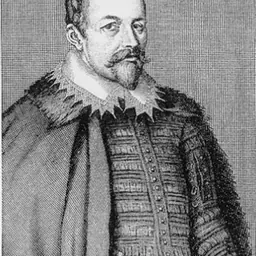
Jacob de Bie, known in France also as Jacques de Bie (Antwerp, 1581 – Arnhem (?), c. 1640) was a Flemish engraver, publisher and numismatist who worked in Antwerp, Brussels, Paris and Arnhem. As a reproductive artist he made engravings after designs of other artists of his generation. He was engaged in numismatic collecting and categorisation and was an official at the mint in Brussels. He is now mainly known for his publication of portraits of French kings.
Life Jacob de Bie was born in Antwerp, where he became the pupil of the prominent engraver Adriaen Collaert in 1594. He was admitted to the Antwerp Guild of Saint Luke as a master and 'copper engraver' ('plaatsnyer in ‘t coper') in 1607. Around 1610 he was appointed by Duke Charles III de Croÿ as keeper of the Duke's extensive ancient coin collection. Jacob de Bie moved to Brussels where the Duke was living. He began to work on an edition of the collection. When the Duke died in January 1612 Jacob de Bie was left without a job. He only finished and published the book on de Croÿ's ancient coin collection in 1615 in Antwerp under the title Imperatorum Romanorum numismata aurea a Julio Cæsare ad Heraclium continua serie collecta Et Ex Archetypis Expressa (A continual series of gold coins of the Roman Emperors from Julius Cesar to Heraclius collected and expressed through the originals). Frontispiece of the Imperatorum Romanorum Numismata Aurea...
Not long after losing his employment the Archdukes Albert and his consort Isabella, who were the then joint governors of the Southern Netherlands, appointed the painter Otto van Veen as the waerdeyn ('warden') of the revived Brussels Mint. With this nomination, the Archduke Albert and his consort Isabella fulfilled two very different goals. Firstly, they wanted to find a decent position for their beloved but ageing painter, and merely followed what had previously been done in 1572 when the great sculptor and medalist Jacques Jonghelinck had been made waerdeyn of the Antwerp Mint. Secondly, they needed to put at the head of the Brussels Mint a competent person, since they were then involved in launching a new series of coins as part of a general monetary reform.
Otto van Veen appears not to have been very enthusiastic about his new appointment as he tried to resign not long after taking up his office. This may have been linked to the difficult relaunch of the Brussels Mint. Otto van Veen who knew of Jacob de Bie's interest in ancient coins offered him the position of maître particulier at the Brussels Mint. The maître particulier was in charge of buying the required quantity of precious metals and organizing the coin production. Jacob de Bie accepted the position, but he soon found himself in trouble because he was blamed for the low quality of the coins produced. The blame rested in fact with the essayeur, the person responsible for the quality of the coins struck at the Mint. This essayeur was a certain Frans van den Driessche who was, however, not personally responsible for the quality problem. It was his two sons who, when they replaced their father during his absences, only produced low-quality coins. When this was discovered, Jacob de Bie was held responsible and he went on the run. Although his name was subsequently cleared, he had again lost his position. As late as the nineteenth century, de Bie's vrais portraits des rois de France were regarded as reliable sources of iconography. His portraits en medals served as models for real medals.
In 1636 de Bie published another book called La France métallique, contenant les actions célèbres tant publiques que privées des rois et des reines remarquées en leurs médailles d'or, d'argent & de bronze. Tirées des plus curieux cabinets. Au tres-chrestien roy de France et de Navarre Louis XIII ('Metallic France, containing the famous public and private actions of kings and queens noticed in their gold, silver & bronze medals. Taken from the most curious cabinets. To the very Christian king of France and Navarre Louis XIII'). He was either the writer or designer of the book. It consists mainly of imaginary coins depicting key events during the reigns of the Kings of France. While de Bie designed the medals, the idea for it clearly went back to the custom in various countries, including the Southern Netherlands and the Dutch Republic, of striking medals (jetons) to commemorate important events. One side of the jeton would bear the arms of the country or the portrait of its ruler, while its reverse would show an allegorical representation of the event. For the French translation, de Bie translated the woodcuts from Ripa's original book into linear figures inside circular frames, thus turning Ripa's allegories into the reverse side of Roman coins. The preface to the second edition of 1644 of the Iconologie states that de Bie had died and that his plates had been retrieved from the pawnshop. This suggests that de Bie had again fallen on hard times and had to pawn the plates and had then died. There exists some doubt as to whether de Bie had actually died. A few books (including an illustrated one) published in Arnhem a few years later refer to a Jacob de Bie paying the expenses for printing it or designing it. It is therefore possible that de Bie left Paris for Arnhem where he continued his publishing activities.
Don’t just read it —
keep it.
Full-length biographies made to live with: read them, listen on the way to work, watch them tonight.
- E-book
- Audio
- Video
Instant download · yours to keep · every purchase keeps this site free
Important facts
People in Jacob de Bie's life
Named in this biography and alive at the same time

Related people
Same field, nearest in time


Contemporaries
People whose lives overlapped Jacob de Bie's



Frequently asked questions
Who was Jacob de Bie?
Flemish engraver, publisher and numismatist (1581–1640)
When was Jacob de Bie born?
Jacob de Bie was born in 1581 in Antwerp.
When did Jacob de Bie die?
Jacob de Bie died in 1640.
What was Jacob de Bie's occupation?
Jacob de Bie was a printmaker, numismatist, bookseller, etcher, copper engraver and art dealer.
What nationality was Jacob de Bie?
Jacob de Bie was Belgian.
Sources & further reading
Cite this page
APA: Biography.guide. (2026). Jacob de Bie. https://biography.guide/jacob-de-bie/
MLA: "Jacob de Bie." Biography.guide, https://biography.guide/jacob-de-bie/.
Chicago: "Jacob de Bie." Biography.guide. https://biography.guide/jacob-de-bie/.
Data last updated: 2026-09-20 · Spot an error? Report a correction.
Page generated 2026-09-27 04:58 UTC