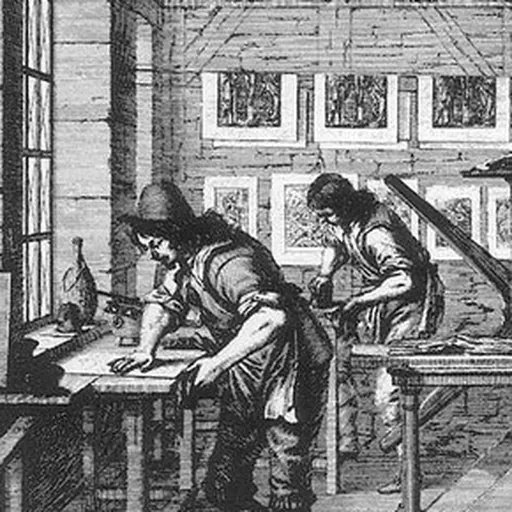
About Abraham Bosse
Lived 1604 – 1676 (aged 71–72). Abraham Bosse was a French printmaker, etcher, painter, draftsperson, graphic artist and copper engraver.
Abraham Bosse ( – 14 February 1676) was a French artist, mainly as a printmaker in etching, but also in watercolour.
Life
He was born to Huguenot (Calvinist) parents in Tours, France, where his father had moved from Germany. His father was a tailor, and Bosse's work always depicted clothes in loving detail. He married Catherine Sarrabat at Tours in 1632. He remained a Huguenot, dying before the Revocation of the Edict of Nantes, but was happy to illustrate religious subjects to Catholic taste.
Work Roughly 1600 etchings are attributed to him, with subjects including: daily life, religion, literature, fashion, technology, and science. He took Callot's highly detailed small images to a larger size, and a wider range of subject matter.
Unlike Callot, his declared aim, in which he largely succeeded, was to make etchings look like engravings, to which end he sacrificed willingly the freedom of the etched line, whilst certainly exploiting to the full the speed of the technique. Like most etchers, he frequently used engraving on a plate in addition to etching, but produced no pure engravings.
Controversy In 1641, he began to attend classes given by the architect Girard Desargues (1591–1661) on perspective and other technical aspects of depiction. Bosse not only adopted these methods but also published a series of works between 1643–1653 explaining and promoting them.
In 1648, Cardinal Mazarin established the Académie Royale de Peinture et de Sculpture. Bosse was made an honorary member in 1651. However his publicising of Desargues' methods embroiled him in a controversy with Charles Le Brun and his followers, who had different methods, and also a belief that "genius" rather than technical method should be the guide in creating artworks. In 1661 Bosse was forced to withdraw from the Academy; he established his own school as an alternative, but it was suppressed by Le Brun. Plates for (1639) Plates for (1642) (1643), printed by P. de Hayes, Paris (1643) De la manière de graver à l'eaux-forte et au burin (1645) (1645) The "Manual of Etching". (1648) — Manual on perspective (1653) The famous frontispiece for Leviathan by Thomas Hobbes (1651) was created with input from Hobbes. Plates for (1656) (1664) — Architecture (1665)
Later Collections Die Kunst, in Kupfer zu stechen, Ilmer, Osnabrück 1975 (Repr. d. Ausg. Nürnberg 1765) Radier-Büchlein. Handelt von der Etzkunst, nemlich wie man mit Scheidwasser in Kupfer etzen, das Wasser und wie auch den harten und weichen Etzgrund machen solle, Moos, München 1977, (Repr. d. Ausg. Nürnberg 1689)
Gallery
Don’t just read it —
keep it.
Full-length biographies made to live with: read them, listen on the way to work, watch them tonight.
- E-book
- Audio
- Video
Instant download · yours to keep · every purchase keeps this site free
Important facts
People in Abraham Bosse's life
Named in this biography and alive at the same time
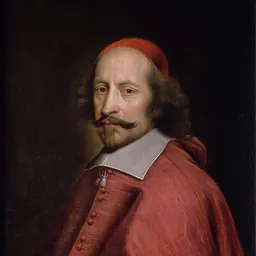
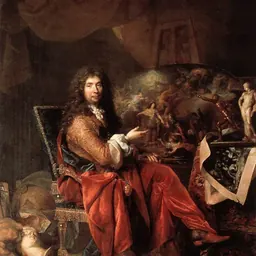

Related people
Same field, nearest in time
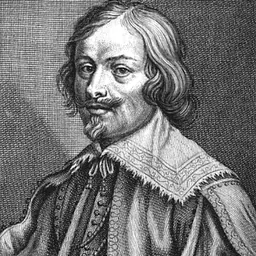



Contemporaries
People whose lives overlapped Abraham Bosse's




Frequently asked questions
Who was Abraham Bosse?
French artist (1604-1676)
When was Abraham Bosse born?
Abraham Bosse was born in 1604 in Tours.
When did Abraham Bosse die?
Abraham Bosse died on 16 February 1676 in Paris.
What was Abraham Bosse's occupation?
Abraham Bosse was a printmaker, etcher, painter, draftsperson, graphic artist and copper engraver.
What nationality was Abraham Bosse?
Abraham Bosse was French.
Sources & further reading
Cite this page
APA: Biography.guide. (2026). Abraham Bosse. https://biography.guide/abraham-bosse/
MLA: "Abraham Bosse." Biography.guide, https://biography.guide/abraham-bosse/.
Chicago: "Abraham Bosse." Biography.guide. https://biography.guide/abraham-bosse/.
Data last updated: 2026-09-23 · Spot an error? Report a correction.
Portrait: Wikimedia Commons · author & licence
Page generated 2026-09-27 05:07 UTC