
About Jackie Sharkey
Lived 1897 – 1970 (aged 72). Jackie Sharkey was an Italian boxer.
Jackie Sharkey or Jack Sharkey (born Giovanni Cervati) was an Italian-born American boxer who made a claim to the World Bantamweight Title on August 15, 1919, defeating reigning champion Pete Herman in a ten-round, non-title bout in Milwaukee, Wisconsin. His claim to the title was not universally recognized. Jack Sharkey, also known as Little Jackie Sharkey, should not be confused with the heavyweight champion Jack Sharkey.
Early life and career Jackie Sharkey was born Giovanni Cervati in Bologna, Emilia Romagna, Italy on June 20, 1897, though he would live most of his life in New York City. In his early professional career between May 23, 1914, and February 21, 1916, fighting almost exclusively in the New York area, he won three and lost six bouts, with one draw. By that year, Zulu Kid had established himself as a serious world flyweight contender.
Draw with Johnny Coulon, February 1917 On February 5, 1917, Sharkey drew with former World Bantamweight champion Johnny Coulon in a ten-round newspaper decision at the Pioneer Sporting Club in New York. Local newspapers disagreed on the decision. Coulon held the World Bantamweight Championship from 1911 to 1913, though the title was not unified at the time.
On July 27, 1917, Sharkey first lost to Kid Williams in six rounds at Oriole Park in Baltimore, at least by the newspaper decision of the Baltimore Sun. He lost to Williams again on April 1, 1918, in a twelve-round points decision at the Lyric Theater in Baltimore. Williams held the World Bantamweight Title from June 1914 to January 1917. They met on February 27, 1917, and Sharkey lost again by a ten-round decision of three New York newspapers at the Pioneer Sports Club in New York City. Sharkey was down in the fifth round, after which Lynch had little trouble penetrating his defenses. The bout was an elimination series for the bantamweight championship, and Lynch had some difficulty with Sharkey in the early rounds.
Sharky and Joe Lynch drew in a fifteen-round points decision at New York's Madison Square Garden on September 28, 1920, although Lynch was down in several rounds from the blows of Sharkey. Sharkey's ability to stay fifteen rounds with a top bantamweight contender put him squarely in the list of top contenders himself. On December 2, 1920, in a somewhat more historic bout, Lynch defeated Sharkey in a fifteenth-round knockout at Madison Square Garden. Sharkey had the better of the bout up until the sixth round, when Lynch became far more dominant. Lynch's win gave him the right to challenge Pete Herman for the Bantamweight Championship three weeks later. On July 2, 1925, at the Polo Grounds in New York, home of the New York Giants, the two drew in four rounds to a large house in which Lynch was somewhat favored to win.
Seven bouts with top bantamweight contender Frankie Burns, 1916–18
Sharkey met Frankie Burns seven times during his career, but had little luck with the highly rated bantamweight contender. Beginning on November 27, 1916, Sharkey faced a ten-round loss by newspaper decision from Burns in New York, followed by a ten-round loss on February 9, 1917, at the Harlem Sports Club in New York by newspaper decision of the New York Sun. Sharkey sank to the mat in the sixth round and claimed a foul, though he recovered by the seventh. He fought the first two rounds "like a whirlwind" and looked to have an advantage, but lost his pace in subsequent rounds. In the third, Sharkey was stunned by a left hook to his midriff that may have affected him for the remainder of the bout.
On October 15, 1917, he lost to Burns in a newspaper decision ten rounder in Albany, New York. Burns was "too clever" for Sharkey and "won by use of constant left jabs and right handers to the body". Sharkey fell to a ten-round loss by newspaper decision in Scranton, Pennsylvania, on February 21, 1918. In their February 21 Jersey City Town Hall bout, Burns was described as easily outpointing his opponent, and taking seven of the ten rounds, with only one to Sharkey before a substantial house of 4000. On June 20, 1918, he drew with Burns in a six-round newspaper decision in Madison Square Garden, and he lost to Burns again at the Garden in their last bout on November 16 in a six-round newspaper decision of the New York Times. Burns was eight years older than Sharkey, but seemed a difficult opponent to defeat. On July 13, 1920, Sharkey lost to Burns in a twelve-round newspaper decision of the Philadelphia Record at the Outdoor Arena of the Armory in Jersey City, New Jersey. As a highly rated Bantamweight, Burns contended four times for the World Bantamweight Championship between 1912 and 1917.
On April 6, 1918, Sharkey defeated Joe Tuber at the National Athletic Club in Philadelphia in a six-round newspaper decision of the Philadelphia Inquirer. The bout was described as sensational and Sharkey was considered to have been in his best form with a clear advantage.
On March 24, 1919, Sharkey lost to Jackie "Kid" Wolfe in a ten-round newspaper decision of the Bridgeport Standard Telegram at the Grand Theater in Cleveland, Ohio.
Championship fights
Sharkey first defeated Pete Herman in a six-round newspaper decision of two local newspapers at the National Athletic Club in Philadelphia on May 4, 1918. The victory over the reigning bantamweight champion was described as "a clean cut lacing", and several newspapers agreed Sharkey had the advantage in the bout. Due to a smaller house than expected, Sharkey was poorly compensated for his victory. Sharkey was described as the aggressor through most of the bout and able to stand punch for punch with the champion. On September 2, 1918, Sharkey again fared well against Herman in a non-title six-round match at the Olympia Club in Philadelphia although it ended in a no-decision and more newspapers gave the advantage to Herman. Sharkey was described as the aggressor and always forcing the pace, though more newspapers felt Herman deserved to win having better timed and more effective punches. The fight was close and Sharkey made Herman extend himself.
Championship Sharkey briefly claimed the World Bantamweight Championship on August 15, 1919, in a ten-round newspaper decision against Herman in a no-decision bout in Milwaukee, Wisconsin, winning by a fairly close margin. Sharkey's claim was not recognized at the time, as he would have had to win by knockout or technical knockout to take the title, or to have won by the decision of a referee. The majority of newspaper reports gave Sharkey the edge. On September 15, 1919, Sharkey again had the edge over Herman in a World Bantamweight Championship match in Detroit, Michigan in a ten-round newspaper decision by the Detroit Free Press, though it was fairly close. According to one source, Sharkey was the aggressor, though Herman landed the more telling blows. On September 11, 1920, Sharkey again defeated Herman in a non-title, fifteen-round newspaper decision of the Chicago Tribune in East Chicago, Indiana, though Herman held the World Bantamweight Championship at the time. Sharkey claimed fouls in the fifth and seventh rounds which were not allowed by the referee. Sharkey was the aggressor throughout which earned him the advantage according to several newspapers. Sharkey's claim to the title was stripped on September 11, 1920. Sharkey was considered a decisive winner, taking eight of the ten rounds according to the newspapermen at ringside. Sharkey's blows were said to land more frequently and with greater force. Sharkey's win was at least a minor upset as Wilde led in the early betting 2 to 1. Sharkey's purse was $20,000 and he achieved notoriety that would help him command more for his future bouts. An exceptional opponent, Wilde would take the British and European Flyweight Championships in that year, and the World Flyweight Championship by 1920.
Charles Ledoux fight On October 15, 1920, Sharkey defeated French boxer Charles Ledoux in a fifteen-round points decision at Madison Square Garden. In his career, Ledoux would take both the European and French bantamweight championships. Sharkey appeared to have a clear advantage in the first three rounds and Ledoux was very briefly down in the second.
Johnny Buff fight On November 10, 1921, Sharkey lost to Johnny Buff in a fifteen-round World Bantamweight Championship by points decision at Madison Square Garden. In the close and exciting fight, Sharkey had five rounds, six went to Buff, and four were even. Both boxers took the lead at times, but Buff finished stronger. The Des Moines Register called it "as rousing a battle as ever you'd wish to see." Most newspapers gave the fight to Buff, who held the World Bantamweight title at the time. The New York Times gave Sharkey the seventh, eighth and ninth rounds, while Buff took eleven of the remaining rounds, with one even. The final rounds seemed to clearly belong to Buff. Sharkey had lost to Buff on January 15, 1920, in an eight-round newspaper decision of the Jersey Journal in Jersey City, New Jersey. The bout was quite exciting and Sharkey was said to excel at infighting having a reach advantage over Dundee. In the early betting, at least among New York newspapers like the New York Tribune, Dundee seemed a clear favorite. The fight was close according to some newspapers and pushed Dundee to his limits, though he won "by a shade". Sharkey never again competed for a world championship.
Fighting at 127 pounds as a junior lightweight, on June 19, 1923, Sharkey lost to Pete Zivic at Queensboro Stadium in Queens, New York in a twelve-round points decision. Zivic was a competent junior lightweight, but Sharkey's record included many losses after his loss to Johnny Dundee on July 6, 1922. Sharkey had nearly a six-pound weight advantage over Zivic though he lacked a few inches in reach. On May 14, 1925, he lost again to Fasano in a ten-round points decision at Manhattan Casino in New York after being reinstated. He lost his momentum by the second round.
Retirement from boxing, 1926 Sharkey retired from boxing around May 1926, with a ten-round points decision loss to Young Mulligan in Norwalk, Connecticut. He had lost two prior bouts by newspaper decision since September 1925, as well as a third-round TKO to Jewish boxer Red Chapman on October 23, 1925. In September 1927, the talented Chapman would lose to Benny Bass in a close bout for the NBA World Featherweight Championship in Philadelphia. unless otherwise stated.
Official record
All newspaper decisions are officially regarded as “no decision” bouts and are not counted in the win/loss/draw column.
Unofficial record
Record with the inclusion of newspaper decisions in the win/loss/draw column.
Don’t just read it —
keep it.
Full-length biographies made to live with: read them, listen on the way to work, watch them tonight.
- E-book
- Audio
- Video
Instant download · yours to keep · every purchase keeps this site free
Important facts
People in Jackie Sharkey's life
Named in this biography and alive at the same time


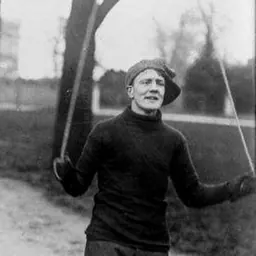
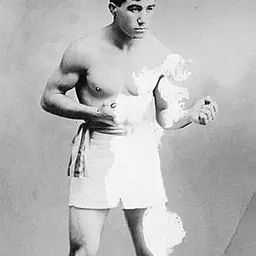
Related people
Same field, nearest in time




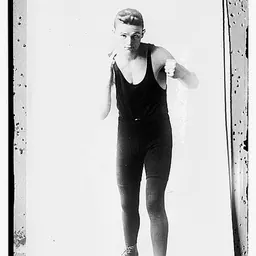
Contemporaries
People whose lives overlapped Jackie Sharkey's



Frequently asked questions
Who was Jackie Sharkey?
Italian boxer (1897-1970)
When was Jackie Sharkey born?
Jackie Sharkey was born on 20 June 1897 in Bologna.
When did Jackie Sharkey die?
Jackie Sharkey died on 1 March 1970.
What was Jackie Sharkey's occupation?
Jackie Sharkey was a boxer.
What nationality was Jackie Sharkey?
Jackie Sharkey was Italian.
Sources & further reading
Cite this page
APA: Biography.guide. (2026). Jackie Sharkey. https://biography.guide/jackie-sharkey/
MLA: "Jackie Sharkey." Biography.guide, https://biography.guide/jackie-sharkey/.
Chicago: "Jackie Sharkey." Biography.guide. https://biography.guide/jackie-sharkey/.
Data last updated: 2026-09-20 · Spot an error? Report a correction.
Page generated 2026-09-27 05:16 UTC