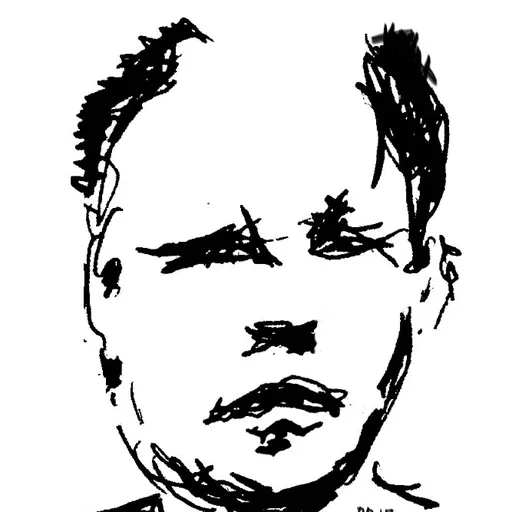
About Jack Spicer
Lived 1925 – 1965 (aged 40). Jack Spicer was an American poet and translator.
Jack Spicer (January 30, 1925 – August 17, 1965) was an American poet often identified with the San Francisco Renaissance.
He graduated from Fairfax High School in 1942, and attended the University of Redlands from 1943 to 1945. After graduation he lived in Los Angeles briefly, and worked as a movie extra and a private investigator.
During this time he searched out fellow poets, but it was through his alliances with Robert Duncan and Robin Blaser that Spicer forged a new kind of poetry, and together they referred to their common work as the Berkeley Renaissance. The three, who were all gay, also educated younger poets in their circle about their "queer genealogy": Rimbaud, Lorca, and other gay writers. Spicer's poetry of this period is collected in One Night Stand and Other Poems (1980). His Imaginary Elegies, later collected in Donald Allen's The New American Poetry 1945–1960 anthology, were written around this time.
San Francisco In 1954, he co-founded the Six Gallery in San Francisco, which soon became famous as the scene of the October 1955 Six Gallery reading that launched the West Coast Beat movement. He considered City Lights Bookstore a tourist destination, and boycotted selling his work there. He was unable to hold a job and fell into poverty, however, so by 1964 he started selling books at City Lights.
Spicer's view of the role of language in the process of writing poetry was probably the result of his knowledge of modern pre-Chomskyan linguistics and his experience as a research-linguist at Berkeley. In the legendary Vancouver lectures he elucidated his ideas on "transmissions" (dictations) from the Outside, using the comparison of the poet as crystal-set or radio receiving transmissions from outer space, or Martian transmissions. The radio oracle derived from Cocteau's film Orphée, often cited by Spicer in his lectures. Although seemingly far-fetched, his view of language as "furniture", through which the transmissions negotiate their way, is grounded in the structuralist linguistics of Zellig Harris and Charles Hockett. (Poems of his final book, Language, refer to morphemes and graphemes). Spicer is acknowledged as a precursor for the Language poets.
Since the publication of The Collected Books of Jack Spicer (1975, 1st ed.), his reputation has grown. The Collected Books of Jack Spicer gathered Spicer's works beginning from 1957, and specifically did not include his earlier poetry per Spicer's requests. A selection of his earlier work was published in One Night Stand and Other Poems, edited by Donald Allen. My Vocabulary Did This to Me: The Collected Poetry of Jack Spicer (2008) edited by Peter Gizzi and Kevin Killian, won the American Book Award in 2009.
Don’t just read it —
keep it.
Full-length biographies made to live with: read them, listen on the way to work, watch them tonight.
- E-book
- Audio
- Video
Instant download · yours to keep · every purchase keeps this site free
Important facts
People in Jack Spicer's life
Named in this biography and alive at the same time





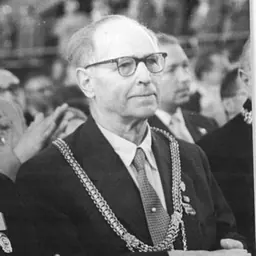
Related people
Same field, nearest in time

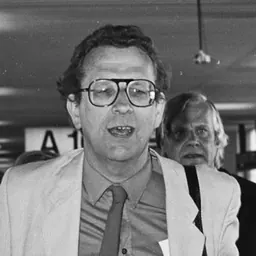



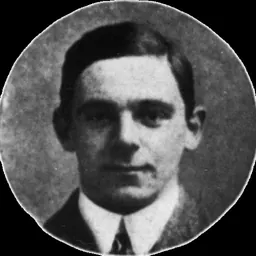
Contemporaries
People whose lives overlapped Jack Spicer's



Frequently asked questions
Who was Jack Spicer?
American poet (1925–1965)
When was Jack Spicer born?
Jack Spicer was born on 30 January 1925 in Los Angeles.
When did Jack Spicer die?
Jack Spicer died on 17 August 1965 in San Francisco.
What was Jack Spicer's occupation?
Jack Spicer was a poet and translator.
What nationality was Jack Spicer?
Jack Spicer was American.
Sources & further reading
Cite this page
APA: Biography.guide. (2026). Jack Spicer. https://biography.guide/jack-spicer/
MLA: "Jack Spicer." Biography.guide, https://biography.guide/jack-spicer/.
Chicago: "Jack Spicer." Biography.guide. https://biography.guide/jack-spicer/.
Data last updated: 2026-09-21 · Spot an error? Report a correction.
Portrait: Wikimedia Commons · author & licence
Page generated 2026-09-27 05:00 UTC