
About Jack Marsh
Lived 1874 – 1916 (aged 41–42). Jack Marsh was an Australian cricketer and athletics competitor.
Jack Marsh ( – 25 May 1916) was an Australian first-class cricketer of Australian Aboriginal descent who represented New South Wales in six matches from 1900–01 to 1902–03. A right-arm fast bowler of extreme pace, Marsh had high athletic qualities and was regarded as one of the outstanding talents of his era. His career was curtailed by continual controversy surrounding the legality of his bowling action; he was no-balled multiple times for throwing. As a result of the debate over the legitimacy of his action, Marsh never established himself at first-class level and was overlooked for national selection. In contemporary discourse, Marsh's lack of opportunities has often been attributed to racial discrimination.
Born into the Bundjalung people at Yulgilbar on the Clarence River in northern New South Wales, Marsh first made an impression as a professional runner, travelling to Sydney and then competing interstate, winning races as a sprinter and a hurdler. While in Sydney, Marsh began competing in the local club cricket competition and his action quickly came under scrutiny. He was first no-balled for throwing in 1897, but it was not until 1900 that he came to prominence in a trial match against the New South Wales state team. Marsh dismissed leading Test cricketers Victor Trumper and Monty Noble, but was called for throwing. Marsh vowed to prove the legitimacy of his action by bowling with his arm encased in splints, which prompted the umpire to resign in humiliation. Having topped the bowling averages in the local competition, Marsh was selected to make his debut in the Sheffield Shield. He made an immediate impression and led the first-class bowling averages for the season after three matches. He was no-balled in his second match by Bob Crockett, but things came to a head in his fourth match when the same umpire no-balled him seventeen times, leading to angry crowd demonstrations. The cricket community was divided on whether Marsh's action was fair and various theories were propounded, which sought to show a motive for foul play against Marsh. The most popular of these theories was that Marsh was scapegoated in a campaign against throwing and was a soft target because of his race.
Marsh only played in two more first-class matches, which came in the two seasons following his no-balling. In a later season, the touring England cricket team objected to his selection in an opposition team. There were calls for Marsh to be selected for Australia, but Noble, the New South Wales selector, refused to select him, citing his controversial action. In later years, Marsh turned to alcohol and was briefly jailed for assault. He was killed in a brawl outside a pub; two men were charged with manslaughter but were acquitted.
Early years Marsh was born into the Bundjalung people at Yulgilbar, which sits on the Clarence River in northern New South Wales. His surname is believed to have possibly derived from that of Francis Henry Marsh, whose property Camira was separated from Yulgilbar by the Richmond Range. Details of Marsh's itinerant pre-cricket life are scarce, because Aboriginal Australians were not on the electoral roll and Marsh had no written correspondence with others because he was illiterate. As with some other Indigenous runners, Marsh was exploited by his trainer and was suspended for "running stiff" in Sydney in 1895.
Club cricket Marsh began playing cricket in a competition based around Moore Park, near central Sydney, representing South Sydney. Following its merger with South Sydney, Marsh played for Sydney Cricket Club. against the New South Wales state team in a trial match in November 1900, before the start of the 1900–01 Sheffield Shield season. Curran called him on the first day of the match. Marsh had an eventful day, bowling Test batsmen Victor Trumper, Frank Iredale and future Test player Bert Hopkins. Marsh also collected the wickets of Test batsmen and future Australian captains Monty Noble and Syd Gregory.
The calls of throwing so infuriated Marsh that at the end of the day's play, he announced that he would wear splints when he was bowling the next day. Marsh took this action to ensure that his elbow was kept straight and to demonstrate that he could bowl fast without throwing. Marsh had previously performed such an exhibition to ground members and the requisite splints and bandages were acquired from the nearby St. Vincent's Hospital, in order to bind his bowling arm. Marsh's intentions were published in the Sydney Morning Herald and Curran was made aware that Marsh would seek to challenge him.
First-class debut Marsh made his first-class debut when he was selected for the New South Wales team to play South Australia at the Adelaide Oval in December 1900, just a month after he was no-balled for throwing. The selection indicated that the state selectors were prepared to overrule Curran's judgment. which remains the highest individual score compiled at the Adelaide Oval in a Sheffield Shield match. dismissing Test batsmen Peter McAlister, Warwick Armstrong, Jack Worrall and Frank Laver. Marsh bowled three of his victims.
According to cricket historian Bernard Whimpress, the early signs of a conspiracy against Marsh were raised by a journalist from The Age of Melbourne by the name of Old Boy. The journalist set a possible agenda by raising a question about Marsh to Crockett on the day before the bowler was called, possibly predisposing the umpire to take action. If Old Boy could be relied on, then observers suspected that Marsh's faster and slower ball were dubious. The reporter did not specify which ball he questioned, except to say that one ball per over was doubtful. The events in Australia occurred against a backdrop of a throwing frenzy in England. A fortnight earlier, the captains of the English county teams had drawn up a list of prohibited bowlers. In Australia, Jim Phillips had set the tone by no-balling Australian Test bowler Ernie Jones. The events in England were seen as a catalyst for a clean-up campaign against dubious bowling actions. Historians regarded Marsh as a prime target due to his Indigenous heritage and his supple wrist action. New South Wales then piled on 918 before completing an innings victory by bowling the visitors out for 156 in the second innings. The margin of an innings and 605 runs set a new record for the largest victory in first-class history. Marsh took 5/59 and did the bulk of the damage, removing five of South Australia's top six specialist batsmen, at one stage reducing the visitors to 6/114. Marsh bowled six of his opponents and was not questioned by either umpire. At this point, Marsh led the first-class averages in bowling, with 21 wickets at a bowling average of 17.38 in three matches.
New South Wales batted first and were bowled out on the first afternoon for 170. When the Victorians began their response, Crockett called Marsh for throwing three times in his first over, provoking rowdy responses from the spectators. He was no-balled a further two times in his second over and five of Victoria's first nine runs were extras. Despite this, Victoria started poorly, losing five wickets by the time it reached 50 runs. Of the five wickets to fall, Marsh bowled future Test captain Armstrong and McAlister. The crowd showed its sympathy for Marsh when he rattled Armstrong's stumps; they cheered him loudly and verbally attacked Crockett. —felt that Marsh was a soft target for Crockett, whom he regarded as a suspicious character. The Victorian umpire was regarded as a tough-minded umpire, much like Jim Phillips, who had triggered the current round of throwing calls in Australian cricket. Crockett was commended for his willingness to call Marsh in the face of public anger and for doing what others would not. When Marsh bowled from the other end in the second innings of the match, his action was deemed by Crockett's umpiring partner Sammy Jones to be fair. He took his worst ever first-class figures of 1/105 as New South Wales lost by one wicket. Australian administrators had been under pressure from England to crack down on dubious bowling actions. English captain Archie MacLaren had asserted that "If Australia expects an English team next September they will have to play according to the new reading of the law at home". It was speculated that because Crockett was a lifelong employee of the Melbourne Cricket Club, which organised and sponsored English tours to Australia, he was under pressure to no-ball bowlers in order to curry favour with English administrators. so it was a one-off match. The match was the subject of much media attention because it was the first time that two Aboriginal Australians had played in opposing teams at first-class level. Queensland's Indigenous player was Alec Henry, another fast bowler who had been accused of throwing. The New South Wales team travelled north to the match by train, making a stop at Ipswich. As part of the media promotion of the match-up between the pair, Henry was taken to Ipswich station to meet Marsh. Marsh was reported in the media as having said "Say old man, toss me up a soft one so I can get a smack at you". Marsh took 2/64 and 3/67 in a drawn match, and bowled three of his victims, who were unable to cope with his pace. Marsh and Henry dismissed one another, each being bowled for nine to create a symmetry in the scorecard. to help his team to a victory. Later in the season, Marsh played in a match for New South Wales against Australia, which was not first-class. He took the wicket of Clem Hill as the match ended in a draw.
Marsh was never selected again, No formal complaint about Marsh's bowling was lodged by the English but his bowling did raise eyebrows. The general consensus among the English touring party was that Marsh's bowling was unfair, with Warner describing him as a "shier", Bardsley said that the only reason that Marsh was "kept ... out of big cricket was his color".
Popular with teammates and known for his sportsmanship, Marsh was regarded as an average fielder and had minimal batting skill, with a batting average of 5.00.
Marsh joined Alexander's Hippodrome Company, travelling around Australia in a sideshow, is named in Marsh's honour. In 2015 Gideon Haigh's subject was "How Victor Trumper Changed Cricket Forever".
Don’t just read it —
keep it.
Full-length biographies made to live with: read them, listen on the way to work, watch them tonight.
- E-book
- Audio
- Video
Instant download · yours to keep · every purchase keeps this site free
Important facts
People in Jack Marsh's life
Named in this biography and alive at the same time



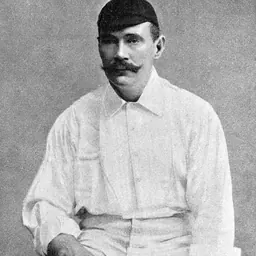



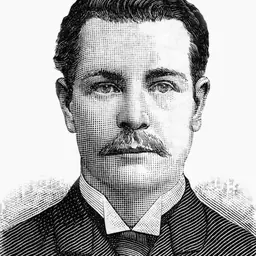
Related people
Same field, nearest in time


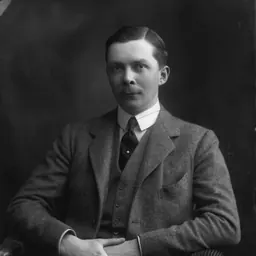

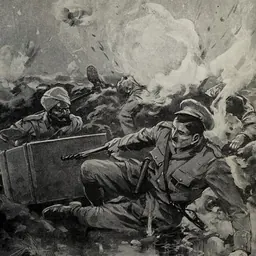
Contemporaries
People whose lives overlapped Jack Marsh's
Frequently asked questions
Who was Jack Marsh?
Australian cricketer (c1874–1916)
When was Jack Marsh born?
Jack Marsh was born in 1874 in Baryulgil.
When did Jack Marsh die?
Jack Marsh died on 25 May 1916 in Orange.
What was Jack Marsh's occupation?
Jack Marsh was a cricketer and athletics competitor.
What nationality was Jack Marsh?
Jack Marsh was Australian.
Sources & further reading
Cite this page
APA: Biography.guide. (2026). Jack Marsh. https://biography.guide/jack-marsh/
MLA: "Jack Marsh." Biography.guide, https://biography.guide/jack-marsh/.
Chicago: "Jack Marsh." Biography.guide. https://biography.guide/jack-marsh/.
Data last updated: 2026-09-20 · Spot an error? Report a correction.
Page generated 2026-09-27 05:17 UTC