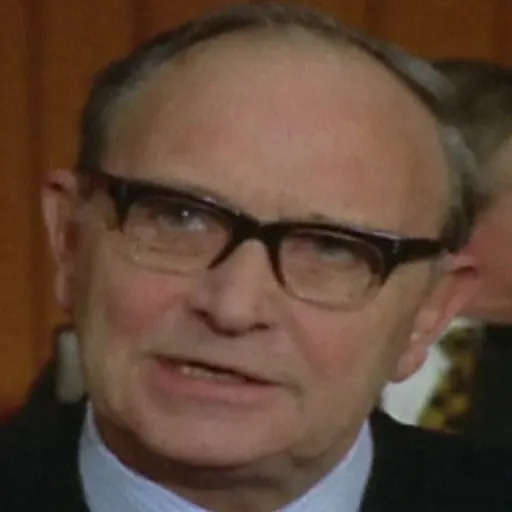
About Jack Jones
Lived 1913 – 2009 (aged 96). Jack Jones was a British trade unionist, known for Transport and General Workers' Union.
James Larkin Jones (29 March 1913 – 21 April 2009), known as Jack Jones, was a British trade union leader and General Secretary of the Transport and General Workers' Union 1968-1978.
Early life Jones was born in Garston, Liverpool, Lancashire. He was named after the Liverpool-born Irish trade unionist James Larkin. He left school at 14 and worked as an engineering apprentice. After the Wall Street crash, Jones lost his job, eventually finding employment with a firm of signmakers and painters. He then joined his father as a Liverpool docker.
Jack Jones was converted to socialism by reading The Ragged Trousered Philanthropists by Robert Tressell, and he later explained how the book "was passed from hand to hand among people in the Labour movement and had a remarkable effect on our thinking". He became a member of the Transport and General Workers Union, and was elected shop steward, then a delegate on the National Docks Group Committee.
Spanish Civil War Jones was elected to the Liverpool City Council for Croxteth Ward in 1937, becoming the youngest member of the council. Strongly opposed to the British Union of Fascists and their leader Oswald Mosley, Jones organised protest-meetings against the fascists in Liverpool, and was beaten by a group of Blackshirts armed with knuckle-dusters. and was seriously wounded at the Battle of the Ebro in 1938.
Second World War
On his return to Britain, Jones became a full-time official of the TGWU in Coventry. Jones played a key role in organising the workforce of the West Midlands motor industry in the postwar period as Regional Secretary of the TGWU. He was a strong supporter of the shop steward movement aimed at promoting trade union and industrial democracy. He was an early supporter of the Institute for Workers' Control. While Assistant General Secretary of the union and a member of the National Executive Committee of the Labour Party, he chaired the Labour Party policy group on Industrial Democracy.
General Secretary of the Union Jones was elected General Secretary of the TGWU in 1968. Together with Hugh Scanlon, President of the Amalgamated Engineering Union he led the left-wing trade union opposition (associated with Broad Left ) to the 1966–70 Labour Government's prices and incomes policy, and the efforts of that government to introduce legislation that would have enforced a 28-day cooling off period before strike action could be taken.
While general secretary, he was chief economic spokesman for the Trades Union Congress and one of the authors of the Social Contract. Jones was also instrumental in the creation of the Advisory, Conciliation and Arbitration Service (Acas) in 1975,
In January 1977 a Gallup opinion poll found that 54% of people believed that Jones was the most powerful person in Britain, ahead of the Prime Minister, Callaghan, and is held responsible by some in the Labour Party for being "the union leader that created the Winter of Discontent and 18 years of Tory rule", despite the fact that he had retired from the leadership of the TGWU in 1978, the year before the Winter of Discontent.
According to KGB defector Oleg Gordievsky, Jones provided intelligence to the Soviet Union in return for money. This was denied by Jones, who described the allegations as a "slur and an outrage". Gordievsky is also cited by the journalist Ben Macintyre as stating that the KGB paid Jones for intelligence in his 2018 book "The Spy and The Traitor".
Jones also had a special relationship with and helped promote the interests of Gibraltarian workers, as well as the British Overseas Territory itself, through the auspices of the TGWU.
Retirement
In retirement from the T&G, Jones served as the President of the National Pensioners Convention, an umbrella organisation representing over 1,000 local, regional and national pensioners' groups, of which he was Honorary Life President. He was also President of the International Brigade Memorial Trust. Jones's last public act was to unveil a memorial at Newhaven Fort on 7 December 2008, 70 years after British Battalion members returned to the port after the International Brigades were withdrawn from Spain.
Jones was nominated for the position of Chancellor of the University of London, but lost the election to Princess Anne in 1981. After writing his autobiography, Union Man (published in 1986), Jones became a campaigner on behalf of pensioners.
At the Labour Party conference in Bournemouth in October 2003, aged 90, he received a special award in recognition of his service to the trade union movement.
The TGWU building Transport House in Liverpool was refurbished by Unite (the trade union formed from the merger of the TGWU and Amicus) and renamed Jack Jones House in 2009.
His name also lives on in a block of sheltered flats for the elderly built by Southwark Council on Reedham Street in Peckham.
Death Jones lived in South London until his death, and died in a care home in Peckham on 21 April 2009. He was survived by his two sons. His wife of more than 50 years, Evelyn (née Taylor) had died three years earlier. She had first been married to the communist trade union organiser and close friend of Jones, George Brown, who had been killed in the Battle of Brunete in 1937 during the Spanish Civil War.
Don’t just read it —
keep it.
Full-length biographies made to live with: read them, listen on the way to work, watch them tonight.
- E-book
- Audio
- Video
Instant download · yours to keep · every purchase keeps this site free
Important facts
People in Jack Jones's life
Named in this biography and alive at the same time


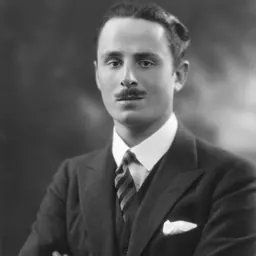


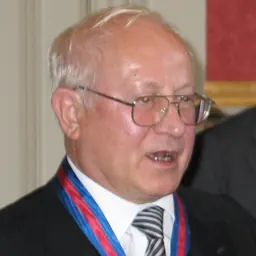
Related people
Same field, nearest in time

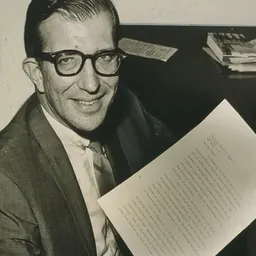


Contemporaries
People whose lives overlapped Jack Jones's



Frequently asked questions
Who was Jack Jones?
British Trade Union leader (1913-2009)
When was Jack Jones born?
Jack Jones was born on 29 March 1913 in Garston.
When did Jack Jones die?
Jack Jones died on 21 April 2009 in Peckham.
What was Jack Jones's occupation?
Jack Jones was a trade unionist.
What was Jack Jones known for?
Jack Jones was known for Transport and General Workers' Union.
What nationality was Jack Jones?
Jack Jones was British.
Sources & further reading
· DBpedia: Jack Jones (trade unionist)
Cite this page
APA: Biography.guide. (2026). Jack Jones. https://biography.guide/jack-jones-trade-unionist/
MLA: "Jack Jones." Biography.guide, https://biography.guide/jack-jones-trade-unionist/.
Chicago: "Jack Jones." Biography.guide. https://biography.guide/jack-jones-trade-unionist/.
Data last updated: 2026-09-22 · Spot an error? Report a correction.
Portrait: Wikimedia Commons · author & licence
Page generated 2026-09-27 05:02 UTC