
About Jack Goldsmith
Born 1962. Jack Goldsmith is an American jurist, lawyer and university teacher.
Jack Landman Goldsmith III (born September 26, 1962) is an American legal scholar. He serves as the Learned Hand Professor of Law at Harvard Law School, where he has written extensively in the fields of international law, civil procedure, federal courts, conflict of laws, and national security law. Writing in The New York Times, Jeffrey Rosen described him as being "widely considered one of the brightest stars in the conservative legal firmament". He is a co-founder of the Lawfare Blog along with Brookings fellow Benjamin Wittes and Texas Law professor Robert M. Chesney.
Early life and career Goldsmith was born in 1962 in Memphis, Tennessee. His stepfather, Charles "Chuckie" O'Brien, is widely believed to have played a role in the disappearance of Jimmy Hoffa. Goldsmith graduated from Pine Crest School in 1980.
After high school, Goldsmith attended Washington & Lee University, graduating in 1984 with a Bachelor of Arts, summa cum laude. He earned a second bachelor's degree with first class honours from the University of Oxford in 1986 (promoted to MA per tradition in 1991). He then attended Yale Law School, graduating in 1989 with a Juris Doctor.
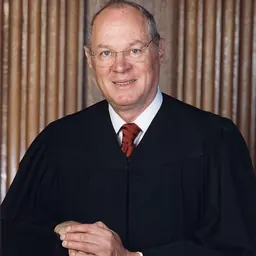
After law school, Goldsmith was a law clerk for Judge J. Harvie Wilkinson III of the U.S. Court of Appeals for the Fourth Circuit from 1989 to 1990, and for Justice Anthony Kennedy of the U.S. Supreme Court from 1990 to 1991. He then earned a diploma from The Hague Academy of International Law in 1992. Goldsmith then entered private practice at the Washington, D.C. law firm Covington & Burling from 1994 to 1996. He served as a professor at the University of Virginia Law School before going to the University of Chicago.
In 2002, Goldsmith joined the Bush administration as the Special Counsel to General Counsel of the Department of Defense, at a time when the government was developing plans for responding to the 9/11 attacks. In April 2003 he was nominated to be a United States Assistant Attorney General, tasked with leading the prestigious Office of Legal Counsel in the Department of Justice. The Senate confirmed him in October 2003. He resigned in July 2004 to join Harvard Law School. He wrote a book about his experiences there called The Terror Presidency (2007).
George W. Bush administration
In August 2002, before Goldsmith joined the George W. Bush administration, the Office of Legal Counsel, Department of Justice, had issued three documents, which became known as the Torture Memos, or the Bybee memo (referring to one in particular). The Bybee memo was directed to the Acting General Counsel of the Central Intelligence Agency in relation to interrogation of a detainee, Abu Zubaydah. It authorized certain methods of torture (characterized by the administration as "enhanced interrogation techniques") for use with detained enemy combatants at the Guantanamo Bay detention center and other locations.
In addition, on March 14, 2003, after Goldsmith had been hired to work as a legal adviser to the General Counsel of the Department of Defense, John Yoo wrote a legal opinion at the request of the Department of Defense General Counsel, five days before the US invasion of Iraq, concluding that federal laws did not prohibit torture by interrogators of foreign subjects overseas. (The memo was not revealed until 2008.)
Office of General Counsel of the Department of Defense By September 2002, Jack Goldsmith had been hired to work as a legal adviser to the General Counsel of the Department of Defense, William J. Haynes II. He had participated in discussions related to treatment.
However, Goldsmith had been unable to have his office complete what he intended as the replacement legal opinions before he resigned. He said later that he felt that he had lost the confidence of the administration. By December 2004, the replacement counsel at the Office of Legal Counsel had reaffirmed the previous legal opinions.
Goldsmith later said that one consequence of the Office of Legal Counsel's "power to interpret the law is the power to bestow on government officials what is effectively an advance pardon for actions taken at the edges of vague criminal statutes."
Warrantless wiretapping memos During Goldsmith's tenure at the Office of Legal Counsel, he wrote at least two legal memos authorizing a program known as Stellar Wind. His memos said that the president has inherent constitutional power in a time of war to monitor Americans' communications without a warrant.
In March 2004, the Office of Legal Counsel concluded the e-mail program was not legal. Acting Attorney General James Comey refused to reauthorize it. On May 6, 2004, Goldsmith wrote in a 108-page memo:
"We conclude only that when the nation has been thrust into an armed conflict by a foreign attack on the United States and the president determines in his role as commander in chief... that it is essential for defense against a further foreign attack to use the [wiretapping] capabilities of the [National Security Agency] within the United States, he has inherent constitutional authority" to order warrantless wiretapping—"an authority that Congress cannot curtail."
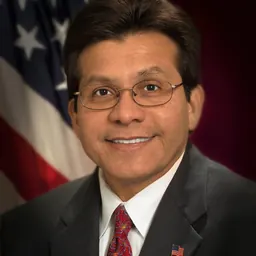
Goldsmith said he resigned in 2004 largely because he felt he had lost the confidence of administration leaders. He notes that the White House Counsel Alberto Gonzales asked him to remain, while Addington, an influential White House figure, asked which other OLC opinions he intended to overturn. Goldsmith wrote in his book, "Nobody had said no to them before."
To discuss his book, Goldsmith appeared on The Daily Show with Jon Stewart twice.
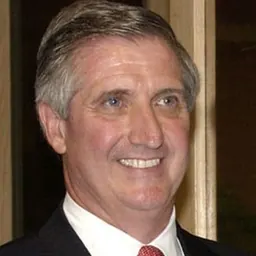
Goldsmith also appeared on the Bill Moyers show on September 7, 2007. Moyers asked about the notable incident of his being in the hospital room of Attorney General John Ashcroft after he had been suddenly taken ill the day before. That day Ashcroft had ruled that Bush's domestic intelligence program, Stellar Wind, was illegal. It included provisions for warrantless wiretaps. Gonzales and Andrew Card, White House Chief of Staff, had come to try to persuade Ashcroft to change his mind and withdraw his memo. Goldsmith was there to support Ashcroft. Goldsmith said that, as Gonzales and Card left the room, Mrs. Ashcroft stuck out her tongue at them behind their backs. President Bush re-authorized the program over the formal objections of the Department of Justice.
Soon after, on NOW on PBS, Goldsmith continued to discuss the issues of how the government could deal with enemy combatants. In response to a suggestion that the regular criminal court system could be used to try them, he said, "Another reason you might not want to use the trial system is that the trial system, to be legitimate, has to have the possibility of acquitting someone of a crime." He thought it would be difficult for the government to conduct military trials while withholding evidence on the basis of national security, as it had done in the military commissions and tribunals.
Who Controls the Internet: Illusions of a Borderless World
Goldsmith co-authored Who Controls the Internet with Columbia Law School Professor Tim Wu. The book makes three basic claims: first, in response to the techno-libertarianism that prevailed at the time, it argues that states had many tools to achieve effective control over internet activities within their borders. Second, as a result of state control, the Internet is becoming bordered by geography. The bordered Internet "reflects top-down pressures from governments that are imposing national laws on the Internet within their borders," as well as "bottom-up pressures from individuals in different places who demand an Internet that corresponds to local preferences, and from the web page operators and other content providers who shape the Internet experience to satisfy these demands." Third, while a geographically bordered Internet has many well-known costs, it also has "many underappreciated virtues," including better satisfaction of local preferences, stability, and harm-prevention.
The Limits of International Law
Goldsmith co-authored this book with University of Chicago Law School Professor Eric Posner. The book is mainly an effort to give a descriptive theoretical account of how international law (treaties and customary international law) works, using basic game theoretical models.
Legal scholarship In addition to his popular writing and books, Goldsmith is one of the country's leading scholars of the executive branch, international and foreign relations law, and Internet regulation having written dozens of academic papers in such journals as The Yale Law Journal and the Harvard Law Review. He has authored or co-authored the following articles, inter alia:
Foreign relations law "Treaties, Human Rights, and Conditional Consent," 149 U. Pa. L. Rev. 399 (2000) "The Abiding Relevance of Federalism to U.S. Foreign Relations," 92 Am. J. Int'l L. 675 (1998) "Sosa, Customary International Law, and Continuing Relevance of Erie," 120 Harv. L. Rev. 869 (2007) "Customary International Law as Federal Common Law: A Critique of the Modern Position," 110 Harv. L. Rev. 815 (1997) "Federal Courts, Foreign Affairs, and Federalism," 83 U. Va. L. Rev. 1617 (1997) "Zivotofsky II as Precedent in the Executive Branch," 129 Harv. L. Rev. 112 (2015) "Presidential Control over International Law," 131 Harv. L. Rev. 1201 (2018) "Statutory Foreign Affairs Preemption," 2000 Sup. Ct. Rev. 175 (2001) "The New Formalism in United States Foreign Relations Law," 70 U. Colo. L. Rev. 1395 (1999) "Pinochet and International Human Rights Litigation," 97 U. Mich. L. Rev. 2129 (1999)
War and national security law "Terrorism and the Convergence of Criminal and Military Detention Models," 60 Stan. L. Rev. 1079 (2008) "Congressional Authorization and the War on Terrorism," 118 Harv. L. Rev. 2047 (2005) "Obama's AUMF Legacy," 110 Am. J. Int'l L. 628 (2016)
International law "Law for States: International Law, Constitutional Law, Public Law," 122 Harv. L. Rev. 1791 (2009) "Obama's Contribution to International Law," 57 Harv. Int'l L.J. 1 (2016) "The Limits of Idealism," 132 Daedalus 47 (2003) "Moral and Legal Rhetoric in International Relations: A Rational Choice Perspective," 21 J. Legal Stud. S115 (2002) "A Theory of Customary International Law," 66 U. Chi. L. Rev. 1113 (1999)
Executive branch lawyering and the presidency "Executive Branch Crisis Lawyering and the Best View," 31 Geo. J. Legal Ethics 261 (2018) "The Irrelevance of Prerogative Power and the Evils of Secret Legal Interpretation," in Extra-Legal Power and Legitimacy: Perspectives on Prerogative (2013) "The Protean Take Care Clause," 164 U. Pa. L. Rev 1835 (2016) "The President's Completion Power," 115 Yale L.J. 2280 (2006)
Internet regulation "Against Cyberanarchy," 65 U. Chi. L. Rev. 1199 (1998) "The Internet and the Dormant Commerce Clause," 110 Yale L.J. 785 (2001)
Film The Special Program, a screenplay exploring Goldsmith's experiences in the Department of Justice's Office of Legal Counsel, was sold to The Weinstein Company on December 16, 2013. According to the Spec Scout database, as of November 21, 2014, this project was "no longer set up with the Weinstein Company."
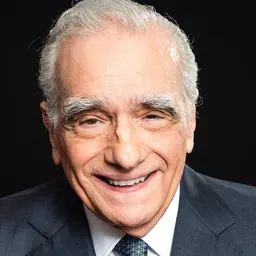
Goldsmith questions a key premise of Martin Scorsese's 2019 film The Irishman due to the information he gathered for his own book about unions in the U.S., his stepfather Chuckie O'Brien, who was an associate of Jimmy Hoffa, and Hoffa's mysterious disappearance.
Books
Who Controls the Internet? Illusions of a Borderless World (with Tim Wu, 2006)
After Trump: Reconstructing the Presidency. Bob Bauer and Jack Goldsmith. Lawfare Institute/Lawfare Press. September 2020.
Don’t just read it —
keep it.
Full-length biographies made to live with: read them, listen on the way to work, watch them tonight.
- E-book
- Audio
- Video
Instant download · yours to keep · every purchase keeps this site free
Important facts
People in Jack Goldsmith's life
Named in this biography and alive at the same time


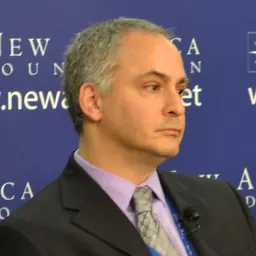

Related people
Same field, nearest in time



Contemporaries
People whose lives overlapped Jack Goldsmith's




Frequently asked questions
Who is Jack Goldsmith?
American legal scholar
When was Jack Goldsmith born?
Jack Goldsmith was born on 26 September 1962 in Memphis.
What is Jack Goldsmith's occupation?
Jack Goldsmith is a jurist, lawyer and university teacher.
What nationality is Jack Goldsmith?
Jack Goldsmith is American.
Sources & further reading
Cite this page
APA: Biography.guide. (2026). Jack Goldsmith. https://biography.guide/jack-goldsmith/
MLA: "Jack Goldsmith." Biography.guide, https://biography.guide/jack-goldsmith/.
Chicago: "Jack Goldsmith." Biography.guide. https://biography.guide/jack-goldsmith/.
Data last updated: 2026-09-20 · Spot an error? Report a correction.
Page generated 2026-09-27 05:32 UTC