
About Jack Conway
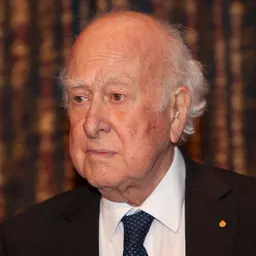
Born 1969. Jack Conway is an American lawyer and politician.
John William Conway (born July 5, 1969) is an American lawyer and politician who served as the 49th attorney general of Kentucky from January 7, 2008, to January 4, 2016. Prior to his election as attorney general, he was the Democratic nominee for in the 2002 elections, narrowly losing to Republican incumbent Anne Northup.
Conway was the Democratic nominee in the 2010 U.S. Senate election, seeking the seat of the retiring Republican Senator Jim Bunning. He lost the general election to Republican nominee Rand Paul on November 2, 2010. He won re-election to a second term as Attorney General in 2011 with 55% of the vote.
Conway ran for Governor of Kentucky in the 2015 gubernatorial election, with State Representative Sannie Overly as his running mate. During the primary election held on May 19, 2015, Conway easily defeated retired engineer Geoff Young for the Democratic Party nomination. The Republican nominee Matt Bevin defeated Conway 52.5% to 43.8% with independent candidate Drew Curtis receiving 4% in the November 3, 2015 general election. He also sits on the bipartisan advisory board of States United Democracy Center.
Early life and education Conway was born in Louisville, Kentucky and raised in a Catholic family, the eldest of four siblings. His parents are Tom, a Louisville lawyer, and Barbara Conway. A graduate of St. Xavier High School, From 1991 to 1997, he worked as legislative aide to the U.S. House Banking Committee. He graduated with a Juris Doctor from George Washington University Law School in 1995.
Personal life On May 20, 2006, Conway married Elizabeth Davenport; the couple has two children.
Conway and his father are partners in thoroughbred racehorse Stately Victor, named after Jack's childhood best friend, whose given name was Victor, who died at age 23. On April 11, 2010, the colt won the Grade I Blue Grass Stakes and later ran in the Kentucky Derby.
Political career Conway joined Paul E. Patton's gubernatorial campaign in September 1995. After being elected, Patton employed Conway as legal counsel to his executive cabinet and his chief energy advisor. Conway was the primary architect of the Kentucky Higher Education Reform Act of 1997, one of Patton's signature legislative accomplishments.
Campaign for U.S. House of Representatives Anne Northup defeated Conway in the 2002 congressional elections. Conway announced his resignation from Patton's cabinet in May 2001 amid speculation that he would seek the 3rd district congressional seat of incumbent Anne Northup. Washington, D.C.-based Roll Call listed Northup among the ten most vulnerable incumbents entering the 2002 elections.
After leaving state government, Conway joined the law firm of Conliffe Sandman Sullivan. Later that week, Patton named Conway chair of the newly formed Kentucky State Energy Policy Advisory Board.
The race also affected the General Assembly's ability to pass a reapportionment bill in 2002. The state Senate's Republican majority proposed adding Republican-leaning Oldham County to the 3rd district, while the Democrat-controlled state House resisted the plan, resulting in an impasse for much of the legislative session. Ultimately, the Assembly passed a plan that kept the 3rd district entirely within Jefferson County, adding several politically conservative suburbs of Louisville instead of Oldham County. Even with the addition of these areas, however, Democrats held a voter registration advantage of nearly two-to-one in the district. Both Conway and Northup expressed support for the approved district boundaries.
Conway portrayed Northup as an ineffective legislator who would not protect Social Security and healthcare benefits. Northup countered that, at 33 years old, Conway lacked experience, and said not being married had deprived him of "a responsibility to somebody else". Northup's campaign raised and spent almost twice as much money as Conway's – aided by fundraisers featuring President George W. Bush (twice) and Vice President Dick Cheney – allowing her to run more television ads on the district's four network television stations. Conway countered with a rally at the headquarters of the local chapter of the United Auto Workers – who gave him their endorsement – featuring then-Democratic House Minority Leader Dick Gephardt. Gephardt promised if Conway were elected and if Democrats gained control of the House, that he would appoint Conway to the powerful Appropriations Committee, of which Northup was then a member.
Political interim Following the loss to Northup, Conway joined his father's legal practice. The Democratic Congressional Campaign Committee tried to convince Conway to run again for the same seat in 2004, but he declined, saying another loss could damage his nascent political career. He was also nominated as chairman of the state Democratic party, but withdrew his name from consideration, saying the position would take too much time from his law practice. In September 2004, Conway was named chairman of John Kerry's presidential campaign in Kentucky.
After State Auditor Crit Luallen and Louisville Mayor Jerry Abramson declined to seek the 2007 Democratic nomination for governor, Conway told the Lexington Herald-Leader that he would "step up and look at the race", although he conceded he would need to move quickly to raise enough money to run a competitive campaign. In November 2006, Conway announced that former Governor Brereton Jones had asked Conway to consider being his running mate if Jones sought the nomination; Conway said he would consider Jones' proposal while continuing to explore his own gubernatorial bid. When Congressman Ben Chandler, the Democratic gubernatorial nominee in 2003, announced in late November that he would not seek the nomination, Conway said he was seeking a running mate and lining up support for a gubernatorial campaign, estimating that he would need to raise a minimum of $2.5 million to be competitive.
In early December, Democratic leaders believed that Jones and Conway would run as a ticket for governor and lieutenant governor, but the deal fell apart days later when Jones announced he would not seek the office. A week later, State Treasurer Jonathan Miller, who had also discussed forming a ticket with Conway, announced he would seek the gubernatorial nomination with Jefferson County Attorney Irv Maze as his running mate instead of Conway. In late January 2007, after Bruce Lunsford named sitting Attorney General Greg Stumbo as his running mate in the gubernatorial contest, Conway said it was "highly likely" that he would seek that office in lieu of a gubernatorial bid.
Attorney General of Kentucky
Election
On January 30, 2007, Conway officially announced his candidacy for state attorney general at a rally at the Capitol Rotunda. His opponent in the Democratic primary was former Assistant Attorney General Robert Bullock. Conway stated that, as attorney general, he would prioritize a crackdown on drug and computer crimes and secure additional resources for local prosecutors such as county and commonwealth's attorneys.
Conway's campaign raised over $320,000, more than the five other attorney general candidates – Republican and Democrat – combined. Conway received the endorsements of several labor organizations, including the AFL–CIO, the United Auto Workers, and the International Union of Electronic, Electrical, Salaried, Machine and Furniture Workers. Conway criticized Bullock for accepting the endorsement of the politically conservative Freedom's Heritage Forum, which issued the endorsement, in part because of Bullock's opposition to state universities' extension of domestic partnership benefits to its employees.
Conway's opponent in the general election was Lexington's Stan Lee, the minority whip in the state House of Representatives, who the Lexington Herald-Leader referred to as an "arch-conservative". Conway started with a large advantage in campaign cash, having carried over $154,544 from his primary campaign. Lee, the leading Republican fundraiser with over $134,000 raised in the primary campaign, started the race with only $3,365 left in his war chest. Conway's spokesman said his candidate would support putting the amendment on the ballot for voters to decide, provided the number of casino licenses were limited, counties were given a local option regarding whether to allow casinos in their communities, and all state revenue generated by the casinos was designated for healthcare, education, and protecting the state's economy. During the forum, Conway reiterated his priorities of reducing drug and Internet crimes, while Lee trumpeted his support for right-to-work laws and opposition to Kentucky's prevailing wage requirements. Conway said he supported rehabilitation activities in lieu of jail time for nonviolent offenders, while Lee maintained that incarceration was a deterrent to crime and said the state should study whether or not more penal institutions should be constructed.
Service Conway was sworn into office on January 9, 2008, at the Capital Rotunda. The oath of office was administered by former Kentucky Supreme Court Justice Martin Johnson. The bill, which The Hazard Herald reported was written by Conway – was reintroduced by Representative Johnny Bell in the 2009 General Assembly, passing both chambers and being signed into law by Beshear in late March 2009.
In April 2008, Governor Steve Beshear requested a non-binding legal opinion from Conway regarding the hiring of Brad Cowgill as president of the Kentucky Council on Postsecondary Education. Beshear maintained that the council had not conducted a national search, as required by law, before hiring Cowgill, who had been serving as interim president after being appointed by Beshear's predecessor, Ernie Fletcher. Conway's office sustained a twelve percent cut in the final budget.
In June 2008, Conway announced a reorganization of his office in response to the budget cuts enacted by the General Assembly. Responsibility for child support enforcement was transferred to the Cabinet for Health and Family Services, and the Kentucky Bureau of Investigation was restructured and renamed the Department of Criminal Investigations (DCI). Delivering on a campaign promise, the restructuring included the creation of a cybercrimes unit within the DCI. As prices continued to rise in anticipation of the landfall of Hurricane Ike in September, Governor Beshear signed an executive order declaring a state of emergency; Conway requested the order in order to trigger consumer protection provisions in the Kentucky Revised Statutes. After Ike triggered strong winds and storm damage in Kentucky, Conway's office issued a notice that the consumer protections also extended to construction contractors and individuals selling electrical generators to residents without power. In January 2009, Conway's office announced that seven stations in southern Kentucky – including five operated by Pilot Travel Centers and two operated by T-Mart – had agreed to a settlement in which they would pay a combined $107,500 in fines but admit to no wrongdoing.
Conway proposed a settlement in the dispute between the states of Kentucky and Ohio over the Indian Head Rock, an boulder registered as a historical artifact in 1987. The dispute began in September 2007 when an Ohio historian led a team that removed the rock from its resting place in the Ohio River, claiming it was in danger of being damaged, and stored it in a city garage in Portsmouth, Ohio. Kentucky claimed ownership of the rock, and in November 2008, Conway called for the rock's return to Kentucky, a public apology from those who extracted the rock, and for the city of Portsmouth to pay to build a display for the rock on the Kentucky side of the river and cover the attorney's fees incurred by the state of Kentucky to that point in the dispute; in exchange, Conway would not file a federal lawsuit over the matter.
When the February 1, 2009, deadline for accepting the proposal passed, Conway filed suit in the U.S. District Court for Eastern Kentucky against the city of Portsmouth, the former mayor of Portsmouth, and two men who led the expedition to extract the rock.
Democratic State Representative Jody Richards asked Conway for an advisory opinion on whether allowing slot machines at Kentucky horse racing tracks would require an amendment to the state constitution in May 2009. Conway's immediate predecessor, Greg Stumbo, had issued a 2005 opinion stating that slots would be allowed under a 1992 amendment that permitted the creation of the Kentucky Lottery; that contradicted an earlier opinion issued by Stumbo's predecessor, Ben Chandler. On June 15, 2009, just hours before the General Assembly convened in a special session called by Governor Beshear to consider – among other issues – enabling legislation for video lottery terminals at state race tracks, Conway issued his opinion that a constitutional amendment would not be required to allow such devices.
Conway launched the Prescription Drug Diversion Task Force in August 2009, targeting prescription drug trafficking, overprescribing physicians, and illegal out-of-state pharmacies. The Task Force also conducted police training statewide. In October 2009, his office announced the arrest of 322 people in Eastern Kentucky in connection with a joint state-federal investigation of a multi-state prescription drug pipeline stretching from Pennsylvania to Florida. It was the largest such operation in state history.
2010 Senate election
Primary Asked in November 2008 if he would consider challenging incumbent Republican Senator Jim Bunning for his seat in the 2010 election, Conway responded, "It's nice to be talked about. I'll certainly take a look at it." Politico described Conway as a viable candidate, citing his large margin of victory in the 2008 campaign for attorney general, his fundraising ability, and the age difference between him and Bunning. Conway consulted with Democratic Congressman Ben Chandler and state Auditor Crit Luallen about running for the seat.
With two Democratic candidates – Lieutenant Governor Daniel Mongiardo and former U.S. Customs agent Darlene Fitzgerald Price – already in the race, Conway said in February 2009 that he would make an announcement about his plans after the General Assembly adjourned on March 27. He officially announced his candidacy for the Senate via a video on his campaign web site on April 9, 2009. He subsequently kicked off his campaign with a rally at the Muhammad Ali Center in Louisville on April 13. At the rally, he received public endorsements from Democratic congressmen Ben Chandler and John Yarmuth, Louisville mayor Jerry Abramson, and State Auditor Crit Luallen; Governor Steve Beshear had previously endorsed Mongiardo.
In the first three months of his candidacy, Conway raised more than $1.3 million, which his campaign said was a record for a Democratic Senate candidate in Kentucky. Mongiardo raised only $303,000 during the same period. In late July 2009, Bunning announced he would retire from the Senate after opposition from members of his own party including Kentucky's senior Senator, Minority Leader Mitch McConnell, hampered his fundraising ability. Bunning's retirement created an open seat and cleared the way for Secretary of State Trey Grayson and Rand Paul – who had been fundraising without officially declaring their candidacies – to enter the Republican primary for the seat. A further contrast came to light in July 2009 when Conway announced his support for the proposed American Clean Energy and Security Act, which would have created a system of emissions trading in the United States, but qualified his support by saying the bill should include language to protect affected consumers and businesses; Mongiardo called the bill a "terrible piece of legislation". Following the event, The Washington Posts Chris Cillizza, moved the primary between Conway and Mongiardo from seventh to fifth in his list of the ten most competitive primaries in the nation. In October 2009, Conway announced his opposition to the Clean Energy Jobs and American Power Act, the Senate version of the emissions trading bill sponsored by Democratic Senators John Kerry (D-MA) and Barbara Boxer (D-CA).
Officially filing his candidacy papers on January 19, 2010 – the day Republican Scott Brown dealt national Democrats a blow by upsetting Democrat Martha Coakley in a special election to fill the Massachusetts Senate seat left vacant by the death of Edward Kennedy – Conway highlighted several issues where he differed with the national party. Saying he would ask to be assigned to the Senate Armed Services committee if elected, he criticized President Barack Obama's decision to increase the number of U.S. troops in Afghanistan in the lead-up to Operation Strike of the Sword in June 2009. He further criticized the administration's decision to try suspected terrorists in civilian courts rather than military tribunals. Mongiardo opposed the bill, saying "If Jack Conway believes this is the magic solution to health care, it's proof that we need to send a doctor to the Senate, not just another politician."
In March 2010, a WHAS/Courier Journal poll showed Mongiardo leading Conway by 18 percentage points among likely primary voters. By April, Mongiardo's lead was down to 3 percentage points, falling within the poll's margin of error. Conway's spokeswoman responded that, in his two and a half years as attorney general, Conway had saved ratepayers "$100 million dollars by forcing proposed rate hikes to be lower in 18 cases before the [Public Service Commission] since 2008". Mongiardo's complaint further alleged that Conway stood to benefit from a requested rate increase by Atmos Energy, a partner of Kinder Morgan, a company in which Conway had a financial interest. Conway criticized Paul for his position on the Civil Rights Act of 1964. He first claimed Paul wanted to "repeal" it and later stated that Paul rejected and would have opposed inclusion of a "fundamental provision of the act". Conway criticized Paul for a 2002 letter in which Paul opposed the Fair Housing Act. Paul had stated that "a free society" should allow discrimination by private businesses even if he disagreed.
As of July 15, 2010, Conway had received $3.4 million in campaign contributions and loaned his campaign $525,000, surpassing Paul in available funds. Conway had been criticized by Paul for appearing at a fundraising event with a contingent of American trial lawyers in Canada. The ad was controversial, but the Conway campaign continued to run it, saying that it questioned Paul's judgment, not his faith.
2015 gubernatorial election
Conway ran for Governor of Kentucky in the 2015 gubernatorial election, with State Representative Sannie Overly as his running mate.
In the general election held on November 3, 2015, Republican Matt Bevin defeated Conway 52.5% to 43.8% with independent candidate Drew Curtis receiving 4% of the vote.
Political positions A July 2010 review of Conway's public statements over the last decade by The Courier-Journal found that while he does have liberal views on some issues such as reproductive rights and health-care reform, his outlook is conservative or moderate on others, including the death penalty. He told the interviewer, "I consider myself a political moderate. Fiscally, I can be pretty conservative. I'm pretty conservative, I think, on the 2nd Amendment."
Abortion Conway supports legalized abortion that "should be as rare as possible, but should be kept safe and legal." He opposes late-term abortion, and opposes a constitutional amendment to ban abortion. In his October 25, 2010 debate with Rand Paul, he reiterated his earlier statement that abortion should be rare but also safe and legal.
Animal welfare In March 2014, Conway joined Kentucky to a lawsuit filed by Missouri Attorney General Chris Koster against California's egg production standards. In October 2014, a federal judge dismissed the lawsuit, rejecting the states' challenge to Proposition 2, California's prohibition on the sale of eggs laid by caged hens kept in conditions more restrictive than those approved by California voters in a 2008 ballot initiative. Judge Kimberly Mueller ruled that Kentucky and the other states lacked legal standing to sue on behalf of their residents and that the plaintiffs were representing solely the interests of egg farmers, not "a substantial statement of their populations."
Civil liberties In 2002, Conway expressed support for some provisions of the Patriot Act. In 2010, he expressed satisfaction that the act had been amended to provide more judicial restraint of surveillance by federal agents. On March 4, Conway announced he would not appeal the ruling, saying it had been decided correctly in his opinion. Governor Beshear announced he would retain outside counsel to pursue the appeal.
Firearms In a 2002 Project Vote Smart survey, Conway stated, "I support the 2nd Amendment--and believe there is nothing wrong with owning a gun for personal protection or recreation." Conway supported maintaining and strengthening current federal legislation, such as required background checks at gun shows and child safety locks, but opposed raising the legal age from 18 to 21 and also opposed requiring a license for gun possession.
Foreign policy Conway stated in 2002, during his congressional campaign, that he supported George W. Bush's foreign policy and would have voted to authorize the 2003 invasion of Iraq. In 2010, Conway told The Courier-Journal that he now opposes the Iraq War because the Bush administration overstated Saddam Hussein's efforts to obtain weapons of mass destruction, adding that "In this case, they trumped up the intelligence and then they didn't have a plan for winning the peace". Conway's jobs plan also calls for the creation of a Small Business Loan Fund that will put $30 billion of new capital toward lending for small businesses through community banks and credit unions.
Labor Conway was a supporter of the Employee Free Choice Act. In a 2010 debate, Conway said that employees should be able to unionize if over 50% of them signed a card.
Medicare and Social Security If elected to the Senate, Conway says the first piece of legislation he will introduce would repeal what he calls a "sweetheart deal" for the pharmaceutical industry that currently prohibits Medicare from negotiating for lower prices on prescription drugs. Citing a report from the National Committee on Social Security and Medicare, he says that this alone would save the federal government $200 billion.
Conway opposes privatizing Social Security and thinks these benefits should be maintained and protected from any outside risks associated with the financial markets. In his 2002 run for Congress Conway stated that raising the retirement age and cutting benefit levels "to save Social Security" has to be considered, but retracted these comments by November 2002.
War on Drugs Conway has stated that ""We need a United States senator who understands that we need federal funding for treatment, we need federal funding for law enforcement investigators, and we need a collaborative approach of federal, state and local (resources) to deal with the drug problem" in Kentucky where prescription drug abuse is of particular concern. Conway has pledged his steadfast support of Operation UNITE, an anti-drug initiative in Kentucky that receives the majority of its funding at the federal level.
When asked if he was in favor of hemp farming for Kentucky, Conway replied:
Conway indicated in a 2002 Project Vote Smart survey that he does not support decriminalizing the use of marijuana for medical purposes.
Don’t just read it —
keep it.
Full-length biographies made to live with: read them, listen on the way to work, watch them tonight.
- E-book
- Audio
- Video
Instant download · yours to keep · every purchase keeps this site free
Important facts
People in Jack Conway's life
Named in this biography and alive at the same time





Related people
Same field, nearest in time

Contemporaries
People whose lives overlapped Jack Conway's



Frequently asked questions
Who is Jack Conway?
American politician from Kentucky
When was Jack Conway born?
Jack Conway was born on 5 July 1969 in Louisville.
What is Jack Conway's occupation?
Jack Conway is a lawyer and politician.
What nationality is Jack Conway?
Jack Conway is American.
Sources & further reading
· DBpedia: Jack Conway (politician)
Cite this page
APA: Biography.guide. (2026). Jack Conway. https://biography.guide/jack-conway-lawyer/
MLA: "Jack Conway." Biography.guide, https://biography.guide/jack-conway-lawyer/.
Chicago: "Jack Conway." Biography.guide. https://biography.guide/jack-conway-lawyer/.
Data last updated: 2026-09-20 · Spot an error? Report a correction.
Page generated 2026-09-27 05:19 UTC