
About J. R. Clifford
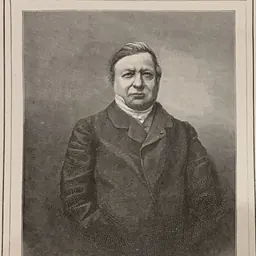
Lived 1848 – 1933 (aged 85). J. R. Clifford was an American lawyer, publisher, teacher, editor and writer.
J. R. Clifford (September 13, 1848 – October 6, 1933) was West Virginia's first African-American attorney. Clifford was also a newspaper publisher, editor and writer, school teacher, and principal. He was a Civil War veteran, grandfather, as well as a civil rights pioneer and founding member of the Niagara Movement (forerunner to the NAACP). Despite boundaries derived from racial discrimination, Clifford's accomplishments were great, reflecting his ability and determination.
Biography John Robert ("J. R.") Clifford was born September 13, 1848, in the small town of Williamsport, in what was then Hardy County, Virginia (now in Grant County), near present-day Moorefield. Clifford's parents Isaac and Mary Clifford and grandparents were "free blacks," who had lived in that region of Virginia for several generations. There were no schools for colored children in the area. Clifford's parents sent him to Chicago to attend school, sometime in the early 1860s to be educated by J. J. Healy.
In 1864, at the age of fifteen, Clifford enlisted in the United States Colored Troops, and served in Company F, 13th Regiment of Heavy Artillery, United States Colored Troops until 1865, having reached the rank of Corporal. At the end of the war, he served as a nurse.
Family and later life
On December 28, 1876, in Harpers Ferry, West Virginia, J. R. Clifford married seventeen-year-old Mary Elizabeth Franklin, a native of Lexington, Virginia; they would have ten children.
In 1933, Clifford died at the age of 85 in Martinsburg, West Virginia. His remains are buried at Arlington National Cemetery.
J.R. Clifford was nearly forgotten to history until he was rediscovered by Dr. Connie Park Rice, the preeminent African American Historian, of West Virginia University. Dr. Rice's article "Don't Flinch Nor Yield An Inch" recounts the complete history of J. R. Clifford.
From Williams v. Board of Education of Fairfax District, 45 W.Va. 199, 31 SE 985 (1898):
"Counsel insist that the colored pupils, having been allotted their pro rata share of the school funds, have no right to complain. The law guaranteed them eight months of school, and, though it cost many times in proportion what the white schools cost, they should have it. Money values should not be set off against moral and intellectual improvement. A nation that depends on its wealth is a depraved nation, while moral purity and intellectual progress alone can preserve the integrity of free institutions, and the love of true liberty, under the protection of equal laws, in the hearts of the people."
The court also said:
"Discrimination against the colored people, because of color alone, as to privileges, immunities, and equal legal protection, is contrary to public policy and the law of the land. If any discrimination as to education should be made, it should be favorable to, and not against, the colored people. Held in the bondage of slavery, and continued in a low moral and intellectual condition, for a long period of years, and then clothed at once, without preparation, with full citizenship, in this great republic, and the power to control and guide its destinies, the future welfare, prosperity and peace of our people demand that this benighted race should be elevated by education, both morally and intellectually, and that they may become exemplary citizens; otherwise the perpetuity of our free institutions may be greatly endangered."
Clifford sued because the school board provided eight months of school for white children but only five months for "colored" children. A teacher whose name is not mentioned continued teaching and sued for the salary for the three months. Clifford won for her the salary, totaling $121.00. The Niagara Movement called for full civil rights for black Americans and an end to legalized segregation, and is recognized as the cornerstone of the 20th Century civil rights movement and the forerunner to the National Association for the Advancement of Colored People (NAACP).
Clifford helped organize the movement's second meeting, the first to be held on U.S. soil, in Harpers Ferry, West Virginia, the site of abolitionist John Brown's 1859 raid. The three-day gathering, from August 15 to 18, 1906, took place at the campus of Clifford's alma mater Storer College (now part of Harpers Ferry National Historical Park). Convention attendees discussed how to secure civil rights for African Americans, and the meeting was later described by Du Bois as "one of the greatest meetings that American Negroes ever held." Attendees walked from Storer College to the nearby Murphy Family farm, the relocation site of the historic fort where John Brown's quest to end slavery reached its bloody climax. Once there, they removed their shoes and socks to honor the hallowed ground and participated in a ceremony of remembrance.
Clifford broke with the Niagara Movement when it formed the NAACP in 1909. Among other disagreements, he objected to the use of the word "colored" in the organization's title.
Don’t just read it —
keep it.
Full-length biographies made to live with: read them, listen on the way to work, watch them tonight.
- E-book
- Audio
- Video
Instant download · yours to keep · every purchase keeps this site free
Important facts
People in J. R. Clifford's life
Named in this biography and alive at the same time


Related people
Same field, nearest in time



Contemporaries
People whose lives overlapped J. R. Clifford's





Frequently asked questions
Who was J. R. Clifford?
American lawyer (1848-1933)
When was J. R. Clifford born?
J. R. Clifford was born on 13 September 1848 in Williamsport.
When did J. R. Clifford die?
J. R. Clifford died on 6 October 1933 in Martinsburg.
What was J. R. Clifford's occupation?
J. R. Clifford was a lawyer, publisher, teacher, editor and writer.
What nationality was J. R. Clifford?
J. R. Clifford was American.
Sources & further reading
Cite this page
APA: Biography.guide. (2026). J. R. Clifford. https://biography.guide/j-r-clifford/
MLA: "J. R. Clifford." Biography.guide, https://biography.guide/j-r-clifford/.
Chicago: "J. R. Clifford." Biography.guide. https://biography.guide/j-r-clifford/.
Data last updated: 2026-09-20 · Spot an error? Report a correction.
Page generated 2026-09-27 05:34 UTC