
About J. Philip Grime
Lived 1935 – 2021 (aged 85). J. Philip Grime was a British ecologist, biologist, university teacher and botanist, known for Intermediate disturbance hypothesis and Universal adaptive strategy theory.
John Philip Grime was an ecologist and emeritus professor at the University of Sheffield. He is best known for the universal adaptive strategy theory (UAST) and the twin filter model of community assembly with Simon Pierce, eco-evolutionary dynamics, the unimodal relationship between species richness and site productivity ("humped-back model"), the intermediate disturbance hypothesis, and DST classification (dominants, subordinates and transients).
Grime's 1979 book Plant Strategies and Vegetation Processes In an interview Grime has stated that "Ecology lacks a Periodic Table", quoting Richard Southwood.
Plant strategies His work and his theories are focused on plant strategies, as developed along their evolutionary history. His CSR theory says that each plant species has a blend of the three strategies that he labels C (competitive), S (stress tolerant) and R (ruderal, or rapid propagation). Ruderal strategists thrive in disturbed areas. He has described a method to classify herbaceous vegetations by analysing the importance of the three strategies in the genotypes of the species that are present.
Selected publications The Evolutionary Strategies that Shape Ecosystems Plant Strategies and Vegetation Processes Plant Strategies, Vegetation Processes, and Ecosystem Properties. (2nd much expanded edition of the above) Benefits of plant diversity to ecosystems: immediate, filter and founder effects "Trait convergence and trait divergence in herbaceous plant communities: mechanisms and consequencesre" "Plant strategy theories: a comment on Craine"
Awards and honours In 1991, Grime was inducted as a foreign member of the Royal Netherlands Academy of Arts and Sciences. In 1997, he won the Marsh Ecology Award from the British Ecological Society and was awarded honorary membership of the Ecological Society of America. He was also Distinguished Visiting Ecologist at Pennsylvania State University in that year. In 1998, he was elected Fellow of the Royal Society (FRS) and honorary doctor at University of Nijmegen. He has been honorary member of the British Ecological Society since 1999. He was the first ever recipient of the Alexander von Humboldt Medal (2011) for his outstanding contribution to the intellectual development of plant community ecology.
In 2013, the Journal of Ecology published a collection of Grime's most influential papers, for which he wrote a blog post and recorded an accompanying podcast interview.
Don’t just read it —
keep it.
Full-length biographies made to live with: read them, listen on the way to work, watch them tonight.
- E-book
- Audio
- Video
Instant download · yours to keep · every purchase keeps this site free
Important facts
People in J. Philip Grime's life
Named in this biography and alive at the same time


Related people
Same field, nearest in time



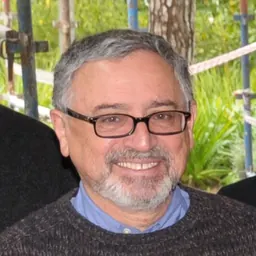

Contemporaries
People whose lives overlapped J. Philip Grime's


Frequently asked questions
Who was J. Philip Grime?
British ecologist (1935-2021)
When was J. Philip Grime born?
J. Philip Grime was born on 30 April 1935 in Manchester.
When did J. Philip Grime die?
J. Philip Grime died on 19 April 2021 in Sheffield.
What was J. Philip Grime's occupation?
J. Philip Grime was an ecologist, biologist, university teacher and botanist.
What was J. Philip Grime known for?
J. Philip Grime was known for Intermediate disturbance hypothesis and Universal adaptive strategy theory.
What nationality was J. Philip Grime?
J. Philip Grime was British.
Sources & further reading
Cite this page
APA: Biography.guide. (2026). J. Philip Grime. https://biography.guide/j-philip-grime/
MLA: "J. Philip Grime." Biography.guide, https://biography.guide/j-philip-grime/.
Chicago: "J. Philip Grime." Biography.guide. https://biography.guide/j-philip-grime/.
Data last updated: 2026-09-20 · Spot an error? Report a correction.
Page generated 2026-09-27 05:20 UTC