
J. Mayo Williams
American football player and coach, music producer
About J. Mayo Williams
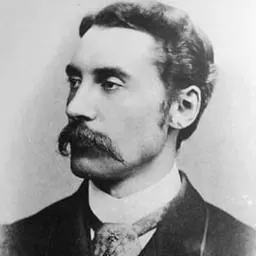
Lived 1894 – 1980 (aged 85). J. Mayo Williams was an American american football player, record producer, composer, american football coach and songwriter.
Jay Mayo "Ink" Williams (September 25, 1894 – January 2, 1980) was a pioneering African-American producer of recorded blues music. Some historians have claimed that Ink Williams earned his nickname by his ability to get the signatures of talented African-American musicians on recording contracts, but in fact it was a racial sobriquet from his football days, when he was a rare Black player on white college and professional teams. He was the most successful "race records" producer of his time, breaking all previous records for sales in this genre.
Biography Williams was born in Pine Bluff, Arkansas, the son of Millie and Daniel Williams. When he was seven years old, his father was murdered, and the family returned to his mother's hometown of Monmouth, Illinois, where he grew up. He was a graduate of Monmouth High School, where he was a star football player.
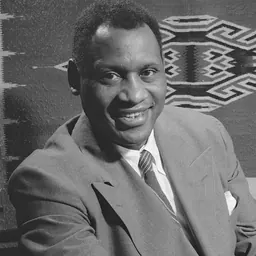
Williams attended Brown University, where he was a track star and outstanding football player. He also served in the First World War. During the 1920s, he played professional football and was one of three black athletes (along with Paul Robeson) to play in the fledgling National Football League during its first year. His playing career lasted until 1926. During that span he played for the Canton Bulldogs, the Dayton Triangles, the Hammond Pros and the Cleveland Bulldogs.
After graduating in 1921, he moved to Chicago. Williams' first foray in the recording industry was working as a collection agent for the Black-owned Black Swan record label. Although he continued to play football until 1926, his first love was music, and in 1924 he joined Paramount Records, which had recently begun to produce and market "race" records. Williams became a talent scout and supervisor of recording sessions in the Chicago area, becoming the most successful blues producer of his time. Upon joining Paramount, Williams became the first African American to hold an executive position in a white-owned recording company. One of his duties was to arrange to have songs scored for publication in order to register them with the copyright division of the Library of Congress. Williams drew no salary but received a royalty from sessions he produced.
In 1927, Williams was recruited to operate The Chicago Record Company, a venture co-founded by Edward Barrett, formerly with the Wisconsin Chair Company (Paramount's parent company) and Fred Gennett of Gennett Records, each contributing $10,000. The Chicago Record Company sought to enter the 'race' music industry, issuing jazz, blues and gospel records on the "Black Patti" label. – that is, acting as though he was a member of the white middle class. His efforts to refine the articulation of rural blues artists and polish their images were often met with hostility and misunderstanding. In addition to producing, he also managed some of the many artists he recorded, even sharing ownership of some songs as a co-writer. Songs on which he is credited as co-writer include "Corrine, Corrina", Nellie Lutcher's "Fine Brown Frame", Louis Jordan's "Mop Mop", "Keep A Knocking" Bert Mays and Stick McGhee's "Drinkin' Wine Spo-Dee-O-Dee" among others.
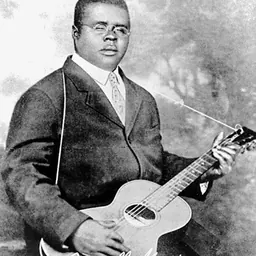
Williams set up the Chicago Music Publishing Company (CMPC) as publisher for all the titles he recorded. The CMPC collected all royalties generated by the materials it held copyrights on, and was responsible for passing on some of the profits to the composer or performer. However, many successful artists that Williams recorded, including Blind Blake and Blind Lemon Jefferson, probably never received any royalties. Race record entrepreneurs knew that rural blues musicians were unfamiliar with copyright laws, and they further played upon the musicians' vulnerability by providing free liquor at recording sessions, hoping they would get drunk and sign their rights away.
As plans were being initiated to conduct interviews with Williams to gather his life story in 1980, he died in a Chicago nursing home. He was buried at Burr Oak Cemetery in Alsip, Illinois.
Legacy Williams was a member of the National Football Hall of Fame Association. In 2004, he was posthumously inducted into the Blues Hall of Fame.
Head coaching record
Don’t just read it —
keep it.
Full-length biographies made to live with: read them, listen on the way to work, watch them tonight.
- E-book
- Audio
- Video
Instant download · yours to keep · every purchase keeps this site free
Important facts
People in J. Mayo Williams's life
Named in this biography and alive at the same time




Related people
Same field, nearest in time



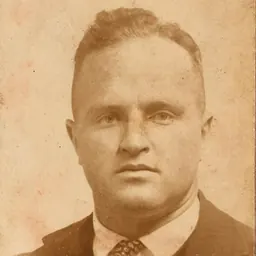
Contemporaries
People whose lives overlapped J. Mayo Williams's
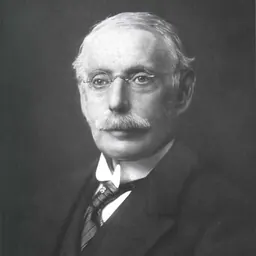

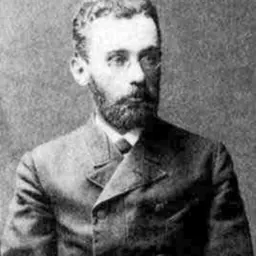
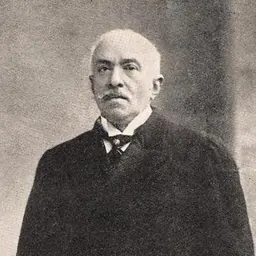

Frequently asked questions
Who was J. Mayo Williams?
American football player and coach, music producer (1894–1980)
When was J. Mayo Williams born?
J. Mayo Williams was born on 25 September 1894 in Pine Bluff, Monmouth.
When did J. Mayo Williams die?
J. Mayo Williams died on 2 January 1980 in Chicago.
What was J. Mayo Williams's occupation?
J. Mayo Williams was an american football player, record producer, composer, american football coach and songwriter.
What nationality was J. Mayo Williams?
J. Mayo Williams was American.
Sources & further reading
Cite this page
APA: Biography.guide. (2026). J. Mayo Williams. https://biography.guide/j-mayo-williams/
MLA: "J. Mayo Williams." Biography.guide, https://biography.guide/j-mayo-williams/.
Chicago: "J. Mayo Williams." Biography.guide. https://biography.guide/j-mayo-williams/.
Data last updated: 2026-09-20 · Spot an error? Report a correction.
Page generated 2026-09-27 05:24 UTC