
About J. J. Sakurai
Lived 1933 – 1982 (aged 49). J. J. Sakurai was a Japanese and American physicist and university teacher, known for Sakurai and Napolitano.
was a Japanese–American theoretical particle physicist.
While a graduate student at Cornell University, Sakurai independently discovered the V-A theory of weak interactions.
He authored the popular graduate text Modern Quantum Mechanics (1985, published posthumously) and other texts such as Invariance Principles and Elementary Particles (1964) and Advanced Quantum Mechanics (1967).
Life and career
J. J. Sakurai was born in Tokyo in 1933 and moved to the United States when he was a high school student. He studied physics at Harvard and Cornell, where he proposed his theory of weak interactions. After receiving his PhD from Cornell in 1958 he joined the faculty at University of Chicago, becoming a full professor in 1964. In 1970, Sakurai moved to the University of California, Los Angeles.
As a graduate student, he proposed the V−A theory of weak interactions, independently of Robert Marshak, George Sudarshan, Richard Feynman, and Murray Gell-Mann. In 1960, he published a paper on the theory of strong interactions based on Abelian and non-Abelian (Yang-Mills) gauge invariance.
In that paper, he also pioneered the vector meson dominance model of hadron dynamics.
Textbooks
In addition to his published papers, Sakurai authored several textbooks. These include Invariance Principles and Elementary Particles (1964), Advanced Quantum Mechanics (1967), and Modern Quantum Mechanics. The third volume was left unfinished due to Sakurai's sudden death in 1982, but was later edited and completed with the help of his wife, Noriko Sakurai, and colleague San Fu Tuan. Modern Quantum Mechanics is probably his most well known book and is still widely used for graduate studies today.
Sakurai Prize
In 1984 the family and friends of J. J. Sakurai endowed a prize for theoretical physicists in his honor. The goal of the prize as stated on the APS website is to encourage outstanding work in the field of particle theory. Recipients receive a $10,000 grant, an allowance for travel to the ceremony, and a certificate citing their contributions to particle physics.
Don’t just read it —
keep it.
Full-length biographies made to live with: read them, listen on the way to work, watch them tonight.
- E-book
- Audio
- Video
Instant download · yours to keep · every purchase keeps this site free
Important facts
People in J. J. Sakurai's life
Named in this biography and alive at the same time
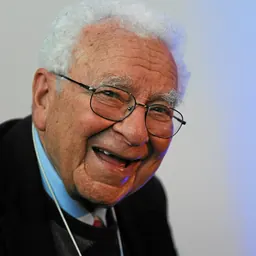
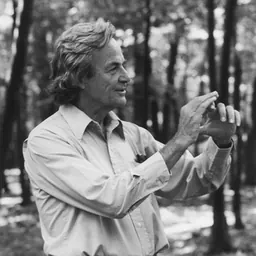
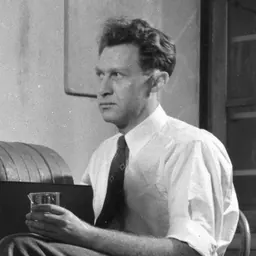
Related people
Same field, nearest in time

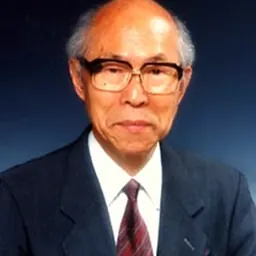


Contemporaries
People whose lives overlapped J. J. Sakurai's




Frequently asked questions
Who was J. J. Sakurai?
American physicist (1933-1982)
When was J. J. Sakurai born?
J. J. Sakurai was born on 31 January 1933 in Tokyo.
When did J. J. Sakurai die?
J. J. Sakurai died on 1 November 1982 in Geneva.
What was J. J. Sakurai's occupation?
J. J. Sakurai was a physicist and university teacher.
What was J. J. Sakurai known for?
J. J. Sakurai was known for Sakurai and Napolitano.
What nationality was J. J. Sakurai?
J. J. Sakurai was Japanese and American.
Sources & further reading
Cite this page
APA: Biography.guide. (2026). J. J. Sakurai. https://biography.guide/j-j-sakurai/
MLA: "J. J. Sakurai." Biography.guide, https://biography.guide/j-j-sakurai/.
Chicago: "J. J. Sakurai." Biography.guide. https://biography.guide/j-j-sakurai/.
Data last updated: 2026-09-20 · Spot an error? Report a correction.
Page generated 2026-09-27 05:31 UTC