
About J. J. C. Smart
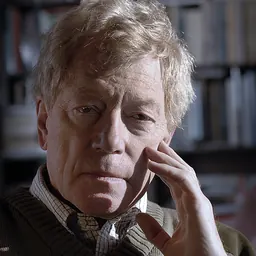
Lived 1920 – 2012 (aged 92). J. J. C. Smart was a British and Australian philosopher, professor and writer.
Career Born in Cambridge, England, of Scottish parents, Smart began his education locally, attending The Leys School, a leading independent boarding school. His younger brothers also became professors: Alastair (1922–1992) was Professor of Art History at Nottingham University; Ninian was a professor of religious studies and a pioneer in that field. Their father, William Marshall Smart, was John Couch Adams Astronomer at Cambridge University and later Regius Professor of Astronomy at Glasgow. In 1950, W. M. Smart was President of the Royal Astronomical Society. In 1946, Jack Smart graduated from the University of Glasgow with an MA, followed by a BPhil from Oxford University in 1948. He then worked as a Junior Research Fellow at Corpus Christi College, Oxford, for two years.
Smart served in the Second World War with the British Army where he was commissioned as a second lieutenant in the Royal Corps of Signals on 9 October 1941 and given the service number 212091. His war service was mainly in India and Burma. Following his retirement he was Emeritus Professor at Monash University.
Smart was a Foundation Fellow of the Australian Academy of the Humanities at its establishment in 1969. In 1990 he was awarded the Companion in the General Division of the Order of Australia. In 1991 he was elected to become an honorary Fellow of Corpus Christi College, Oxford, and in 2010, elected to become an honorary Fellow of Queen's College, Oxford.
Metaphysics Smart's main contribution to metaphysics is in the area of philosophy of time. He has been an influential defender of the B-theory of time, and of perdurantism.
His most important original arguments in this area concern the passage of time, which he claimed is an illusion. He argued that if time really passed, then it would make sense to ask at what rate it passes, but this requires some second time-dimension with respect to which passage of normal time can be measured. This in turn faces the same problems, and so there must be a third time-dimension, and so on. This is called the rate of passage argument and it was originally put forward by C. D. Broad.
Smart changed his mind about the nature and causes of the illusion of the passage of time. In the 1950s, he held that it was due to people's use of anthropocentric temporal language. He later came to abandon this linguistic explanation of the illusion in favour of a psychological explanation in terms of the passage of memories from short-term to long-term memory.
Philosophy of mind Regarding the philosophy of mind, Smart was a physicalist. In the 1950s, he was also one of the originators, with Ullin Place, of the mind–brain identity theory, which claims that particular states of mind are identical with particular states of the brain. Initially, this view was dubbed "Australian materialism" by its detractors, in reference to the stereotype of Australians as "down-to-earth" and "unsophisticated".
Smart's identity theory dealt with some extremely long-standing objections to physicalism by comparing the mind–brain identity thesis to other identity theses well known from science, such as the thesis that lightning is an electrical discharge, or that the morning star is the evening star. Although these identity theses give rise to puzzles such as Gottlob Frege's puzzle of the Morning Star and Evening Star, in the scientific cases, some claim that it would be absurd to reject the identity theses on this ground. Since the puzzles facing physicalism are strictly analogous to the scientific identity theses, it would then also be absurd to reject physicalism on the grounds that it gives rise to these puzzles.
Ethics In ethics, Smart was a defender of utilitarianism. Specifically, he defended "extreme", or act utilitarianism, as opposed to "restricted", or rule utilitarianism. The distinction between these two types of ethical theory is explained in his essay Extreme and Restricted Utilitarianism.
Smart gave two arguments against rule utilitarianism. According to the first, rule utilitarianism collapses into act utilitarianism because there is no adequate criterion on what can count as a "rule". According to the second, even if there were such a criterion, the rule utilitarian would be committed to the untenable position of preferring to follow a rule, even if it would be better if the rule were broken, which Smart called "superstitious rule worship".
Another aspect of Smart's ethical theory is his acceptance of a preference theory of well-being, which contrasts with the hedonism associated with "classical" utilitarians such as Jeremy Bentham. Smart's combination of the preference theory with consequentialism is sometimes called "preference utilitarianism".
Smart's arguments against rule utilitarianism have been very influential, contributing to a steady decline in its popularity among ethicists during the late 20th century. Worldwide, his defence of act utilitarianism and preference theory has been less prominent but has influenced philosophers who have worked or been educated in Australia, such as Frank Jackson, Philip Pettit, and Peter Singer.
One of Smart's two entries in The Philosophical Lexicon refers to his approach to the consequences of act utilitarianism: to "outsmart" an opponent is "to embrace the conclusion of one's opponent's reductio ad absurdum argument." This move is more commonly called "biting the bullet".
Works
"Extreme and Restricted Utilitarianism", The Philosophical Quarterly, Oct. 1956, pages 344–354. An Outline of a System of Utilitarian Ethics, 1961. Philosophy and Scientific Realism, 1963. Problems of Space and Time, 1964 (edited, with introduction). Between Science and Philosophy: An Introduction to the Philosophy of Science, 1968. Utilitarianism : For and Against (co-authored with Bernard Williams; 1973) Ethics, Persuasion and Truth, 1984. Essays Metaphysical and Moral,1987. Our Place in the Universe: A Metaphysical Discussion, 1989. Atheism and Theism (Great Debates in Philosophy) (including contributions by John Haldane; 1996)
Don’t just read it —
keep it.
Full-length biographies made to live with: read them, listen on the way to work, watch them tonight.
- E-book
- Audio
- Video
Instant download · yours to keep · every purchase keeps this site free
Important facts
People in J. J. C. Smart's life
Named in this biography and alive at the same time


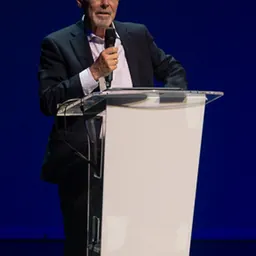




Related people
Same field, nearest in time
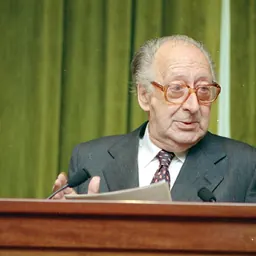

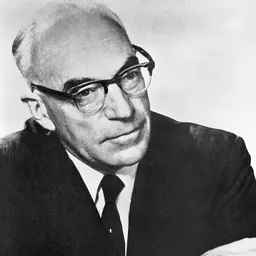

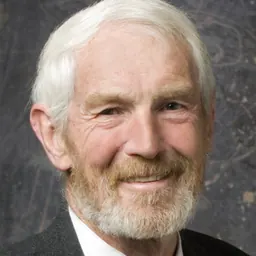
Contemporaries
People whose lives overlapped J. J. C. Smart's




Frequently asked questions
Who was J. J. C. Smart?
Australian philosopher and academic (1920–2012)
When was J. J. C. Smart born?
J. J. C. Smart was born on 16 September 1920 in Cambridge.
When did J. J. C. Smart die?
J. J. C. Smart died on 6 October 2012 in Melbourne.
What was J. J. C. Smart's occupation?
J. J. C. Smart was a philosopher, professor and writer.
What nationality was J. J. C. Smart?
J. J. C. Smart was British and Australian.
Sources & further reading
Cite this page
APA: Biography.guide. (2026). J. J. C. Smart. https://biography.guide/j-j-c-smart/
MLA: "J. J. C. Smart." Biography.guide, https://biography.guide/j-j-c-smart/.
Chicago: "J. J. C. Smart." Biography.guide. https://biography.guide/j-j-c-smart/.
Data last updated: 2026-09-20 · Spot an error? Report a correction.
Page generated 2026-09-27 05:19 UTC