
About J. Edward Guinan
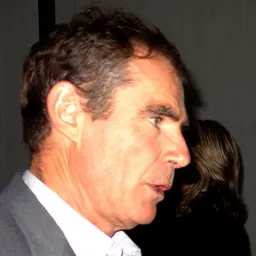
Lived 1936 – 2014 (aged 78). J. Edward Guinan was a peace activist, known for Statehood movement in the District of Columbia.
John Edward Guinan (6 March 1936 – 26 December 2014) was a former stock trader who became a Paulist priest and founded Washington, D.C.'s Community for Creative Non-Violence in 1970. He engaged in public acts of nonviolent resistance such as prolonged fasting and peaceful civil disobedience in response to homelessness, hunger, the Vietnam War, the Indochina wars, and Henry Kissinger's legacy that brought national media attention. He was the first to put the initiative for DC Statehood on the ballot, and it won all wards of the district to kickstart the statehood movement.
Early life and education Guinan was born into a blue-collar family in 1936 in Denver, Colorado, the son of Edward Thomas Guinan and Gabrielle Huot Guinan, who were of Irish and French descent respectively. He attended Loyola grade school in Denver from 1942 to 1950 and Saint Joseph High School from 1950 to 1954.
Military service and college Before college, Guinan served in the U.S. Naval Air Force from 1954 to 1957, at the U.S. Naval Air Station Barbers Point, Oahu, Hawaii. He worked as a radioman, and engaged in top-secret work countering China. After the Navy he enrolled in the University of Colorado Boulder in 1957 on the G. I. Bill. He graduated in 1960, majoring in international finance.
Stock trader He became a stock trader in San Francisco, where he worked for Schwabacher & J. W. Strauss & Co., a third-market firm. He was a member of the New York, American, and Pacific Coast stock exchanges, and the National and San Francisco Traders Associations. He bought a Jaguar racing coupe, and said he enjoyed driving it to lavish company getaways in Acapulco and Mexico City. However, he also began volunteering in a ghetto behind Nob Hill several nights a week with a young Paulist priest friend, and "came to the conclusion that I'd rather respond directly to human suffering than perpetuate the wealth of the already wealthy..."
Religious life To become a priest, he completed a one-year novitiate from 1965 to 1966, including spending the summer of 1965 as an assistant chaplain in Berkeley, becoming deeply influenced by Mario Savio, whom he met, and the Berkeley Free Speech Movement. There he volunteered in Anacostia, which was at that time the city's highest-crime neighborhood, and very poor. As a priest he counseled conscientious objectors against going to Vietnam. He was deeply involved in the antiwar movement, and his "fiery let's-go-to-the-barricades" sermons on peace drew large crowds, according to the social justice journalist Colman McCarthy. Various student-run underground and campus papers nationwide began taking notice, even encouraging young people to travel to Washington to hear him.
First antiwar protest and arrest He had his first experience with protest and arrest in 1971 when he attended the 1971 May Day protests against the Vietnam War, held at the US Department of Justice and sponsored by the Southern Christian Leadership Conference. The two-month "Peace Summer" on the weekend of June 30 to July 1 drew over 1,500 people who organized and coalesced themselves into a movement. Catholic Worker founder and activist Dorothy Day attended, as did Catholic journalist and friend of Mother Teresa, Eileen Egan. During this summer Guinan met his future wife, Kathleen Thorsby, and invited her to work with the other activists in Washington, DC. Beyond the antiwar movement, he envisioned working on systemic issues affecting poverty and racism. The group wanted to feed hungry people, and opened a new house at 1008 K Street Northwest.
Community for Creative Non-Violence (CCNV) Guinan perceived the need to establish a place of dialogue and input where people could think through and have significant input on city issues, the military industrial complex, and the Vietnam War. In 1969 he asked the Paulist Council to grant him the freedom to create a community on the principles of "common goods, shared responsibility and service-oriented – to live poorly, simply, to make ourselves available to others and see if it works." This all grew out of the worship community of George Washington University. It was an interfaith enterprise, however, with Jewish, Baptist, and secular members alongside Catholics among the original founding group, and not officially connected to any church. Guinan and the group drafted a statement of purpose, "To resist the violent; to gather the gentle; to help free compassion and mercy and truth from the stockades of our empire." Dorothy Day also visited from time to time, and was closely involved with the growth of the communities. Hélder Câmara the self-identified socialist Bishop and advocate of Liberation Theology visited as well. The venue was busy and popular, but they were also threatened with eviction in 1973 for attracting the wrong element to the building, making headlines: "We have come to feed the hungry, and we intend to insist on that right. The more fortunate will have to adjust." The Guinans also founded the Zacchaeus Free Clinic and recruited Jack Bresette, MD. The Zacchaeus organizations later merged to become Bread for the City.
Kissinger protest On October 8, 1973, when Henry Kissinger received the Pacem in Terris award from the Center for the Study of Democratic Institutions, an incensed Guinan led a group of four other CCNV protesters to the event, known as Pacem in Terris III. Bishop Dozier even waved to Guinan when he saw him, because they knew one another from Pax Christi USA events, which Bishop Dozier prominently supported. When Kissinger paused in his acceptance speech, Glick recalled that Guinan stood and said loudly enough for everyone to hear, "Henry Kissinger, it is an outrage that you are getting this award after the millions of deaths you are responsible for in Indochina." Others from the group shouted "We're laughing at you, Henry Kissinger. How can you keynote a convocation for peace?" Then Guinan, Glick, and the others activated the laughing boxes from their various seats around the auditorium, causing an uproar. Rader writes, "Immediately, dozens of Secret Service men descended, grabbing over each other at the mechanical laughing boxes and trying to find a lever that would stop them. The audience watched in bewilderment. The boxes wouldn’t stop. Then four huge men in a panic threw the boxes to the floor, jumping and stomping on them. But the boxes kept it up: HA HA HA HA HA HA HA." In 1972 Guinan went on a 21-day water-only fast to bring attention of the right of the poor to eat. He then broke the fast by going into a Safeway grocery store, eating bread from the shelves, and declaring "This bread has been stolen by Safeway from the children, from the elderly, from the hungry, from the farmers and farm workers. It is here in this store so that this monopoly may now steal from the consumers. People have a right to eat."
His fast in 1975 protesting a mansion for a Catholic bishop was his most covered in national news. A group of Catholic businesspeople raised money to buy the Chase mansion in Washington, DC's Kalorama neighborhood, where Embassy Row is located. The mansion was considered one of the most beautiful in the city, and the media soon dubbed it the "Christian Embassy". Cardinal William Wakefield Baum purchased it from the group as his intended residence, prompting Guinan to go on what he intended to be a prolonged water-only fast to protest the extravagance and declare that the money should be spent serving the poor. Following a public outcry, Baum relented after Guinan had fasted for 27 days. He organized the founding assembly, which was held at George Washington University on October 5–7, 1973. Many of the 350 participants had also joined pray-ins outside the nearby Nixon White House that summer. Guinan wished to counter Just war theory, using Pope John XXIII's Pacem in terris encyclical of 1963 to, in his words, "permeate the Roman Catholic consciousness and structure with its rich tradition of Catholic pacifism and gospel nonviolence which has always been with us, but which has for many centuries been overlaid with layers of argumentation and rhetoric and is very difficult to uncover." Dorothy Day spoke at that first meeting, saying the group was needed to counter U.S. involvement in Indochina.
Pax Christi USA differed from similar groups such as Catholic Peace Fellowship (Jim Forest) because, according to Guinan, it had "consultative status with the United Nations." Bishop Carroll Thomas Dozier of Memphis and Bishop Thomas Gumbleton of Detroit sent messages of support to the assembly, as did Cardinal Bernardus Johannes Alfrink of Utrecht, honorary chairman of the international body.
Guinan's participation only lasted a year, until the summer of 1974. Guinan's resignation letter was also a key to his personality. "I function very poorly in organizations and institutions, possibly an instinctual disbelief in the form; I abhor majority and distrust consensus, possibly an exaggerated belief in the individual; I oppose sacrificing the person for the greater Glory of God, which has brought me to the precipice of our present disagreement."
Wellspring Ministries For 25 years from 1985 until he retired in 2010, Guinan was executive director of Wellspring Ministries, a nonprofit incorporated to serve adults living with developmental disabilities.
DC Statehood Guinan, a Statehood Party member, saw a DC statehood initiative as a way of bringing the benefits of being a state to the electorate, especially the poor. The statehood movement restarted after the death of Julius Hobson, when Guinan put statehood on the 1980 ballot as an initiative. He did not ask anyone in the self-determination movement, but instead drafted a statehood proposal, which led to initial controversy among those who thought the city wasn't ready. Were DC to become a state, Guinan's proposal would have launched a legal process to create a constitution for the State of New Columbia and lobby congress for a statehood bill. Asch and Musgrove show how Guinan also hoped to establish a grassroots activist network "that would displace establishment leaders and empower citizens to address D.C.'s most pressing needs."
Co-author with the Catholic Bishops of Appalachia, "This Land is Home to Me: A Pastoral Letter on Powerlessness in Appalachia," 1975.
Editor, Redemption Denied: An Appalachian Reader, Gamaliel Press, 1976.
Editor, Flesh and Spirit: A Religious View of Bicentennial America, Gamaliel Press, 1976
Personal life While he was still a Paulist priest, Guinan met Kathleen Thorsby, who had come to Washington, D.C., for the "Peace Summer" discussed above. He asked the Paulists for permission to become the first married priest, and he further petitioned the Vatican to abolish the rule that priests cannot marry. His request was denied by Pope Paul VI, so he left the Paulists. He and Thorsby married in July 1974, she took his surname, and they remained a married team until his death. Together they founded Zacchaeus Community Kitchen, and other cornerstone organizations that serve the poor. Kathleen Guinan has been CEO of Crossway Community since 1990. She is also a founder of Rachael's Women's Center, the first day shelter for women experiencing homelessness. They had four children. The couple received the WETA Hometown Hero award as DC citizens creating "positive change for underprivileged people."
Don’t just read it —
keep it.
Full-length biographies made to live with: read them, listen on the way to work, watch them tonight.
- E-book
- Audio
- Video
Instant download · yours to keep · every purchase keeps this site free
Important facts
People in J. Edward Guinan's life
Named in this biography and alive at the same time
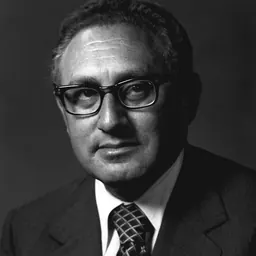





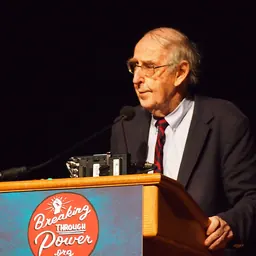

Related people
Same field, nearest in time

Contemporaries
People whose lives overlapped J. Edward Guinan's






Frequently asked questions
Who was J. Edward Guinan?
American community activist
When was J. Edward Guinan born?
J. Edward Guinan was born on 6 March 1936 in Denver, Colorado.
When did J. Edward Guinan die?
J. Edward Guinan died on 26 December 2014 in Washington, D.C..
What was J. Edward Guinan's occupation?
J. Edward Guinan was a peace activist.
What was J. Edward Guinan known for?
J. Edward Guinan was known for Statehood movement in the District of Columbia.
Sources & further reading
Cite this page
APA: Biography.guide. (2026). J. Edward Guinan. https://biography.guide/j-edward-guinan/
MLA: "J. Edward Guinan." Biography.guide, https://biography.guide/j-edward-guinan/.
Chicago: "J. Edward Guinan." Biography.guide. https://biography.guide/j-edward-guinan/.
Data last updated: 2026-09-26 · Spot an error? Report a correction.
Page generated 2026-09-27 05:14 UTC