
About J. E. Casely Hayford
Lived 1866 – 1930 (aged 63). J. E. Casely Hayford was a writer, lawyer, journalist, editor and politician.
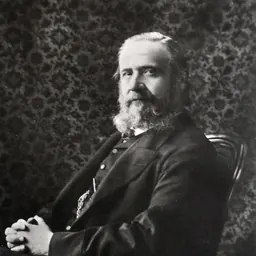
Joseph Ephraim Casely Hayford, (29 September 1866 – 11 August 1930), also known as Ekra-Agyeman, was a prominent Fante Gold Coast journalist, editor, author, lawyer, educator, and politician who supported pan-African nationalism. His 1911 novel Ethiopia Unbound is one of the earliest novels published in English by an African.
Biography Joseph Ephraim Casely Hayford was born on 29 September 1866 in Cape Coast, in the British Gold Coast colony, now Ghana.
His family, part of the Fante Anona clan and descendants of a dynasty of omanhenes and okyeames, was part of the Fante coastal elite. His father, Joseph de Graft Hayford (1840–1919), was educated and ordained as a minister in the Methodist church, and was a prominent figure in Ghanaian politics. His mother, Mary de Graft Hayford, was from the Brew family, descended from the 18th-century Irish trader Richard Brew and his African "country wife", the Fante princess and daughter of Eno Baisie (Beesie) Kurentsi (known to Europeans as “John Currantee”), the Omanhene (chief) of Anomabu. Brew settled in this area about 1745 and was involved in the Transatlantic slave trade.
Casely was one of Joseph's middle names; he adopted Casely Hayford as a non-hyphenated double surname. His brothers were Ernest James Hayford, a doctor, and the Reverend Mark Hayford, a minister.
Early life Casely Hayford attended Wesley Boys' High School (now known as Mfantsipim School) in Cape Coast, and Fourah Bay College in Freetown, Sierra Leone. While in Freetown, Casely Hayford became an avid follower of Edward Wilmot Blyden, the foremost pan-African figure at the time, who edited Negro, the first explicitly pan-African journal in West Africa.
Upon returning to Ghana, Casely Hayford became a high-school teacher. He eventually was promoted to principal at Accra Wesleyan Boys' High School. He was dismissed from his position at the school for his political activism.
By 1888, Casely Hayford was the editor, and he renamed the paper as the Gold Coast Echo. and at Peterhouse, Cambridge. He was called to the Bar on 17 November 1896. That year, he returned with his second wife Adelaide to Ghana to private law practice in Cape Coast, Axim, Sekondi and Accra. He also continued his work as a journalist, editing the Gold Coast Leader. In 1904, he helped found the Mfantsipim School. In 1910, he succeeded John Mensah Sarbah as president of the Aborigines' Rights Protection Society, the first anti-colonial organisation founded in the Gold Coast.
While visiting London to protest the Forest Ordinance of 1911, he was part of a group that gave financial assistance to Dusé Mohamed Ali to get his African Times and Orient Review off the ground. Others were Francis T. Dove and C. W. Betts from Sierra Leone and Dr. Oguntola Sapara from Lagos.
Casely Hayford was also deeply involved in the political movement for African emancipation. He corresponded with W. E. B. Du Bois, and participated in Booker T. Washington's International Conference on the Negro in 1912. Casely Hayford's correspondence with Washington fostered the pan-African movement in both Africa and the United States.
Casely Hayford's career in public office began with his nomination to the Legislative Council of the Gold Coast in 1916. As a legislator, he served on various public commissions, and was appointed an MBE in the 1919 Birthday Honours for services in aid of the Prince of Wales's Patriotic Fund. In the same year, he formed West Africa's first nationalist movement, the National Congress of British West Africa, one of the earliest formal organisations working toward African emancipation from colonial rule. He represented the Congress in London in 1920, to demand constitutional reforms from the colonial secretary, and address the League of Nations Union. He was criticised for accepting inadequate concessions from the colonial authorities. While promoting an African nationalism that demanded unity and cultural awareness among Africans, Hayford advocated only constitutional political reforms within the framework of Ghana remaining a colony. The novel is set in both Africa and England. It relies on philosophical debates between an African and his English friend, as well as references to contemporary African events and ancient African history, to provide a context for its exploration of African identity and the struggle for emancipation.
Marriage and family Casely Hayford was the progenitor of the Casely-Hayford family of Ghana and Britain. His descendants have served as part of the latter country's Black British elite.
He was first married to Beatrice Madeline Pinnock. The couple's son Archie Casely-Hayford became a barrister, district magistrate and the first Minister of Agriculture and Natural Resources in the First Republic of Ghana.
While in London studying at the Inner Temple and lodging at a hostel for African bachelors in 1893, Casely Hayford met Adelaide Smith, a lady of Sierra Leonean Creole origins. They later married, and she returned with him to the Gold Coast in 1896 after he was received by the bar. She became a prominent writer and established a Freetown girl's vocational school. Adelaide and Joseph had a daughter, Gladys May Casely-Hayford (1904–1950), who was a teacher, an artist and a poet, publishing some of her poems under the pen name of Aquah Laluah.
Don’t just read it —
keep it.
Full-length biographies made to live with: read them, listen on the way to work, watch them tonight.
- E-book
- Audio
- Video
Instant download · yours to keep · every purchase keeps this site free
Important facts
Family & relationships
People in J. E. Casely Hayford's life
Named in this biography and alive at the same time


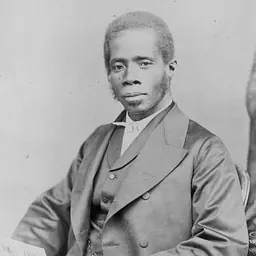
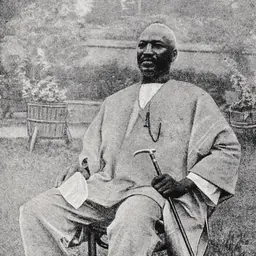


Related people
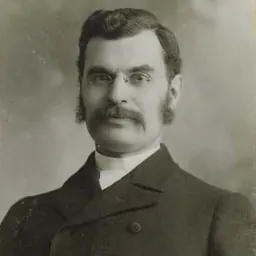
Same field, nearest in time





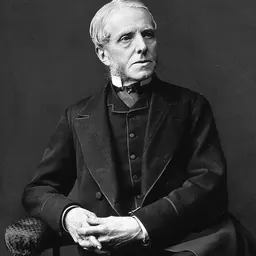
Contemporaries
People whose lives overlapped J. E. Casely Hayford's



Frequently asked questions
Who was J. E. Casely Hayford?
Ghanaian politician (1866-1930)
When was J. E. Casely Hayford born?
J. E. Casely Hayford was born on 29 September 1866 in Cape Coast.
When did J. E. Casely Hayford die?
J. E. Casely Hayford died on 11 August 1930 in Accra.
What was J. E. Casely Hayford's occupation?
J. E. Casely Hayford was a writer, lawyer, journalist, editor and politician.
What nationality was J. E. Casely Hayford?
J. E. Casely Hayford's recorded nationality: Gold Coast Colony.
Sources & further reading
· Wikipedia: J. E. Casely Hayford
· DBpedia: J. E. Casely Hayford
Cite this page
APA: Biography.guide. (2026). J. E. Casely Hayford. https://biography.guide/j-e-casely-hayford/
MLA: "J. E. Casely Hayford." Biography.guide, https://biography.guide/j-e-casely-hayford/.
Chicago: "J. E. Casely Hayford." Biography.guide. https://biography.guide/j-e-casely-hayford/.
Data last updated: 2026-09-22 · Spot an error? Report a correction.
Page generated 2026-09-27 05:33 UTC