
About Dusé Mohamed Ali
Lived 1866 – 1945 (aged 78). Dusé Mohamed Ali was an Egyptian journalist, writer and actor.
Dusé Mohamed Ali (; 21 November 1866 – 25 June 1945) was a Sudanese-Egyptian actor and political activist, who became known for his African nationalism. He was also a playwright, historian, journalist, editor, and publisher. In 1912 he founded the African Times and Orient Review, later revived as the African and Orient Review, which published in total through 1920. He lived and worked mostly in England, alongside the United States and Nigeria respectively. In the latter location, he founded the Comet Press Ltd, and The Comet newspaper in Lagos.
Early life Ali was born in 1866 in Alexandria, Egypt. His father, Abdul Salem Ali, was an officer in the Egyptian Army. His mother was Sudanese. He received his early training in Egypt, but at the age of nine or 10, his father arranged for him to go to England to be educated, Ali had originally intended to study as a doctor and had started on related studies before his father's death. His father died in 1882 while serving at the Battle of Tel el-Kebir in Egypt. After that, the younger Ali, then 16, was forced to return to Egypt, settling affairs with his father's estate, Ali returned to England. Afterward he wanted to write and act. On completing his studies at the University of London. As the ward of Canon Berry, he pursued studies at King's College London.
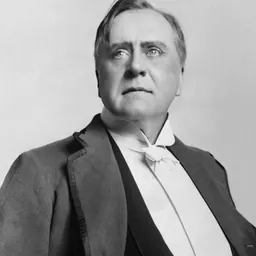
Actor and playwright Ali was in the theatre company of Herbert Beerbohm Tree and in Lillie Langtry's production of Antony and Cleopatra at the Royal Princess Theatre, London.
As an actor, Ali toured the British Isles. He produced Othello and The Merchant of Venice at Hull, Yorkshire, in 1902, playing the parts of Othello and the Prince of Morocco. He earned praise from the British press.
He wrote several plays, producing The Jew's Revenge (1903) at the Royal Surrey Theatre in London, A Cleopatra Night (1907) at Dundee, and the Lily of Bermuda (1909), a musical comedy at the Theatre Royal, Manchester. The plot centers on a flower whose hallucinogenic scent causes people to act against their normal prejudices, illustrating Ali's desire for 'a more equitable society'. The productions were praised by the British and American press.
His production and performance in A Daughter of Judah (1906), which he first produced in the Glasgow Empire Theatre (GET) received particularly good reviews.
Mohamed toured in the United States, where he produced several plays and won recognition as an actor.
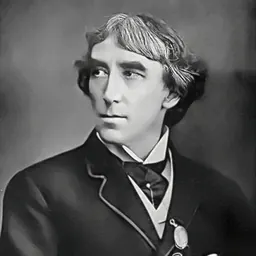
In London, he founded the Hull Shakespeare Society, of which Sir Henry Irving was the first President. Representing his political interests and considerable British interest in the Orient, he founded the Anglo-Ottoman Society, London. Its members included Lords Newton, Lamington, Stourton and Mowbray.
In 1915 Ali founded and was Secretary of the Indian Muslim Soldiers' Widows' and Orphans' War Fund. Among its patrons were Consuelo, the Duchess of Marlborough, the Right Hon. D. Lloyd George, Sir Edward Grey, Lord and Lady Lamington, Lord and Lady Newton, the Marquis and Marchioness of Crew, Mrs. H. H. Asquith, Sir Austen and Lady Chamberlain, Lord Curzon, and almost all the members, of the British Cabinet.
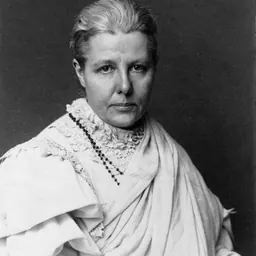
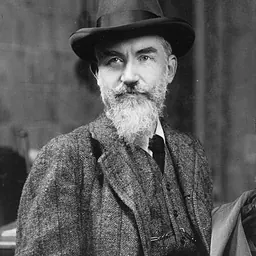
Lecturer and journalist Duse Mohamed Ali at his desk at the African Times and Orient Review, London, September 1913. After the First Universal Races Congress held at the University of London in 1911, Ali, with the help of John Eldred Jones, a journalist from Sierra Leone, The journal advocated Pan-African nationalism. It became a forum for African and other intellectuals and activists from around the world. It attracted numerous contributors, including George Bernard Shaw, H. G. Wells, Annie Besant, Sir Harry H. Johnston, Henry Francis Downing, and William H. Ferris.
Don’t just read it —
keep it.
Full-length biographies made to live with: read them, listen on the way to work, watch them tonight.
- E-book
- Audio
- Video
Instant download · yours to keep · every purchase keeps this site free
Important facts
People in Dusé Mohamed Ali's life
Named in this biography and alive at the same time




Related people
Same field, nearest in time

Contemporaries
People whose lives overlapped Dusé Mohamed Ali's



Frequently asked questions
Who was Dusé Mohamed Ali?
African nationalist (1866–1945)
When was Dusé Mohamed Ali born?
Dusé Mohamed Ali was born on 21 November 1866 in Alexandria.
When did Dusé Mohamed Ali die?
Dusé Mohamed Ali died on 25 June 1945.
What was Dusé Mohamed Ali's occupation?
Dusé Mohamed Ali was a journalist, writer and actor.
What nationality was Dusé Mohamed Ali?
Dusé Mohamed Ali was Egyptian.
Sources & further reading
Cite this page
APA: Biography.guide. (2026). Dusé Mohamed Ali. https://biography.guide/duse-mohamed-ali/
MLA: "Dusé Mohamed Ali." Biography.guide, https://biography.guide/duse-mohamed-ali/.
Chicago: "Dusé Mohamed Ali." Biography.guide. https://biography.guide/duse-mohamed-ali/.
Data last updated: 2026-09-20 · Spot an error? Report a correction.
Page generated 2026-09-27 05:33 UTC