
About J. Baldwin
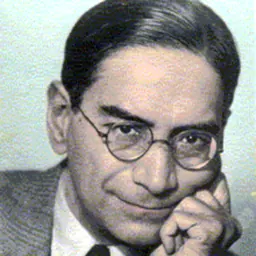
Lived 1933 – 2018 (aged 84). J. Baldwin was an American designer.
James Tennant Baldwin (May 6, 1933 – March 2, 2018), often known as Jay Baldwin or J. Baldwin, was an American industrial designer and writer. Baldwin was a student of Buckminster Fuller; Baldwin's work was inspired by Fuller's principles and, in the case of some of Baldwin's published writings, he popularized and interpreted Fuller's ideas and achievements. In his own right, Baldwin was a figure in American designers' efforts to incorporate solar, wind, and other renewable energy sources. In his career, being a fabricator was as important as being a designer. a design that combines Buckminster Fuller's geodesic dome with panels of inflated ETFE plastic panels.
Early life, work and teaching J. Baldwin, born the son of an engineer, once said that, at 18, he heard Buckminster Fuller speak for 14 hours non-stop. This was in 1951 at the University of Michigan, where Baldwin had enrolled to learn automobile design because a friend of his had been killed in a car accident that Baldwin attributed to bad design. He worked with Fuller prior to graduation from U. of M. in 1955. During his student years, Baldwin worked (in a unique job sharing role) in an auto factory assembly line. He went on to do graduate work at the University of California, Berkeley.
Baldwin remained a friend of Buckminster Fuller, and reflected that "By example, he encouraged me to think for myself comprehensively, to be disciplined, to work for the good of everyone, and to have a good time doing it."
As a young designer in the late 1950s and early 1960s, Baldwin designed advanced camping equipment with Bill Moss Associates. Baldwin became an instructor who passed on his knowledge and design perspective. In March 1969, accompanied by a number of his design-school students from Southern Illinois University, Baldwin was a participant in the Alloy conference that took place near La Luz, New Mexico. The conference, convened by Steve Baer and fiends, had attracted people from across the U.S. and from Canada. In the early 1970s, Baldwin taught at Pacific High School, and later taught simultaneously at San Francisco State College (now called San Francisco State University), San Francisco Art Institute, and the Oakland campus of California College of Arts & Crafts for about six years.
Baldwin referred to his own rural home as "a three-dimensional sketchpad".
During the first Jerry Brown administration, Baldwin worked in the California Office of Appropriate Technology.
Given his long-term role as a "technology" editor, it is worth mentioning the scope of Baldwin's focus on technology. His interests remained broader than that represented in the shifting media and popular focus of the mid-1980s and later, which inclined to highlight the micro chip and electronic devices based on it. Baldwin continued to point out the value of (and need for evaluation of) technologies within a larger perimeter. Certainly shelter and transportation technologies always interested him. So did tools – and whether a device or tool or process was freshly innovative or age-old in concept, if it enabled a person to "do the job" with wood, metal, fiberglass panels, soil, trees, etc., it remained worthy of Baldwin's attention. The structure weighed just one-half pound per square foot of floor space. For a variety of reasons including durability and toxicity concerns from vinyl chloride vapor emitted by vinyl sheeting, Baldwin later recommended the use of ETFE film; ETFE had further advantages including transparency and ease of keeping the surface clean, but its ultraviolet transparency reduces its suitability for occupied structures. Baldwin intentionally did not patent his invention. The basic approach has since been applied in large-scale applications such as the Eden Project in Cornwall, England.
Baldwin continued to practice design (as exemplified in the unique and aerodynamic 'mobile-room' Quick-Up camper he put on the market) and to teach design at the college level up until 2016. Between the early 1990s and 2016 he taught at Sonoma State University, San Francisco Institute of Architecture, and at California College of Arts & Crafts. Death Baldwin died on March 2, 2018, at the age of 84.
Books Author: Why You Can't Fly, 2015. Author: BuckyWorks: Buckminster Fuller's Ideas for Today, 1997. Co-editor (with Stewart Brand and others): Whole Earth Catalogs, 1968–1998. Co-editor (with Stewart Brand): Soft-Tech, 1978. Editor Whole Earth Ecolog: The Best of Environmental Tools & Ideas, 1990.
Don’t just read it —
keep it.
Full-length biographies made to live with: read them, listen on the way to work, watch them tonight.
- E-book
- Audio
- Video
Instant download · yours to keep · every purchase keeps this site free
Important facts
People in J. Baldwin's life
Named in this biography and alive at the same time
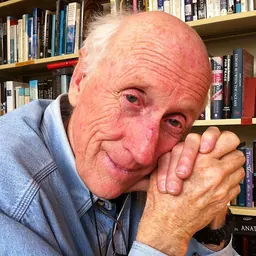



Related people
Same field, nearest in time


Contemporaries
People whose lives overlapped J. Baldwin's




Frequently asked questions
Who was J. Baldwin?
American industrial designer
When was J. Baldwin born?
J. Baldwin was born on 6 May 1933.
When did J. Baldwin die?
J. Baldwin died on 5 March 2018.
What was J. Baldwin's occupation?
J. Baldwin was a designer.
What nationality was J. Baldwin?
J. Baldwin was American.
Sources & further reading
Cite this page
APA: Biography.guide. (2026). J. Baldwin. https://biography.guide/j-baldwin/
MLA: "J. Baldwin." Biography.guide, https://biography.guide/j-baldwin/.
Chicago: "J. Baldwin." Biography.guide. https://biography.guide/j-baldwin/.
Data last updated: 2026-09-26 · Spot an error? Report a correction.
Page generated 2026-09-27 05:15 UTC