
About Iyothee Thass
Lived 1845 – 1914 (aged 68). Iyothee Thass was a physician, author, anthropologist, journalist and linguist, known for South Indian Sakya Buddhist movement.
C. Iyothee Thassa Pandithar (Born Kathavarayan; 20 May 1845 – 1914) was an Indian anti-caste activist and a practitioner of Siddha medicine. He famously converted to Buddhism and called upon the Paraiyars to do the same, arguing that this was their original religion. He also founded the Panchamar Mahajana Sabha in 1891 along with Rettamalai Srinivasan. Panchamas are the ones who are outcastes.
"Iyothee Thass" is the most common Anglicized spelling of his name; other spellings include Pandit C. Ayodhya Dasa, C. Iyothee Doss, C. Iyodhi Doss, C. Iyothee Thoss, K. Ayōttitācar (avarkaḷ), K. Ayōttitāsa (paṇṭitaravarkaḷ), or Ayothidas Pandithar.
Early life Iyothee Thass was born Kathavarayan on 20 May 1845 in Thousand Lights, a neighbourhood in Madras (now Chennai), and later migrated to the Nilgiris district. His family followed Vaishnavism and on that basis he named his children Madhavaram, Pattabhiraman, Janaki, Raman and Rasaram. His grandfather worked for George Harrington in Ootacamund (now Ooty) and little Kathavarayan profited immensely from this association.
Iyothee Thass possessed deep knowledge in Tamil, Siddha medicine and philosophy, and literary knowledge in languages such as English, Sanskrit and Pali.
Early Activism (1870 - 1900) In 1870, Iyothee Thass founded Adhvaidhananda Sabha, considered one of his early institution-building activities. Later, in 1891, he established the Dravida Mahajana Sabha and organized its First Conference in Ooty. The conference addressed issues such as enacting criminal laws against the humiliation of untouchables and providing education and employment opportunities for them. Iyothee Thass actively engaged with the colonial census and sought recognition for the Depressed Classes as Adi-Tamilar, distinct from Hinduism.
In the 1870s, Iyothee Thass organized the Todas and other tribes of the Nilgiri Hills into a formidable force. In 1876, Thass established the Advaidananda Sabha and launched a magazine called Dravida Pandian in collaboration with Rev. John Rathinam.
Conversion to Buddhism Iyothee Thass met Colonel H. S. Olcott with his followers and expressed a sincere desire to convert to Buddhism. and was established in the year 1898.
Identifying the caste system's origin with the decline of Buddhism, Iyothee Thass urged Dalits to return to Buddhism for the annihilation of caste. In 1898, he embraced Buddhism during a visit to Sri Lanka and founded 'The Sakya Buddhist Society.' The society established branches in various locations, including South Africa and Sri Lanka. Iyothee Thass's efforts aimed at constructing a casteless identity for Dalits. He emphasized the need to record Buddhism as their religion in the census, challenging the established caste hierarchy.
Later life and work (1900 - 1914) On 19 June 1907, Iyothee Thass launched a weekly Tamil newspaper called Oru Paisa Tamizhan or One Paise Tamilian and Dravidia Pandian, In addition to hosting Iyothee Thass' editorials, the newspaper gave a voice to the public, including members of the Dalit community, who had the opportunity to publish articles on areas such as "religion, law, Tamil literature, economy, agriculture and a Ladies Column". The newspaper enjoyed a wide reach among marginalized communities and took an explicit anti-caste stance, also reflected in its refusal to use caste names.
Iyothee Thass fought (unsuccessfully) with the Madras Mahajana Sabha for the right of Parayars to enter Vishnu and Shiva temples, traditionally denied to Dalit communities, and advocated with the British for free education up to the fourth grade and allocation of unused lands to oppressed Parayars.
Iyothee Thass died on 5 May 1914, According to popular sources, Kandappan preserved the works from destruction after finding the manuscripts written on palm leaves in a pile of leaves used for cooking. Kandappan had them delivered to Ellis.
Thass found the discrepancy between the 1831/1834 texts and the 1835/1837 texts notable, suggesting a deliberate intervention. Thass proposed that the publication of Thirukkural by Ellis likely alerted the brahmanas to the existence of an ethical text authored by a valluvan, a sub-sect of the pariahs. This awareness may have led them to reconcile their views on the social status of valluvans and pariahs with the newfound intellectual strength and achievements demonstrated in Thirukkural. To address this, Thass suggested that a new genealogy for Thiruvalluvar emerged, attempting to align him with noble birth. Different versions of these stories circulated, with the 1847 edition by Muthuveerapillai and Vedagiri Mudaliar linking Thiruvalluvar's birth to puranic myths. Thass argued that these stories, often inconsistent and absurd, aimed to distance Thiruvalluvar from his Buddhist origins and integrate him into the Brahminical Hindu value system. His works are nationalized and solatium was given to their legal heirs in 2008.
Criticism
In the early part of the 20th century, he indulged in vehement condemnation of the Swadeshi movement and the nationalist press remarking that he could "locate the power of the modern secular Brahmin in the control he wielded over public opinion."
Don’t just read it —
keep it.
Full-length biographies made to live with: read them, listen on the way to work, watch them tonight.
- E-book
- Audio
- Video
Instant download · yours to keep · every purchase keeps this site free
Important facts
People in Iyothee Thass's life
Named in this biography and alive at the same time

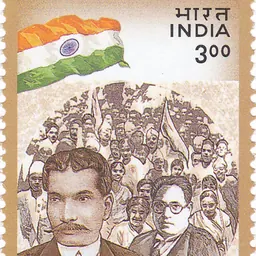
Related people
Same field, nearest in time




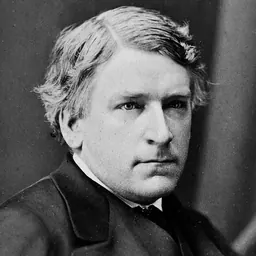
Contemporaries
People whose lives overlapped Iyothee Thass's
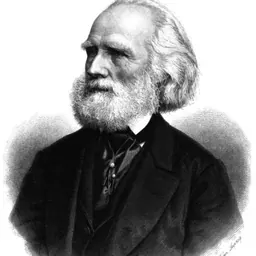
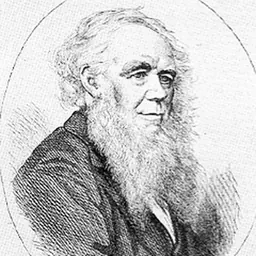


Frequently asked questions
Who was Iyothee Thass?
Indian activist
When was Iyothee Thass born?
Iyothee Thass was born on 20 May 1845 in Nilgiris district.
When did Iyothee Thass die?
Iyothee Thass died on 5 May 1914.
What was Iyothee Thass's occupation?
Iyothee Thass was a physician, author, anthropologist, journalist and linguist.
What was Iyothee Thass known for?
Iyothee Thass was known for South Indian Sakya Buddhist movement.
What nationality was Iyothee Thass?
Iyothee Thass's recorded nationality: Colonial India, Indian people.
Sources & further reading
Cite this page
APA: Biography.guide. (2026). Iyothee Thass. https://biography.guide/iyothee-thass/
MLA: "Iyothee Thass." Biography.guide, https://biography.guide/iyothee-thass/.
Chicago: "Iyothee Thass." Biography.guide. https://biography.guide/iyothee-thass/.
Data last updated: 2026-09-22 · Spot an error? Report a correction.
Page generated 2026-09-27 05:15 UTC