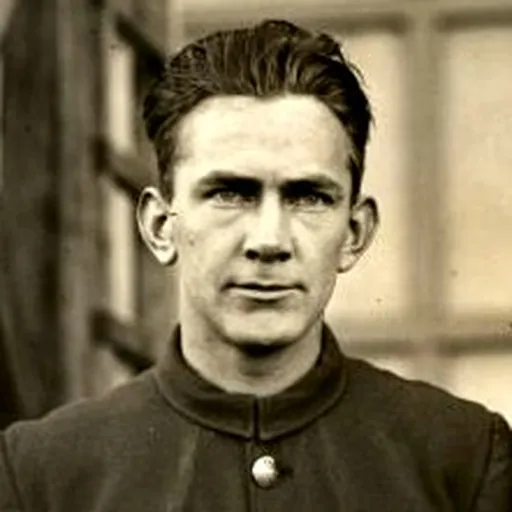
About Ivor McIntyre
Lived 1899 – 1928 (aged 28). Ivor McIntyre was a British navigator and aircraft pilot.
Ivor Ewing McIntyre (6 October 1899 – 12 March 1928) was an Australian pilot who served in the Royal Australian Air Force (RAAF). He gained national recognition in 1924, when he and Wing Commander Stanley Goble became the first men to circumnavigate Australia by air. Two years later, under the command of Group Captain Richard Williams, McIntyre piloted the first international flight undertaken by an RAAF plane and crew; this feat earned him the first Air Force Cross awarded to an RAAF member. Born and raised in England, McIntyre had served with the Royal Naval Air Service and Royal Air Force in World War I before joining the RAAF. He left the Air Force in 1927 to become an instructor with the South Australian branch of the Australian Aero Club, and died after a plane crash the following year.
Early career Ivor Ewing McIntyre was born on 6 October 1899 in Kent, England, the son of Captain Duncan McIntyre. He joined the Royal Naval Air Service (RNAS) in 1917, and saw action in World War I as a flight sub-lieutenant. He was granted a short-service commission in the RAF as a flying officer on 12 December 1919.
McIntyre joined the Royal Australian Air Force (RAAF) in 1923. In November that year, he piloted a survey flight between Melbourne and Sydney, and carried out a similar mission between Melbourne and Hobart in February 1924. In July 1925, McIntyre was tasked by the Chief of the Air Staff with intercepting a squadron of the United States Pacific Fleet as it approached Melbourne on a flag-waving visit; he succeeded in doing so despite poor weather and not without, according to the official history of the inter-war RAAF, "an enormous element of luck, not to mention risk".
Pioneering flights
Circumnavigation of Australia
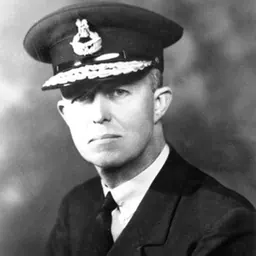
In 1924, McIntyre and Wing Commander (later Air Vice Marshal) Stanley Goble, another veteran of the RNAS, became the first men to circumnavigate Australia by air. McIntyre was lead pilot while Goble, who was Chief of the Air Staff at the time, acted as commander and navigator. The pair took off from Point Cook, Victoria, on 6 April 1924 in a single-engined Fairey IIID floatplane. They flew anticlockwise along the eastern coast to Thursday Island, Queensland, then crossed the Gulf of Carpentaria to Darwin, Northern Territory, and continued along the Western Australian and South Australian coasts. Along the way they faced adverse weather, fatigue and illness, and had to deal with engine problems and fuel leaks.
McIntyre and Goble returned to Victoria after covering in 44 days. As they flew over Point Cook, 12 RAAF aircraft took off to escort them to their landing place at St Kilda Beach, where a crowd of 10,000 people was waiting to welcome them. McIntyre was also awarded the Oswald Watt Gold Medal for 1924, and promoted to flight lieutenant effective from 31 March that year.
Pacific Islands flight
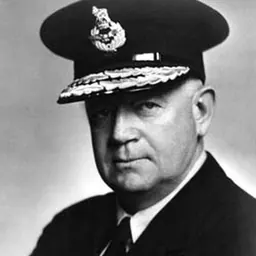
In 1926, McIntyre was selected as lead pilot on another pioneering Australian flight under the command of the then-Chief of the Air Staff, Group Captain (later Air Marshal Sir) Richard Williams, to study the South Pacific region as a potential theatre of operations. In company with Flight Sergeant Les Trist, they took off from Point Cook on 26 September 1926 and made a round trip to the Solomon Islands in a De Havilland DH.50A floatplane. Like the circumnavigation of Australia in 1924, this flight was not without its difficulties. Approaching Southport, Queensland, on 29 September, the DH.50 lost power and had to land in the ocean; after making repairs, McIntyre was twice thrown clear of the aircraft while taxiing to the beach in heavy surf. The expedition returned on 7 December to a 12-plane RAAF escort and a 300-man honour guard.
Though subsequently described as partly a "matter of prestige" owing to rumours of other countries planning such a journey, as well as a "reaction" by Williams to the 1924 expedition led by Goble, Williams' rival at the time for leadership of the young Air Force, this was the first international flight undertaken by an RAAF plane and crew. it marked the first occasion that the AFC was awarded to a member of the RAAF. Trist received the Air Force Medal,
Death and legacy McIntyre left the RAAF in November 1927 to become a flying instructor for the newly formed South Australian section of the Australian Aero Club. He died in an Adelaide hospital on 12 March 1928 of injuries received the previous day, when he crashed the club's Moth trainer while giving an aerobatics display at Parafield. Goble said of him:
In 1994, McIntye and Goble were honoured by the issue of a postage stamp by Australia Post, one of a series depicting Australian aviators that also included Freda Thompson, Lawrence Hargrave, Sir Keith and Sir Ross Macpherson Smith.
Don’t just read it —
keep it.
Full-length biographies made to live with: read them, listen on the way to work, watch them tonight.
- E-book
- Audio
- Video
Instant download · yours to keep · every purchase keeps this site free
Important facts
People in Ivor McIntyre's life
Named in this biography and alive at the same time

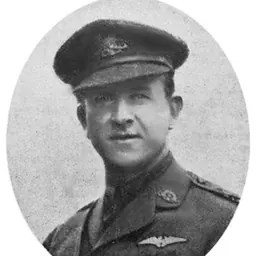
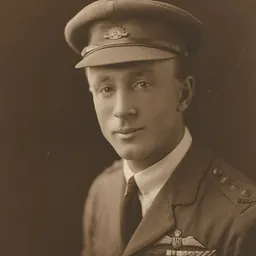
Related people
Same field, nearest in time




Contemporaries
People whose lives overlapped Ivor McIntyre's



Frequently asked questions
Who was Ivor McIntyre?
Australian Air Force pilot
When was Ivor McIntyre born?
Ivor McIntyre was born on 6 October 1899 in Herne Bay.
When did Ivor McIntyre die?
Ivor McIntyre died on 12 March 1928 in Adelaide.
What was Ivor McIntyre's occupation?
Ivor McIntyre was a navigator and aircraft pilot.
What nationality was Ivor McIntyre?
Ivor McIntyre was British.
Sources & further reading
Cite this page
APA: Biography.guide. (2026). Ivor McIntyre. https://biography.guide/ivor-mcintyre/
MLA: "Ivor McIntyre." Biography.guide, https://biography.guide/ivor-mcintyre/.
Chicago: "Ivor McIntyre." Biography.guide. https://biography.guide/ivor-mcintyre/.
Data last updated: 2026-09-21 · Spot an error? Report a correction.
Portrait: Wikimedia Commons · author & licence
Page generated 2026-09-27 04:59 UTC