
Ivor Bulmer-Thomas
British journalist and author
About Ivor Bulmer-Thomas
Lived 1905 – 1993 (aged 87). Ivor Bulmer-Thomas was a British mathematician, historian of mathematics, politician, journalist, writer and author.
Ivor Bulmer-Thomas (30 November 1905 – 7 October 1993), born Ivor Thomas, was a British journalist and scientific writer who served eight years as a Member of Parliament (MP). His career was much influenced by his conversion to the Church of England in his youth, and he became a pious believer on the Anglo-Catholic wing of the Church.
A brilliant scholar and champion athlete while at university, Bulmer-Thomas wrote biographies and worked as a sub-editor on The Times during his early life. His experience in wartime Italian propaganda led him to doubt its value. Serving in the Attlee Labour Party government in junior roles made him resent the influence of the Labour left; he fell out with party policy on nationalisation and moved to the Conservative Party. He was a workaholic and after leaving politics he became a leading layman in the Church of England; an interest in historic buildings led him to set up the Friends of Friendless Churches group, which campaigns to prevent churches falling into disuse, and to play a key role in founding the charity known today as the Churches Conservation Trust.
Family and faith Thomas was born in Cwmbran, Monmouthshire; his father A.E. Thomas, was working class. He went to West Monmouth School in Pontypool, where he abandoned his father's Baptist faith in favour of the Anglo-Catholic wing of the Church of England, a decision that was to affect his future career profoundly. Although a pious believer,
Oxford Performing well at school, Thomas won a scholarship to St John's College, Oxford, where he studied both Mathematical Mods. and Literae Humaniores (known unofficially as 'Greats' and as 'Classics' at other universities), obtaining Firsts in both. He was the Liddon Student in 1928, the Ellerton Essayist in 1929, and the Junior Denyer and Johnson Scholar in 1930.
Thomas' achievements at Oxford were not confined to academic life; he also became a competitive cross country runner. He represented Oxford in varsity matches against Cambridge from 1925 to 1927, in which year he won the three-miles race. Illustrating the History of Greek Mathematics (1939–1941), Loeb Classical Library The Socialist Tragedy, Latimer House (1949) Contributed substantial articles to the authoritative Dictionary of Scientific Biography (1970–1990) The section on Greek geometry in Geschichte der Algebra (1990) Sections in Lehrbücher zur Didaktik der Mathematik Reviewer for Classical Reviews on ancient science and mathematics; contributor of articles to journals and encyclopaedias.
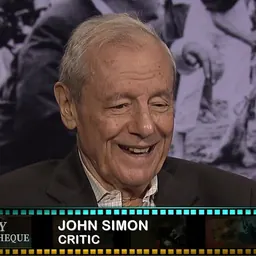
Journalism Thomas joined the staff of The Times newspaper in 1930, where he served in the sub-editors' room. He also wrote occasional leader columns and specialist articles on scientific subjects The sitting Member of Parliament was Sir John Simon, the Home Secretary and the contest was a high-profile one; although Simon was elected, his margin of 642 votes was closer than expected and was said to have given him a fright. While in the Army, he wrote a two-volume work Selections Illustrating the History of Greek Mathematics which was published by the Loeb Classical Library. The political parties had agreed an electoral truce, and a threatened Independent candidacy by B. D. Margerison of Wibsey in Bradford came to nothing when Margerison decided not to stand (despite having issued an election address). Thomas was therefore elected unopposed on 13 February.
Maiden speech Thomas' maiden speech on 12 March concerned pensions, during which he argued that the means test was "a blot on our national honour". He described the principle of supporting those unable to work as "the iron ration of citizenship". In his early period in Parliament he concentrated on propaganda concerns, in which he disagreed with Stephen King-Hall's call for it to be treated on the same level as the three services. Thomas argued that this was an "entirely false perspective" and that propaganda was a "valuable but ancillary weapon".
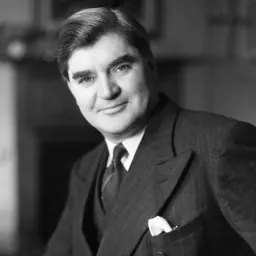
Activity In November 1942, Thomas worked with Aneurin Bevan and an all-party group of Members of Parliament to put down a motion opposing British co-operation with Admiral Darlan in French North Africa. He was also active on domestic issues, supporting the movement to allow Sunday opening of theatres, and for his stance he was denounced by the Lord's Day Observance Society. At a meeting of the society in February 1943, one prayer asked God to "deal with Ivor Thomas as he dealt with Saul of Tarsus". (Saul is said in Acts 9:4 to have been converted hearing a voice from Heaven saying "Saul, Saul, why are you persecuting me?")
Thomas became a very active Member of Parliament, intervening in many debates on diverse subjects both domestic and foreign. In January 1945 he was also a speaker at the inaugural meeting of the League for European Freedom, a group which worked to restore the sovereignty of all "lesser European Powers existing in 1937" and for democratic government throughout Europe. With the end of the war in sight, in April 1945 Thomas drew attention to a speech by Ernest Bevin which called for Government and Opposition to share common ground on foreign policy and defence by sharing information.
Government
Ministry of Civil Aviation At the 1945 general election Thomas was easily re-elected. When he saw the list of Government Ministers appointed by Clement Attlee, Thomas took the unusual step of writing to the new prime minister to ask why his own name had not appeared on it. Attlee decided to find Thomas an appointment, He was the Ministry's spokesman in the House of Commons as the Minister was Lord Winster. Thomas took over responsibility for the building of London Heathrow Airport, then known as 'Heath Row', which had been started by the Royal Air Force during the war.
Thomas felt that he could only truly understand his job if he obtained a Private Pilot's Licence, and took up flying until he passed. Some Labour Members were concerned that Thomas, still a young man with little experience of the heavy work of Parliament, was in charge of such an important Bill. the Bill was enacted on schedule on 1 August.
Colonies Office On 4 October 1946 Thomas was moved to be Under-Secretary for the Colonies, a shift which he later ascribed to an act of weakness by Attlee in giving in to left-wing pressure after the dispute over the Civil Aviation Bill. He negotiated at the United Nations over continued British administration of the colonies of Tanganyika, Togoland and the Cameroons, against attempts by the Soviet Union to limit the extent of control. Early the next year he intervened in a strike in Singapore, helping to persuade 7,000 municipal labourers to return to work. The Colonies Office also had responsibility for Palestine under the British mandate, in which he followed government policy of resisting illegal immigration (which was predominantly Jewish).
Crossing the floor Despite thoughts that Thomas might be 'leadership material', The reason was Thomas' increasing disillusion with socialism. when it was revealed that left-wing Labour Members of Parliament had sent a telegram of support to Pietro Nenni, leader of the rival Italian Socialist Party (PSI) – which was fighting the forthcoming election as part of a Popular Front with the Italian Communist Party – Thomas signed a motion calling for a Select Committee to investigate.
On 13 October 1948 Thomas wrote to The Times to urge the government to "drop all contentious legislation" in the forthcoming Parliamentary session, specifically the Parliament Bill and the Iron and Steel Bill, prompting considerable debate. Immediately after the King's Speech in which both Bills were included, Thomas wrote to Attlee announcing his resignation from the Labour Party. He said he had been "particularly disturbed by the growing concentration of power in the hands of the State" and accused the government of surrendering "to its more extreme members and supporters".
Stormy speech When Thomas rose to speak in the debate the following day, it became clear that leaving the Labour Party had cost him many friendships.
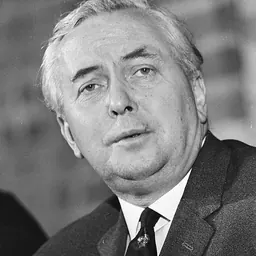
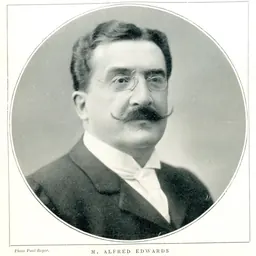
During the rest of the Parliament, Thomas was treated by Labour Members as a pariah. He formed an unofficial group of two with Alfred Edwards who had also left Labour over the nationalisation of steel, However, he did not receive the Conservative Whip until Whitsun. Thomas made an attacking speech at the 1949 Conservative Party Conference: referring to Harold Wilson's remark that half the children in his class never had any boots, Thomas gibed that "if ever he went to school without any boots it was because he was too big for them". He wrote a book called The Socialist Tragedy which was published that year. Thomas was defeated by the heavy margin of 9,992 votes.
Return to journalism Thomas' first action on losing his seat was to go with a group of friends to drive across the Sahara desert. and in June of that year he successfully moved a motion in the Church Assembly to set up a £4 million trust for the preservation of historic churches.
The Historic Churches Preservation Trust achieved its desired funding and persuaded the Church Assembly to pass the Inspection of Churches Measure, to properly assess the condition of old churches every five years. Bulmer-Thomas' obituary in The Independent commented that "more than any other single Act, this modest Measure has prevented many of those sudden 'repairs crises' which carry off too many fine churches".
At the Church Assembly on 15 November 1956, Bulmer-Thomas attacked Fisher, saying that he "held a pistol to my face while the Dean of Gloucester plunged his dagger into my back", which shocked some listeners. Bulmer-Thomas went away and made his own plans.
Friends of Friendless Churches On 12 August 1957 Bulmer-Thomas announced the formation of the Friends of Friendless Churches, with himself as acting chairman and honorary secretary; he stressed that the group "is in no sense a rival to any existing body". The Friends followed the policy Bulmer-Thomas had hoped the trust would adopt, opposing any suggestion of the demolition of a church. He saw some considerable success but became an even more controversial figure with those who saw new uses of old churches as being an inevitable development. Bulmer-Thomas was in charge of it for seven years. As of 2015 this body has over 345 historic churches in its care, visited by almost 2 million people a year.
Other activity Bulmer-Thomas had other involvement in the field of heritage, being Secretary of the Ancient Monuments Society from 1958; he served on the society's council for more than 30 years and was its chairman from 1975 to 1990. In 1970 he became a Fellow of the Society of Antiquaries of London. In addition he became a Churchwarden at St Andrew-by-the-Wardrobe in the City of London, where he conducted an 'Advanced Sunday School'; he had a special bond to the Church, having fought to have it rebuilt after bomb damage in the Second World War. His interest in journalism and connection to the Church led him to get involved in the Society of the Faith and the Faith Press, which it owned as a specialist printing firm.
Honours He never attempted to return to politics, but he did write The Growth of the British Party System in two volumes in 1965; it was poorly received. In 1981 he became a member of the newly founded Social Democratic Party, although he was not active. He was a hard worker, but in 1985 he stood down from the General Synod after 35 years' membership of it and its predecessor. He received several honours, including an honorary Fellowship of St John's College, Oxford (his alma mater), and the CBE for his work in preserving churches in 1984, which Bulmer-Thomas quipped stood for "Churches Before Evangelism".
He received two honorary degrees, that from the University of Warwick in 1979 being at the insistence of the Mathematics Department. On his 80th birthday, the Ancient Monuments Society published a Festschrift in his honour, paying tribute to the diversity of his interests.
Bulmer-Thomas was reported to have been working "literally till a few minutes before his death" on a letter to the Daily Telegraph, which was published on the same day as his obituary appeared.
Don’t just read it —
keep it.
Full-length biographies made to live with: read them, listen on the way to work, watch them tonight.
- E-book
- Audio
- Video
Instant download · yours to keep · every purchase keeps this site free
Important facts
People in Ivor Bulmer-Thomas's life
Named in this biography and alive at the same time




Related people
Same field, nearest in time


Contemporaries
People whose lives overlapped Ivor Bulmer-Thomas's





Frequently asked questions
Who was Ivor Bulmer-Thomas?
British journalist and author (1905–1993)
When was Ivor Bulmer-Thomas born?
Ivor Bulmer-Thomas was born on 30 November 1905 in Cwmbran.
When did Ivor Bulmer-Thomas die?
Ivor Bulmer-Thomas died on 7 October 1993 in London.
What was Ivor Bulmer-Thomas's occupation?
Ivor Bulmer-Thomas was a mathematician, historian of mathematics, politician, journalist, writer and author.
What nationality was Ivor Bulmer-Thomas?
Ivor Bulmer-Thomas was British.
Sources & further reading
· Wikipedia: Ivor Bulmer-Thomas
Cite this page
APA: Biography.guide. (2026). Ivor Bulmer-Thomas. https://biography.guide/ivor-bulmer-thomas/
MLA: "Ivor Bulmer-Thomas." Biography.guide, https://biography.guide/ivor-bulmer-thomas/.
Chicago: "Ivor Bulmer-Thomas." Biography.guide. https://biography.guide/ivor-bulmer-thomas/.
Data last updated: 2026-09-20 · Spot an error? Report a correction.
Page generated 2026-09-27 05:24 UTC