
About Ivor Brown
Lived 1891 – 1974 (aged 82). Ivor Brown was a British journalist, writer, linguist and critic.
Ivor John Carnegie Brown CBE (25 April 1891 – 22 April 1974) was a British journalist and man of letters.
After graduating from Oxford with top honours, he joined the civil service, but left after two days to pursue a freelance career as a writer. He later joined the staff of The Manchester Guardian as its London drama critic, and subsequently wrote for, and for six years edited, The Observer. He was widely regarded as the leading drama critic of his generation.
Brown was a prolific author; he published more than seventy-five books – some of them compilations of his journalism, and others about words, their origins, meaning and use.
Life and career Early years Brown was born in Penang, Malaya, on 25 April 1891, His father had a practice in Malaya, and Brown was sent to England to be educated at Suffolk Hall preparatory school and then, from 1902 to 1907, at Cheltenham College.
In the entrance examination for the civil service in 1913 he came sixth out of eighty-four successful candidates. (The top five included James Grigg, James Braid Taylor and Andrew Clow.)
On 4 January 1916 Brown married Irene Gladys Hentschel (1890–1979), an actress and later a director. The biographer Philip Howard writes, "her knowledge of the far side of the footlights enriched her husband's criticism". The marriage was lifelong. They had no children. His opposite number on The Daily Telegraph, W. A. Darlington, wrote of Brown, "No contemporary drama critic has enjoyed a higher reputation for good judgment combined with witty and scholarly writing". J. C. Trewin called him the leading English drama critic of his time ... wise, balanced, modest and a master-stylist [who] will stand with the few major English critics".
The Times commented that it fell to Brown to interpret "the great outburst of new and experimental modes of playwriting" that followed the war. His responses to the expressionists such as Karel Čapek, Luigi Pirandello, Elmer Rice and Eugene O'Neill were collected in a volume, Masques and Phrases (1926), compiled from his press reviews. The Times commented that it remains a valuable commentary on a remarkable chapter in the history of the theatre. He said that Eliot "offers the public the balderdash of his Waste-land (pretentious bungling with the English language?) and immediately becomes a pundit, bestriding the Atlantic". He was equally dismissive of Ezra Pound.
In addition to his work for The Guardian, Brown became the drama critic for the Saturday Review in 1923 and was the Shute lecturer in the art of the theatre at Liverpool University three years later. In 1929 he added The Observer to the papers for whom he reviewed. In 1939 he was appointed professor of drama by the Royal Society of Literature and the following year he became as director of drama for the Council for the Encouragement of Music and the Arts the following year. But this was in the middle of the Second World War, and few journalists were available. Astor offered the editorship to a leading civil servant who declined it. Meanwhile the paper was brought out by the efforts of staff from The Economist and an informally assembled team of European emigrés. The directors turned to Brown and invited him to be acting editor until after the war. With the help of his friend Donald Tyerman of The Economist, he "successfully steered the paper on its altered course".
Final years Brown spent his final years concentrating on writing books. He eventually published more than 75 books covering a wide range of topics and genres, but he was best known for his works on literature and the English language. He was a member of the Literary Society, described him as "a dry wine perhaps, but full of flavour" and his publisher, Rupert Hart-Davis, found him "nice as ever but even more liberally spread with scurf, cigarette-ash and shaving-soap than usual". A former colleague wrote: blockindent|There was a natural austerity about Ivor Brown which only the foolish or the unthinking or the unworthy found really forbidding. Thus, he could put the fear of God into young actors and actresses, for whom the fear of God is a very good thing. But the more seasoned and wiser players – including most of the profession's Knights and Dames – were among his friends. ... We had also come to know that there was a heart capable of great kindness and sympathy, deep down under the carapace.
Books According to Howard, Brown was among the most prolific and versatile writers of his generation, publishing more than seventy-five books, including novels, essays, biography, autobiography, criticism, coffee-table books, and "even a light (and not very good) play".
He became famous for his books about words, "agreeable rambles around correct usage and philology, enlivened by literary allusion, quotation, wit, and personal anecdote". Like his contemporaries H. W. Fowler and Eric Partridge he cared not only about precise use of words, but for words in themselves. Howard comments that Brown collected words as others collect porcelain, and was the most good-humoured of prescriptivists, but was nevertheless "incorrigibly convinced that there existed such a thing as correct English, and that it was to be preferred to the other kind".
Word series
A Word in Your Ear (1942) Just Another Word (1943) I Give You My Word (1945) Say the Word (1947) No Idle Words (1948) Having the Last Word (1950) I Break my Word (1951) A Word in Edgeways (1953) Chosen Words (1955) [A selection from the previous word books] Words in Our Time (1958) Words in Season (1961) A Ring of Words (1967) A Rhapsody of Words (1969) Random Words (1971) A Charm of Names (1972) Words on the Level (1973)
Individual books
Years of Plenty (1915) Security (1916) The Meaning of Democracy (1919) Lighting-up Time (1920) English Political Theory (1920) H. G. Wells (1923) Smithfield Preserv'd: Or, The Divill a Vegetarian (1926) Masques and Phases (1926) First Player: The Origin of Drama (1927) Parties of the Play (1928) Now on View (1929) Essays of To-day and Yesterday (1929) Puck Our Peke (1931) I Commit to the Flames (1934) Master Sanguine: Who Always Believed What He Was Told (1934) The Heart of England (1935) Marine Parade (1937) Life within Reason (1939) This Shakespeare Industry: Amazing Monument (with George Fearon) (1939) British Thought 1947 (1947) Observer Profiles (1948) Shakespeare (1949) Shakespeare Memorial Theatre 1948–50 (1950) (with Anthony Quayle) Winter in London: An Excursion into the Pleasure of a Rich and Fascinating City (1951) Summer in Scotland (1952) Word for Word: An Encyclopaedia of Beer (1953) The Way of My World (1954) Balmoral: The History of a Home (1954) Shakespeare Memorial Theatre 1954–56 (1956) Dark Ladies (1957) J. B. Priestley (1957) Royal Homes in Colour (1958) A Book of England (National Anthologies) (1958) William Shakespeare (1958) Shakespeare in His Time (1960) London (1960) A Book of London (1961) Stately Homes in Colour (1961) Mind Your Language (1962) A Book of Marriage (1963) How Shakespeare Spent the Day (1963) Dickens in His Time (1963) What Is a Play? (1964) Shakespeare and His World (1964) Doctor Johnson and His World (1965) Shaw in His Time (1965) Jane Austen and Her World (1966) William Shakespeare (1968) The Women in Shakespeare's Life (1968) Anton Chekhov (1970) Shakespeare and the Actors (1970) W. Somerset Maugham (1970) Charles Dickens: A Collection of Contemporary Documents (1970) Charles Dickens: 1812-1870 (1970) Dickens and His World (1970) Old and Young: A Personal Summing up (1971) Conan Doyle: A Biography of the Creator of Sherlock Holmes (1972)
Editor The Bedside 'Guardian': A Selection from the Manchester Guardian 1951–1952 (1952) The Bedside 'Guardian' 2: A Selection from the Manchester Guardian 1952–1953 (1953) The Bedside 'Guardian' 3: A Selection from the Manchester Guardian 1953–1954 (1954) The Bedside 'Guardian' 4: A Selection from the Manchester Guardian 1954–1955 (1955) The Bedside 'Guardian' 5: A Selection from the Manchester Guardian 1955–1956 (1956) The Bedside 'Guardian' 6: A Selection from the Manchester Guardian 1956–1957 (1957) The Bedside 'Guardian' 7: A Selection from the Manchester Guardian 1957–1958 (1958)
Notes, references and sources
Don’t just read it —
keep it.
Full-length biographies made to live with: read them, listen on the way to work, watch them tonight.
- E-book
- Audio
- Video
Instant download · yours to keep · every purchase keeps this site free
Important facts
People in Ivor Brown's life
Named in this biography and alive at the same time
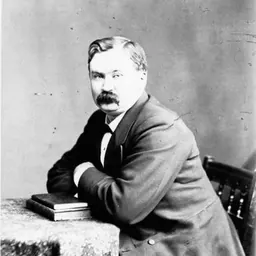


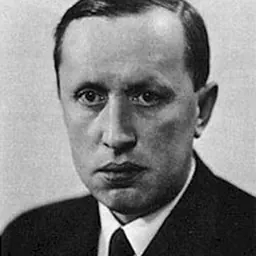



Related people
Same field, nearest in time



Contemporaries
People whose lives overlapped Ivor Brown's


Frequently asked questions
Who was Ivor Brown?
British journalist
When was Ivor Brown born?
Ivor Brown was born on 25 April 1891 in Penang.
When did Ivor Brown die?
Ivor Brown died on 22 April 1974 in London.
What was Ivor Brown's occupation?
Ivor Brown was a journalist, writer, linguist and critic.
What nationality was Ivor Brown?
Ivor Brown was British.
Sources & further reading
Cite this page
APA: Biography.guide. (2026). Ivor Brown. https://biography.guide/ivor-brown-journalist/
MLA: "Ivor Brown." Biography.guide, https://biography.guide/ivor-brown-journalist/.
Chicago: "Ivor Brown." Biography.guide. https://biography.guide/ivor-brown-journalist/.
Data last updated: 2026-09-22 · Spot an error? Report a correction.
Page generated 2026-09-27 05:33 UTC