
About Ivica Kostelić
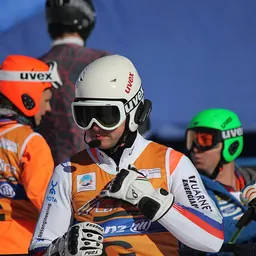
Born 1979. Ivica Kostelić is a Croatian alpine skier.
Breakthrough (2002–2005) His big breakthrough came during the 2002 season, when he shockingly won the slalom at Aspen, Colorado, in November 2001 starting from the 64th bib number, his first finish higher than 21st place in any World Cup race. He won two more slaloms that season, and had three additional podiums (top 3), enough to clinch the slalom season title over Bode Miller while avoiding season-ending injury for the first time in his career.
Kostelić would continue his success during the next season, winning three more slalom races by mid-season, and adding a gold medal in slalom in February at the 2003 World Championships in St. Moritz, Switzerland. He would narrowly miss repeating his slalom title, falling to second place as Kalle Palander won four consecutive slaloms in late season to clinch the globe. He would go on to win another slalom race during the 2003–2004 season, the 7th win of his career, before injuries again ended his season prematurely in January. He would return to World Cup competition in time for the start of the 2004–2005 season, but would fail to finish any of his first 7 races that year. Despite a pair of podiums later that season and occasional top-10 finishes, he would not win another World Cup race for nearly three years.
Resurgence as all-event skier (2006–2010) Kostelić began his World Cup career as a technical specialist, racing only slalom and GS (with an occasional super-G), but started to ski more often the speed events including downhill during the 2006 season, primarily in order to compete in the new format of super combined, which consists of single runs of downhill and slalom. He did win a Nor-Am downhill in December 1998 at Lake Louise, Canada. As his sister Janica, 'Ivo' has always been aiming to become a complete racer able to excel in all specialties. He scored his first World Cup points at Kitzbuehel, Austria, finishing 29th on the 'Streif' in January 2008. A week later he was 8th in the downhill at Chamonix, in France. His broadened portfolio brought quick dividends, with a silver medal in the combined (a traditional combined with a single downhill and two runs of slalom) at the 2006 Winter Olympics in Torino, Italy, in February. He would follow that success during the 2007 World Cup season with a win in the super combined in Reiteralm, Austria, in December 2006, his eighth World Cup win and first other than slalom.
Starting with the 2008 season, Kostelić joined the select group of World Cup racers able to excel in all disciplines. Although he failed to win any World Cup races during the 2008 season, he finished second 4 times and third twice in slalom and super combined events, and for the first time scored points in all disciplines. He would finish second in the combined standings and sixth in the overall. The next season brought another win in slalom, along with three more second places (including in GS for his first time) and a pair of thirds, as he moved up to fourth in the overall standings while again taking second in the slalom standings. Success in all disciplines continued in the 2010 season, with two more World Cup wins in slalom and combined (for a total of 11 in his career) along with a second in super-G, his first podium in a speed event. At the 2010 Winter Olympics in Whistler, he won a pair of silver medals, in slalom and combined.
Overall World Cup title (2011) Kostelić's skiing would reach another level during the 2011 season. Following a third in the season-opening slalom in November at Levi, Finland, he suffered a string of mediocre finishes outside the top-10 for the rest of 2010. Then he opened the New Year with a victory in the first-ever Munich City Event parallel slalom on 2 January, and took second place four days later in the slalom in his hometown of Zagreb. He followed that up with three more wins over the next two weeks in slalom and super combined at Adelboden and Wengen, Switzerland, to take the lead in the overall World Cup standings for the first time. At the Hahnenkamm races in Kitzbühel, Austria, he had victories in super-G and combined, plus a second place in slalom, which opened a gap of more than 400 points over his nearest competitors in the overall ranking. A week later, he won the super combined in Chamonix, France, his third straight win in combined and clinching the combined title for the season with one race still remaining. It was his seventh victory of January 2011, the most by any alpine ski racer in a single calendar month in World Cup history, and he scored points in all 14 World Cup races held in January, including two seconds and two fifths along with top-30 finishes in all three downhills, for a total of 999 points in January alone.
After the stunning success of January, Kostelić's results tailed off considerably and he would fail to finish higher than fifth in any of the remaining 10 World Cup races on the season. In February, Kostelić won a bronze medal in super-G at the 2011 World Championships in Garmisch, but finished only 8th and 13th in the slalom and giant slalom after he sustained a knee injury in the second giant slalom run. He had chosen not to race the World Championships downhill or the super combined (in which he was the clear favorite to win the gold medal) in order to avoid injury on the extremely icy course. On 12 March, five races before the end of the season, he clinched his first overall World Cup title, and he would clinch the slalom title at the final race in Lenzerheide, Switzerland on 19 March, despite finishing out of the points that day. Kostelić would win a total of three crystal globes for the 2011 season including the overall, slalom, and combined titles.
Defending the overall World Cup title (2012) In the 2012 season Kostelić had a better start than the year before, winning two slaloms in December. His next victories were the super combined and the slalom at Wengen, and the following weekend he won also the classical combined of the Hahnenkamm races (downhill and slalom) in Kitzbühel, where he took the overall lead for the first time that season. However, in February 2012 he sustained an injury and missed 11 races, including two classic slaloms and one parallel, in Stockholm. In the meantime, Marcel Hirscher took the lead in the overall standings and would go on to claim his first overall title. Kostelić returned to action in Schladming at the end of the season, and competed only in slalom. He finished 16th and André Myhrer took the slalom title.
Personal life Born and raised in Zagreb, his parents, Ante and Marica, are former elite team handball players. They taught Ivica and his sister Janica, two years younger, to ski on the nearby hill Sljeme (now the site of the annual Snow Queen Trophy World Cup races). Janica Kostelić also became an accomplished skier, and Ante Kostelić remained their primary ski coach throughout their careers, and was the head coach of the Croatian ski team.
In 2006 Kostelić passed the entrance exam at the University of Zagreb to become a part-time undergraduate student of history.
In 2014 Kostelić married his longtime girlfriend Elin Arnarsdóttir, a native of Iceland. In October she gave birth to their first child, a son Ivan. In July 2016 Elin gave birth to their second child, a son Leon. In March 2020 they had twin daughters - Jana and Kata.
Nacional article In January 2003, after winning the slalom at Kranjska Gora, Kostelić told the reporters that before the race he had felt "powerful, all-conquering, like a German soldier ready for battle in 1941", in reference to the June 1941 German invasion of the Soviet Union. Although the Croatian media had largely ignored the statement, the weekly tabloid Nacional picked up the story and published an article featuring previously unreleased statements made by Kostelić from an interview that he gave to the weekly in May 2002. According to Nacional Kostelić said that he was "fascinated" with the scale of the World War II Luftwaffe attack on Britain and gave an opinion on the differences between national socialism and communism saying that "Nationalism was still a healthy system for someone who was ambitious. In communism, we weren’t permitted to be ambitious, and both systems were totalitarian."
His remarks were interpreted by the weekly as a sign of far-right political leanings and the story attracted attention from international press. Kostelić then issued a statement claiming that the sentences published by Nacional were taken out of context and that they were made in informal conversation conducted after the formal interview, and added that "my heart is neither left- nor right-oriented, only towards sports, and my mind is only on skiing".
World Cup results
Season titles 6 titles – 1 overall, 2 Slalom, 3 Combined Season Discipline2002 Slalom 2011 Overall Combined Slalom 2012 Combined 2013 Combined Unofficial, tied with Alexis Pinturault.
Season standings Season Age Overall Slalom Giantslalom Super-G Downhill Combined 2001 21 107 40 — — — — 2002 22 7 1 22 — — — 2003 23 7 2 27 — — — 2004 24 34 14 30 37 — — 2005 25 31 7 — — — — 2006 26 40 15 — — — 16 2007 27 25 16 — — — 3 2008 28 6 5 40 25 35 2 2009 29 4 2 8 26 47 4 2010 30 5 4 21 15 23 3 2011 31 1 1 11 3 25 1 2012 32 4 2 23 — 43 1 2013 33 5 3 14 28 44 1 2014 34 42 16 32 34 — 30 2015 35 50 31 — — 59 4 2016 36 105 — — — — 20 2017 37 139 — — — — 35
Crystal globes in Combined have not been officially awarded for 2013 season. However, athletes still get their medals.
Race victories 26 wins – 15 slalom, 9 combined (5 super combined, 4 traditional), 1 parallel slalom, 1 super-G
World Championships results Year Age Slalom Giant slalom Super-G Downhill Combined 1999 19 — — 32 — — 2001 21 — — — — — 2003 23 1 DNF1 — — — 2005 25 DNF1 — — — — 2007 27 DNF2 DSQ1 — — 12 2009 29 — DNS1 — — — 2011 31 8 13 3 — — 2013 33 5 25 28 20 2 2015 35 15 — DNF — 12 2017 37 38 — — — —
Olympic results
Podiums per discipline NOTE: This table counts all career races in A-team, including FIS World Cup, FIS World Championships and Winter Olympics.
Don’t just read it —
keep it.
Full-length biographies made to live with: read them, listen on the way to work, watch them tonight.
- E-book
- Audio
- Video
Instant download · yours to keep · every purchase keeps this site free
Important facts
People in Ivica Kostelić's life
Named in this biography and alive at the same time

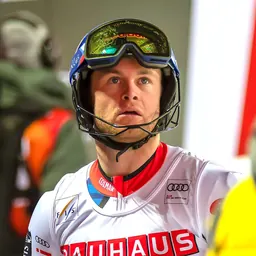

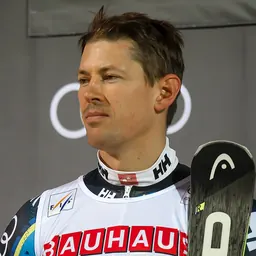
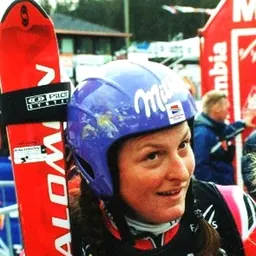


Related people
Same field, nearest in time

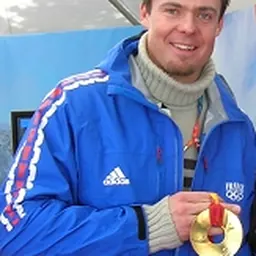

Contemporaries
People whose lives overlapped Ivica Kostelić's




Frequently asked questions
Who is Ivica Kostelić?
Croatian Alpine skier
When was Ivica Kostelić born?
Ivica Kostelić was born on 23 November 1979 in Zagreb.
What is Ivica Kostelić's occupation?
Ivica Kostelić is an alpine skier.
What nationality is Ivica Kostelić?
Ivica Kostelić is Croatian.
Sources & further reading
Cite this page
APA: Biography.guide. (2026). Ivica Kostelić. https://biography.guide/ivica-kostelic/
MLA: "Ivica Kostelić." Biography.guide, https://biography.guide/ivica-kostelic/.
Chicago: "Ivica Kostelić." Biography.guide. https://biography.guide/ivica-kostelic/.
Data last updated: 2026-09-25 · Spot an error? Report a correction.
Page generated 2026-09-27 05:11 UTC