
About Ivan Vinogradov
Lived 1891 – 1983 (aged 91). Ivan Vinogradov was a Russian mathematician and university teacher.
Ivan Matveevich Vinogradov In 1951 he became a foreign member of the Polish Academy of Sciences and Letters in Kraków.
Mathematical contributions
In analytic number theory, Vinogradov's method refers to his main problem-solving technique, applied to central questions involving the estimation of exponential sums. In its most basic form, it is used to estimate sums over prime numbers, or Weyl sums. It is a reduction from a complicated sum to a number of smaller sums which are then simplified. The canonical form for prime number sums is
With the help of this method, Vinogradov tackled questions such as the ternary Goldbach problem in 1937 (using Vinogradov's theorem), and the zero-free region for the Riemann zeta function. His own use of it was inimitable; in terms of later techniques, it is recognised as a prototype of the large sieve method in its application of bilinear forms, and also as an exploitation of combinatorial structure. In some cases his results resisted improvement for decades.
He also used this technique on the Dirichlet divisor problem, allowing him to estimate the number of integer points under an arbitrary curve. This was an improvement on the work of Georgy Voronoy.
In 1918 Vinogradov proved the Pólya–Vinogradov inequality for character sums.
Personality and career
Vinogradov served as director of the Mathematical Institute for 49 years. For his long service he was twice awarded the order of The Hero of the Socialist Labour. The house where he was born was converted into his memorial – a unique honour among Russian mathematicians. As the head of a leading mathematical institute, Vinogradov enjoyed significant influence in the Academy of Sciences and was regarded as an informal leader of Soviet mathematicians, not always in a positive way: his anti-Semitic feelings led him to hinder the careers of many prominent Soviet mathematicians.
Although he was always faithful to the official line, he was never a member of the Communist Party and his overall mindset was nationalistic rather than communist. This can at least partly be attributed to his origins: his father was a priest of the Russian Orthodox Church. Vinogradov was enormously strong: in some recollections it is stated that he could lift a chair with a person sitting on it by holding the leg of the chair in his hands. He was never married and was very attached to his dacha in Abramtsevo, where he spent all his weekends and vacations (together with his sister Nadezhda, also unmarried) enjoying flower gardening. He had friendly relations with the president of the Russian Academy of Sciences Mstislav Keldysh and Mikhail Lavrentyev, both mathematicians whose careers started in his institute.
Don’t just read it —
keep it.
Full-length biographies made to live with: read them, listen on the way to work, watch them tonight.
- E-book
- Audio
- Video
Instant download · yours to keep · every purchase keeps this site free
Important facts
People in Ivan Vinogradov's life
Named in this biography and alive at the same time
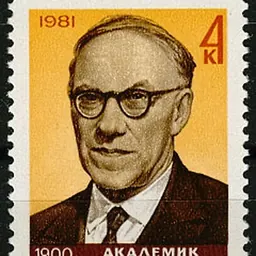
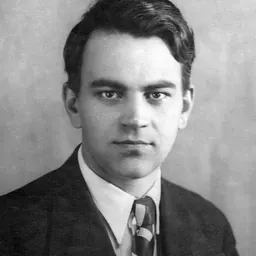

Related people
Same field, nearest in time


Contemporaries
People whose lives overlapped Ivan Vinogradov's
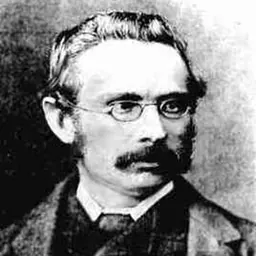
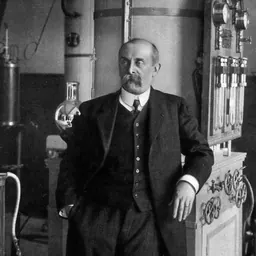


Frequently asked questions
Who was Ivan Vinogradov?
Soviet mathematician (1891-1983)
When was Ivan Vinogradov born?
Ivan Vinogradov was born on 14 September 1891.
When did Ivan Vinogradov die?
Ivan Vinogradov died on 20 March 1983 in Moscow.
What was Ivan Vinogradov's occupation?
Ivan Vinogradov was a mathematician and university teacher.
What nationality was Ivan Vinogradov?
Ivan Vinogradov was Russian.
Sources & further reading
Cite this page
APA: Biography.guide. (2026). Ivan Vinogradov. https://biography.guide/ivan-vinogradov/
MLA: "Ivan Vinogradov." Biography.guide, https://biography.guide/ivan-vinogradov/.
Chicago: "Ivan Vinogradov." Biography.guide. https://biography.guide/ivan-vinogradov/.
Data last updated: 2026-09-22 · Spot an error? Report a correction.
Portrait: Wikimedia Commons · author & licence
Page generated 2026-09-27 05:02 UTC