
About Ivan Skoropadsky
Lived 1646 – 1722 (aged 75–76). Ivan Skoropadsky was a Polish diplomat and politician.
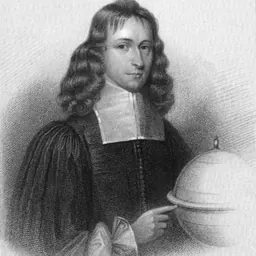
Ivan Skoropadsky (Old Ukrainian: Иоан(ъ) Скоропадский; ; ; 1646 – ) served as Hetman of the Zaporizhian Host from 1708 to 1722, succeeding Ivan Mazepa after the latter's alliance with Sweden during the Great Northern War. Elected at the insistence of tsar Peter I, who considered him a weaker politician than other members of the Cossack elite, Skoropadsky presided over the Hetmanate during a period when its autonomy was increasingly limited by the Russian government. After his death, control over affairs in Ukraine was transferred to the Collegium of Little Russia.
Biography Career before hetmanship Born into a noble Cossack family in Umań, Podolia, Polish–Lithuanian Commonwealth, in 1646, Skoropadsky was educated in Kyiv-Mohyla Academy. In 1674 he moved to Left-bank Ukraine, and for the next two years worked in the chancellery of its hetman Ivan Samoylovych, representing his government during dipolmatic missions to Moscow. Between 1681 and 1694 Skoropadsky served as chancellor of the Chernihiv Regiment. He distinguished himself in Russo-Turkish War of 1676–1681 and once again in the Crimean expedition against the Ottoman Empire and Crimean Khanate in 1688, and in 1698 was appointed to the position of bunchuk general. Under the hetmanship of Ivan Mazepa Skoropadsky took part in diplomatic missions to Poland, Moscow and Zaporozhian Sich, As a result, only about 3,000 Cossacks, mostly Zaporozhians, followed Mazepa, while others remained loyal to the Tsar. The fear of reprisals and suspicion of Mazepa's newfound Swedish ally Charles XII prevented most of Ukraine's population from siding with the rebels.
Hetman On 17 (O.S. 6) November 1708, one day after Mazepa's effigy had been publicly hanged in Hlukhiv, Skoropadsky was elected the new hetman at a starshyna rada held in the city in presence of the tsar. His election was seen as a mere formality after the alternative candidature of Chernihiv colonel Pavlo Polubotok was declined by Peter I, who saw Skoropadsky as a less cunning politician. Six days after Skoropadsky's election, an anathema was proclaimed against his predecessor by the Russian Orthodox Church.
Despite his agreement to appoint Skoropadsky as hetman, Peter I never fully trusted him, refused to confirm the new treaty with Moscow proposed by the Ukrainian side in 1709 in Reshetylivka, and postponed the provision of a charter formally installing the new hetman until 1710. Following Skoropadsky's election, 10 dragoon regiments of the Russian army were placed in Ukraine on a constant basis, with costs for their cantonment being paid by the local population. The Cossack army was transferred under the command of Russian generals, and its artillery was transported to Moscow. The Hetmanate's capital was moved from Baturyn, which had been razed by the Russian army after Mazepa's defection, to the town of Hlukhiv, where a special envoy of the tsar was tasked with overseeing the hetman and giving him "advice" on all issues. Russian authorities increasingly limited trade contacts of Ukrainian lands with Western Europe, Black Sea region and Zaporozhian Sich, the development of local industry was slowed down, and the economy and finances of the Hetmanate increasingly came under control of Russian merchants. In 1720 Peter I outlawed Ukrainian printing. At the same time, the work of his government was hindered by the mass repressions organized by the tsar against the former supporters of Mazepa and their families. Confiscation of properties owned by Cossacks suspected of disloyalty to Peter led to the establishment of huge latifundia held by the tsar's close allies, such as Alexander Menshikov. Numerous Cossacks were also recruited to work on the construction of fortifications and canals by the tsarist government.
Legacy
Ukrainian historian Oleksander Ohloblyn positively evaluated Skoropadsky's attempts to defend the interests of the Hetmanate, which included protests against pressure from the Russian government and its officials and condemnation of the plans to establish the Collegium of Little Russia. According to him, the hetman had no power to influence Peter I, who had taken a firm decision to liquidate the Cossack autonomy after Mazepa's defection to the Swedes. Despite the official propaganda depicting Mazepa as a traitor, Skoropadsky remained respectful to his predecessor, as demonstrated by the texts of his universals. Mazepa's followers, in their turn preserved a positive attitude to Skoropadsky, with Pylyp Orlyk calling him a "dear friend" in his diary. briefly ruled Ukraine in 1918, and also carried the title of hetman in his Hetmanate-influenced government. During Pavlo Skoropadsky's tenure, the anathema against Mazepa, which had been introduced shortly after Ivan Skoropadsky's election, was overturned.
Don’t just read it —
keep it.
Full-length biographies made to live with: read them, listen on the way to work, watch them tonight.
- E-book
- Audio
- Video
Instant download · yours to keep · every purchase keeps this site free
Important facts
Family & relationships
People in Ivan Skoropadsky's life
Named in this biography and alive at the same time
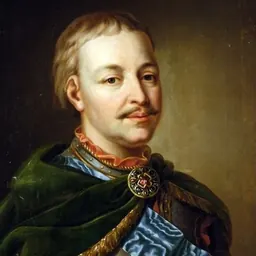
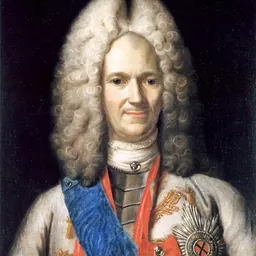

Related people
Same field, nearest in time
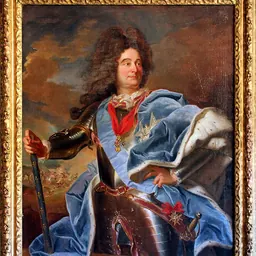

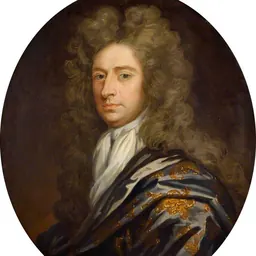



Contemporaries
People whose lives overlapped Ivan Skoropadsky's




Frequently asked questions
Who was Ivan Skoropadsky?
Hetman of Ukrainian Cossack (1646-1722)
When was Ivan Skoropadsky born?
Ivan Skoropadsky was born in 1646 in Uman.
When did Ivan Skoropadsky die?
Ivan Skoropadsky died on 3 July 1722 in Hlukhiv.
What was Ivan Skoropadsky's occupation?
Ivan Skoropadsky was a diplomat and politician.
What nationality was Ivan Skoropadsky?
Ivan Skoropadsky was Polish.
Sources & further reading
Cite this page
APA: Biography.guide. (2026). Ivan Skoropadsky. https://biography.guide/ivan-skoropadsky/
MLA: "Ivan Skoropadsky." Biography.guide, https://biography.guide/ivan-skoropadsky/.
Chicago: "Ivan Skoropadsky." Biography.guide. https://biography.guide/ivan-skoropadsky/.
Data last updated: 2026-09-26 · Spot an error? Report a correction.
Page generated 2026-09-27 05:13 UTC