
About Ivan Dumbadze
Lived 1851 – 1916 (aged 65). Ivan Dumbadze was a Russian military personnel and yalta.
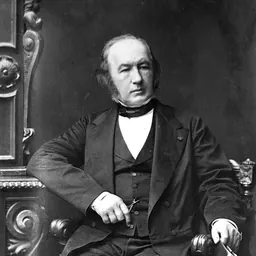
Ivan Antonovich Dumbadze (; ) (January 19, 1851 – October 1, 1916) was a Major-General of H. I. M. Retinue of Nicholas II, Supreme Head of Yalta, one of the activists of the Union of Russian People, notorious for his antisemitic and extravagant escapades.
Personal life Ivan Dumbadze's father, Anton Dumbadze, came from a commoner family, however, the maiden name of Ivan's mother, Nakashidze , is possibly of a noble Georgian tavadi origin, from the province of Guria (in the 19th century an ujezd of the Kutaisi governorate).
All three brothers of Ivan Dumbadze – Joseph, Nicholas and Samson – also became Major-Generals in the Russian army.
Dumbadze was married three times, and had two daughters and five sons. Alexander Ivanovich Dumbadze, a son from his marriage with Gurieli, was a rittmeister of the Crimean Cavalry regiment, and died January 1, 1918, in a firefight with revolutionary sailors at Sevastopol. Another son, Anton Ivanovich Dumbadze (1887–1948), a Russian Air Force captain, emigrated to France.
Military career Dumbadze attended the Kutaisi classical gymnasium, after which he entered the Junker Infantry School in Tiflis on September 30, 1869. Upon his graduation on December 20, 1872, Dumbadze was assigned to the 18th "Caucasian" Line battalion as a praporshchik (ensign). In 1875 Dumbadze was transferred to the 162nd "Akhaltsikhe" Infantry regiment, where in 1876 he was promoted to podporuchik (second lieutenant). He took part in the Russo-Turkish War (1877–1878), after which he was promoted to poruchik (lieutenant).
In 1879 Dumbadze was assigned to the office of the military governor, the commander of the military district of Batumi. There he was put in charge of one of the sotnia detachments in a punitive expedition against rebels in the mountainous regions of Georgia. After promotion in 1880 to the next rank of stabskapitan, Dumbadze was assigned to the Guria infantry regiment, to carry out repressions in the province which, considering the noble Gurian origin of his mother,
On May 26, 1903, Colonel Dumbadze assumed the command of the 16th ("Emperor Alexander III") Infantry Regiment, and remained at this position through October 15, 1907.
Military and civil head of Yalta
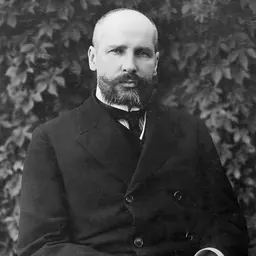
Following increased social unrest in Russia after the October Manifesto of 1905, on October 26, 1906 Minister of Interior Pyotr Stolypin proclaimed a state of emergency in the popular resort city of Yalta. Both civilian executive and legislative powers (zemstvo) were suspended and transferred to General Vassily Novitsky, the Governor of Taurida. Because the governor's residence was in Simferopol, far from Yalta, Novitsky entrusted his rights as the military commandant of Yalta to Colonel Dumbadze, for the protection of the tzar's summer residence in the Livadia neighborhood of Yalta. Meanwhile, an independent contemporary encyclopedic biographer of Dumbadze states that he personally performed functions of judicial institutions, making judgments, even "interfering in family quarrels" to resolve them, calling this a "patriarchal" style of government. In violation of both the civil laws and the norms of an officer's honor Dumbadze challenged a civilian, a local journalist Pervukhin to a duel, he bragging: "Now I'll get rid of him without a warrant of deportation".
Meanwhile, under the threat of a forced closing of local newspapers or jailing of their editors, Dumbadze required mandatory publication of materials he sent them. went into the contemporary encyclopedical biography of Dumbadze.
Yalta was an elite resort without large factories, and thus no proletariat. So many people whom Dumbadze imprisoned, expelled from Yalta and declared political unreliable The interference of Dumbadze with the statutory procedures of interaction between the branches of state authorities, shattered the fundamentals of the state rule. Thus even Prime Minister Pyotr Stolypin who is named among supporters of Dumbadze, sometimes was forced to disavow Dumbadze's initiatives, insisting that otherwise the "interaction set by the law between the State Duma and the government could be substantially subverted."
Finally, in 1910 Dumbadze insulted the Governing Senate, the supreme legislative, judicial, and executive body of the Russian Empire, directly subordinated to the emperor. Senate was considering one of his civil cases at that time, and Dumbadze did not pay the stamp fee when he sent his solicitation there. Responding to meeting request from the Senate, he replied in an insulting manner that he "does not know any Senate...", does not want to pay, and "requests the Senate to leave him alone with its illegal demands." The prosecution's case against Dumbadze for the contempt of the Senate failed, after one senator paid the required stamp duty.
Assassination attempt Dumbadze was receiving death threats from the revolutionary parties, who offered him to resign or be killed. Dumbadze replied to this threats: "I was going to resign and already prepared report, but now I will stay at the active service, and prove that I do not fear any threats. I will devote all my life to the service to Tsar and Russia". Several monarchist publications claim variously that Dumbadze was either "scratched" or "suffered ear damage". In retaliation, Dumbadze called his troops to lay siege to the dacha. Although the bomber immediately shot himself, Dumbadze without any investigation ordered his soldiers to throw out the dacha's inhabitants, not allowing them to take any belongings with them. Soldiers then set fire to the house and did not allow the fire brigade to extinguish it until it had burned to the ground. Wrangel-Rokossovsky says that soldiers destroyed "even the stone foundation of the house."
Dumbadze and Black hundreds After the Russian Revolution of 1905 Dumbadze actively participated in the tumultuous events of the political life of Russia. Among the entire spectrum of political movements and parties the greatest sympathy shown by Dumbadze was aimed towards the Black Hundreds.
In the eve of 1907 Christmas, on Dumbadze reserved "Rossiya" ("Russia"), one of the best hotels of Yalta, for a congress and a celebration of the "Union of Genuinely Russian people" ("Союз истинно-русских людей"), the extremist nationalist organization. As a head of the city administration, Dumbadze ordered the local police (as the «Russian Word» newspaper noted, „in corpore”, Lat. „in full staff”) and security to ensure the full protection of this gathering. Dumbadze also addressed the mob with a speech.
As soon as "Union of Russian People" (URP), the largest Black Hundredists organization in Russia was instituted, Dumbadze established close ties with them. On the local organization of URP solemnly presented Dumbadze with a badge of membership. After that Dumbadze consistently patronized URP, providing all kinds of support
N. S. Mishchenko, a deputy chairman of the Kiev provincial Department of URP assessed Dumbadze activities within the context of his party in the most laudatory expressions:
According to American Jewish Year Book, in August 1915 Dumbadze denied having anti-Jewish sentiments
The world notorious fame came to General Dumbadze in 1909 when he provided the concealment of justice to Alexander Dubrovin, a leader of the Union of the Russian People (URP). On in Terijoki, (now Zelenogorsk) the deputy of the I State Duma, Mikhail Herzenstein was assassinated. Investigators got evidences that the murder was organized by Yushkevich-Kraskovsky, an assistant of Dubrovin. Yushkevich-Kraskovsky worked with the killers directly at the office of URP in Petersburg, where he gave them photos of a targeted victim, money etc.
Russian authorities have actively resisted the investigation and the trial (although being a constituent part of the Russian Empire, the Grand Duchy of Finland was autonomous in its internal affairs and judicial proceedings). So when a Finnish court subpoenaed Dubrovin had to Terioki Dumbadze subpoenaed to testify as a witness, Dumbadze immediately gave him a refuge in his house in Yalta. This house was located on the territory of Livadia Palace, a summer residence of the tzar, guarded by security, headed by Dumbadze himself.
All the attempts to bring Dubrovin to the trial failed. The New York Times wrote on these days:
Later career and death On May 31, 1907, Dumbadze was promoted to Major General. From October 15, 1907, through July 10, 1908, he was the commander of the 2nd Brigade of the 34th Infantry division, and through July 23, 1912, was listed as the commander of the 2nd Brigade of the 13th Infantry division. On he was appointed commander of the 2nd Brigade of the 13th Infantry division, and the Supreme Head of Yalta.
On , by the order of the Military minister, Dumbadze was dismissed from this position in the Infantry division, and in the same month from the office of the Supreme Head of Yalta; he was seconded to the reserve of the Military minister.
In December 1912, Tzar Nicholas II enlisted Dumbadze in H. I. M. Retinue, and soon, by the personal will of the tzar, Dumbadze was restored at his former position of the Supreme Head of Yalta. At this position Dumbadze received several foreign decorations, including the Persian Order of the Lion and Sun, the Bukhara orders of "Rising Star" and of "Golden Star", the Greek Order of the Saviour and the Montenegrin Order of Prince Daniel.
In August 1914, Dumbadze received a special sign on the St. George's Ribbon for "forty years of irreproachable service". However, by the beginning of World War I he was ill, and was not involved in the conflict, continuing to live in Livadia. In the spring of 1916 Dumbadze underwent surgery in Kiev, which was ineffectual. On August 15, 1916, at his own request, Dumbadze abandoned his position in the Yalta city administration, while remaining the member of the tzar's retinue. On October 1, 1916, he died in Livadia, and was buried with both military and civilian honors.
Don’t just read it —
keep it.
Full-length biographies made to live with: read them, listen on the way to work, watch them tonight.
- E-book
- Audio
- Video
Instant download · yours to keep · every purchase keeps this site free
Important facts
People in Ivan Dumbadze's life
Named in this biography and alive at the same time
Related people
Same field, nearest in time
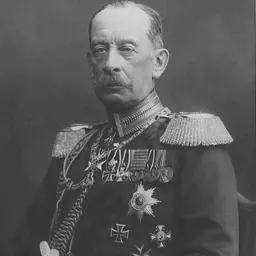


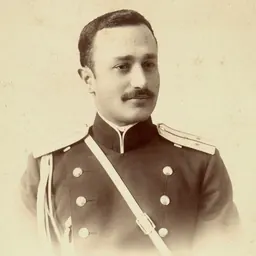

Contemporaries
People whose lives overlapped Ivan Dumbadze's


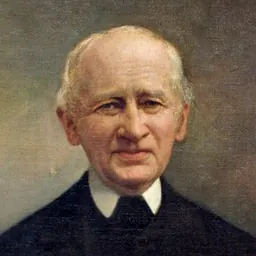
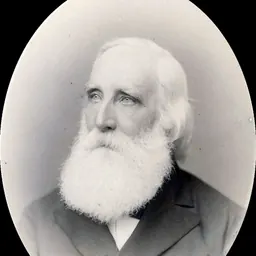

Frequently asked questions
Who was Ivan Dumbadze?
Russian general (1851-1916)
When was Ivan Dumbadze born?
Ivan Dumbadze was born on 19 January 1851 in Kutaisi Governorate.
When did Ivan Dumbadze die?
Ivan Dumbadze died on 1 October 1916 in Livadiya.
What was Ivan Dumbadze's occupation?
Ivan Dumbadze was a military personnel and yalta.
What nationality was Ivan Dumbadze?
Ivan Dumbadze was Russian.
Sources & further reading
Cite this page
APA: Biography.guide. (2026). Ivan Dumbadze. https://biography.guide/ivan-dumbadze/
MLA: "Ivan Dumbadze." Biography.guide, https://biography.guide/ivan-dumbadze/.
Chicago: "Ivan Dumbadze." Biography.guide. https://biography.guide/ivan-dumbadze/.
Data last updated: 2026-09-20 · Spot an error? Report a correction.
Page generated 2026-09-27 05:31 UTC