
About István Anhalt
Lived 1919 – 2012 (aged 92). István Anhalt was a Hungarian and Canadian composer.
István Anhalt (April 12, 1919 – February 24, 2012) was a Hungarian-Canadian composer and teacher.
Anhalt served as a professor of music at McGill University and founded the McGill University Electronic Music Studio. He also served as head of music at Queen's University, Kingston. His works earned him recognition as one of the pioneers of electroacoustic music in Canada. In 2007, he was made a Fellow of the Royal Society of Canada.
Early life and education Childhood István Anhalt was born in Budapest, Hungary to a Jewish family on April 12, 1919. He was the son of Arnold Anhalt and Katalin Anhalt (née Herzfeld), When he was still an infant, Anhalt's parents separated; he lived with his mother until age twelve, attending elementary school from 1925 to 1929. Although she had some interest in music and opera, his mother was not especially musical. However, there was a piano in the home and Anhalt began taking piano lessons at age six with a teacher who lived in his neighborhood and later from a family friend until he was twelve. He also learned to speak four languages: Hungarian, German, French, and English.
His father's financial troubles, his half-sister's birth in 1935, and tension between him and his stepmother led Anhalt to move again a few years later to stay with his maternal grandparents. At about that time, Anhalt overheard László Gyopár, a peer from a neighboring school, play a piano piece that he had composed himself. Anhalt recognized the influence of Bach and, admiring Gyopár's compositional achievement, decided to learn how to write music and compose on his own. Anhalt and Gyopár became friends and, soon after, Anhalt began to receive private harmony lessons with Géza Falk. Gyopár was attending the Academy of Music at the time, where Anhalt audited Zoltán Kodály's class in 1936-37 before passing the entrance exam and joining his friend at the academy.
World War II and aftermath Anhalt was drafted into the forced labour service of the Hungarian Army in 1940 during World War II.
In 1942, Anhalt and his best friend at the academy were both forced to enter a forced-labour brigade for Jewish men. Anhalt's friend was killed by a soldier in the unit. Anhalt escaped from the brigade, disguised himself as a seminarian, and hid until the war was over.
In the late 1940s, he studied under Louis Fourestier, Nadia Boulanger and Soulima Stravinsky before emigrating to Canada in 1949.
Career Emigration to Canada and academic position Anhalt emigrated to Canada as a recipient of a Lady Davis Fellowship. He settled in Montreal, and soon met Beate Frankenberg, a biochemist.
From 1949-71 Anhalt taught analysis and composition at McGill University's Faculty of Music, where he established the theory and composition departments, Like Anhalt, Rochberg, who was born in New Jersey, came from a Jewish background.
1971–1984, move to Kingston In 1971, Anhalt moved to Kingston, Ontario where he became the head of the music department at Queen's University. and soon after he began to work on what became his second opera, Winthrop. He also worked on the scholarly monograph, Alternative Voices. He mentored a number of students, many of whom stayed in touch with him after his retirement.
He died on February 24, 2012, at St. Mary's of the Lake Hospital in Kingston. Compositional periods
Anhalt was one of the early composers of electronic music. Anhalt was a librettist for his dramatic works, beginning in 1969 with Foci, and ending in 1999 with Millennial Mall.
1919–1958 Anhalt wrote a variety of works for chorus, solo voice, ensembles, and instrumental soloists. This period ended with the completion of his First Symphony, which won Anhalt both national and international recognition.
1971–2012
La Tourangelle is the first of three large-scale works created by Anhalt after 1971. It is an hour-long piece that premiered in 1975 in a performance broadcast by CBC Radio. This "musical tableau" was composed for an orchestra of 16 players, five singer-narrators, and pre-recorded tapes for five operators. Its theme is the pursuit of God and meaning,
Winthrop is a complementary piece to La Tourangelle, but focused on English Canada.
In Alternative Voices, Anhalt makes recurrent references to Canadian composers and their music. He discusses the role of Canadian music and composers in the context of current thought in Western art, music, and philosophy. Rhythm, theatre, poetry, performing techniques, sound, speech, and the roots of language and music are explored, their components interconnected, and their usage examined.
The publication of Alternative Voices and the completion of Winthrop coincided with the year of Anhalt's retirement.
Compositions
Stage
La Tourangelle. 1975 Winthrop. 1986 Traces (Tikkun), opera. 1996 Millennial Mall (Lady Diotima's Walk), opera. 1999
Orchestra
Interludium, small orchestra. 1950 Funeral Music, small orchestra. 1951 (Montreal 1954) Symphony, orchestra. 1958 (Montreal 1959), BMIC 1963 Symphony of Modules, orchestra, tape. 1967 Simulacrum, orchestra. 1987 (Ott 1987) SparkskrapS, orchestra. 1988 (Toronto 1988) Sonance•Resonance (Welche Töne?), orchestra. 1989 (Toronto 1989) Twilight Fire (Baucis' and Philemon's Feast), orchestra. 2001 The Tents of Abraham (A Mirage), orchestra. Premiered 2004
Chamber
Trio. 1953 Sonata, violin and piano. Foci, soprano, chamber ensemble, tape. 1969, Ber 1972. Doors ... Shadows (Glenn Gould In Memory), string quartet. 1992
Piano
Arc en ciel, ballet, two pianos. 1951 (Montreal 1952) Sonata. 1951 Fantasia. 1954. Ber 1972.
Choir
The Bell Man (Herrick), choir, 2 bells, organ. 1954 (rev 1980) Three Songs of Love, (de la Mare, anonymous), SSA. 1951 Three Songs of Death (Davenant, Herrick), SATB. 1954 Cento 'Cantata Urbana''' (Grier), 12 speakers (SATB), tape. 1967. BMIC 1968. VoiceSix Songs from Na Conxy Pan (Sándor Weöres), baritone, piano. 1941-7 (English version 1984) Psalm XIX 'A Benediction' (A.M. Klein), baritone, piano. 1951Journey of the Magi (Eliot), baritone, piano. 1952Comments (Montreal Star clippings), alto, piano trio. 1954Chansons d'aurore (A. Verdet), soprano, flute, piano. 1955 A Wedding Carol (Anhalt), soprano, organ. 1985 A Little Wedding Music (Hopkins), soprano, organ. 1984, Ber 1985Thisness, "a duo-drama" (Anhalt), mezzo, piano. 1986 (Vancouver 1986)The Squirrel (E. Barnett), voice, piano. 2002
Writings
Raoul Duguay, editor.
Wsevolod W. Isajiv, editor.
John Beckwith, Frederick A. Hall, editors.Oppenheimer (opera), 1990, play only, not music. Record and book reviews in Canadian Music Journal (1957–61), including a review of Varèse recordings, Winter 1961.
Don’t just read it —
keep it.
Full-length biographies made to live with: read them, listen on the way to work, watch them tonight.
- E-book
- Audio
- Video
Instant download · yours to keep · every purchase keeps this site free
Important facts
People in István Anhalt's life
Named in this biography and alive at the same time


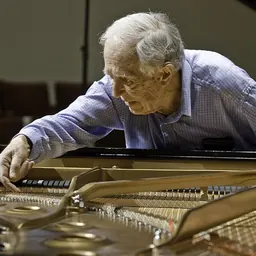
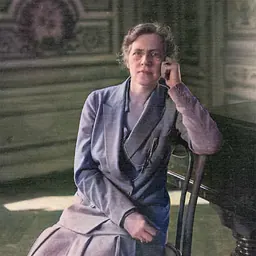
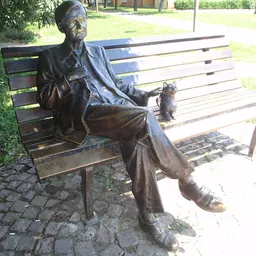



Related people
Same field, nearest in time


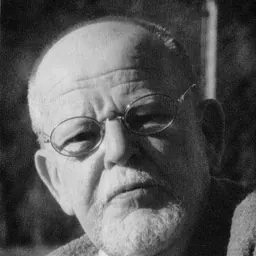
Contemporaries
People whose lives overlapped István Anhalt's



Frequently asked questions
Who was István Anhalt?
Canadian composer (1919–2012)
When was István Anhalt born?
István Anhalt was born on 12 April 1919 in Budapest.
When did István Anhalt die?
István Anhalt died on 24 February 2012 in Kingston.
What was István Anhalt's occupation?
István Anhalt was a composer.
What nationality was István Anhalt?
István Anhalt was Hungarian and Canadian.
Sources & further reading
Cite this page
APA: Biography.guide. (2026). István Anhalt. https://biography.guide/istvan-anhalt/
MLA: "István Anhalt." Biography.guide, https://biography.guide/istvan-anhalt/.
Chicago: "István Anhalt." Biography.guide. https://biography.guide/istvan-anhalt/.
Data last updated: 2026-09-25 · Spot an error? Report a correction.
Page generated 2026-09-27 05:10 UTC