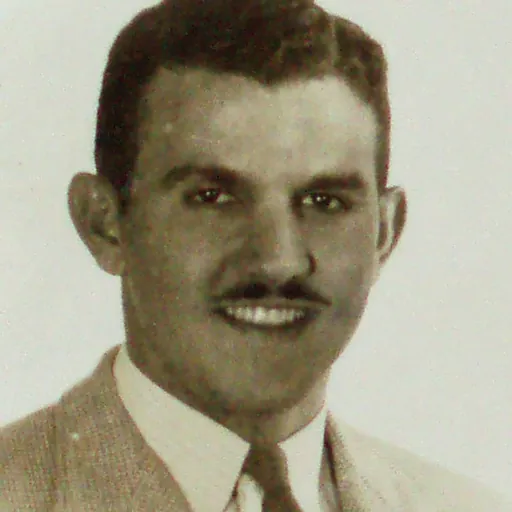
About Issa El-Saieh
Lived 1919 – 2005 (aged 85). Issa El-Saieh was a Haitian saxophonist and jazz musician.
Issa Joseph El-Saieh (February 22, 1919 – February 2, 2005), also known as Maestro, was a Haitian saxophonist, clarinetist, bandleader, composer, arranger, businessman, gallerist and art collector of Palestinian descent.
Throughout his life and work he contributed to two facets of Haitian culture: music as well as art.
From 1941 to the mid 1950s, as a musician, composer, arranger and bandleader of the Orchestre Saieh. In parallel to his music career, he began buying and collecting Haitian art. By the late 1950s, he founded the Galerie Issa, through which he promoted Haitian art and culture abroad.
He died in Port-au-Prince from esophageal cancer on February 2, 2005, at the age of 85.
Early life and education Issa El-Saieh was born in Petit-Goâve, Haiti, on February 22, 1919. Both his parents, Julia Moussa Talamas and Joseph Said El-Saieh, were Palestinian Christians who immigrated separately to Haiti from Bethlehem, Palestine.
His mother, twice a widow, was a businesswoman who raised her three sons, Elias Noustas, Issa and André El-Saieh, between Petit-Goâve and Port-au-Prince.
El-Saieh attended Saint-Louis de Gonzague in Port-au-Prince. In 1928, his younger brother André and him were sent to various boarding schools in the United States, mainly in Massachusetts. There, he was introduced to music and learned to play the clarinet as well as the saxophone, and was a member of his school bands.
Family businesses
In the summer of 1940, El-Saieh returned to Haiti, and worked alongside his mother in her dry goods store Veuve Joseph El-Saieh in downtown Port-au-Prince. Located on rue Bonne Foi (then rue Roux), the store expanded throughout the 1950s.
At the time Haiti was booming, and was a popular tourist destination. In December 1951, Elias Noustas opened Le Perchoir, a restaurant, night club and gift-shop designed by architect Max Ewald, located in Boutilliers, overlooking Port-au-Prince.
In the fall of 1941 and spring of 1942, he began gradually setting up his own ensemble. Known as Issa El-Saieh & His Orchestra, or Orchestre Saieh, the ensemble was heavily structured and composed of a large number of musicians, like an American big band. This would set the orchestra apart from other groups.
Many of the musicians were members of the military orchestra of the National Palace, or came from various bands. Others were still students or had professions. Thus, the orchestra's composition varied through the years.
The band's repertoire merged traditional Haitian music genres – mainly folkloristic songs and melodies as well as voodoo rhythms – with modern jazz, Cuban mambo, meringue and American swing.
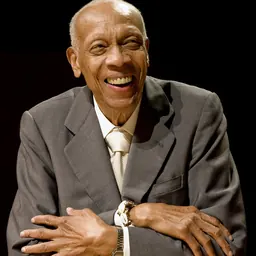
In its first few years, Orchestre Saieh played in private houses in Port-au-Prince and the provinces, as well as cinemas and clubs, including the Rex Theater, Ciné Paramount and the Club Miramar. Between 1944 and 1951, the band became regulars at the Club Zanzi Bar and Cabane Choucoune, both located in Pétion-Ville. In the early 1950s, the band frequently played at Le Perchoir in Boutilliers as well as on Ricardo Widmaier's Radio Haiti Sunday morning program called Cocktail Dansant. leaving the band in the hands of Ernest "Nono" Lamy, who later renamed the ensemble Nono Lamy & Son Orchestre. of the Orchestre Saieh, but also his life-long friend. Valdés wrote and performed the track "Monsieur Saieh", which first featured in the 1959 album Todo Ritmo by Bebo Valdés Y Su Orquesta.
During the late 1940s, in New York City, El-Saieh studied music alongside Eddie Barefield, Andy Brown, Albert J. "Budd" Johnson, and Walter «Foots» Thomas – who had all been members and collaborators of The Cab Calloway Orchestra. He also frequented other musicians such as Dizzy Gillespie, Charlie Parker, Jo Thompson and Kenny Dorham, and was a regular at various jazz and blues night clubs, including Birdland, the Blue Note and Café Society.
The label also recorded tracks by various bands put together by combinations of musicians from the orchestra, including The Belle Créole Group, La Belle Créole Trio, Bebo Valdés & His Rhythm, Rodolphe Legros & His Ibo Lele Group, Budd Johnson & The Le Perchoir Group, Wébert Sicot & His Cabane Choucoune Ensemble, The Cabane Choucoune Ensemble, Guy Durosier & His Rhythm or Rodolphe Legros & His Ibo Lele Group.
The recordings took place in different locations such as Cabane Choucoune, Radio Commerce or Ricardo Widmaier's Radio Haiti, as well as other locations in Miami, New York City and Havana (mainly at Radio Progreso).
Galerie Issa (1957–2005)
In the late 1940s, El-Saieh began buying paintings, and in the mid 1950s, he opened a shop in his brother Elias Noustas's restaurant and night club, Le Perchoir. In 1957, he transferred his shop to rue du Quai in downtown Port-au-Prince, calling it Issa Art Gallery. In 1964, the gallery was moved to his home, where it became known as Galerie Issa.
By the late 1960s and early 1970s, El-Saieh had over fifty artists working with him regularly. Many of them had their ateliers on site, and several remained exclusive to the gallery until El-Saieh's death.
According to the Swedish economist and writer Mats Lundahl:
"Issa played a crucial role in the establishment of a number of the most well-known Haitian naïf painters. He found them, and set them up on regular contracts with his Galerie Issa, providing them with the kind of financial stability that allowed them to concentrate on their painting. The results are to be seen in museums, art galleries, auction houses and private collections all over the world." El-Saieh launched and supported the careers of many Haitian artists, including:
Gabriel Alix Smith and Sisson Blanchard Henri and Seymour Bottex Jacques Chéry Abner Dubic Préfète Duffaut Roger Françoi Yvon Jean-Pierre Philton Latortue André Normil André Pierre Fernand Pierre Dieudonné Pluviose Jerome Polycarp Dieudonné Rouanez Charles and Audes Saül Micius Stephane Josaphat Tissaint
Galerie Issa organized and participated in several art exhibitions, particularly in the Caribbean, as well as in other parts of America and Europe. The gallery closed in 2005, following El-Saieh's death.
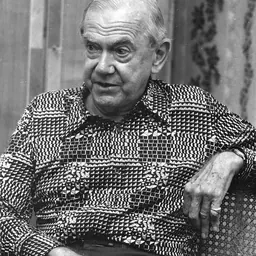
Hotel Oloffson In the 1960s, El-Saieh briefly managed the Hotel Oloffson in Port-au-Prince. There, he met English writer Graham Greene, who based the character of Hamit the Syrian on him, in his 1966 novel The Comedians.
Philanthropy During the course of his life, El-Saieh made regular contributions to orphanages, hospitals and other charitable institutions, mainly in Port-au-Prince. He also supported the Hôpital Albert Schweitzer in Deschapelles and Eye Care-Haiti by regularly donating art works. 1998 – honored at New York City's Lincoln Center, by the Haitian American Alliance of New York, as an emblematic figure of Haitian music and one of five giants of Haitian music. 2002 – Honor and Merit award from the Caribbean Film Productions – Nuit des Etoiles, for his contribution to Haitian culture.
Don’t just read it —
keep it.
Full-length biographies made to live with: read them, listen on the way to work, watch them tonight.
- E-book
- Audio
- Video
Instant download · yours to keep · every purchase keeps this site free
Important facts
People in Issa El-Saieh's life
Named in this biography and alive at the same time



Related people
Same field, nearest in time


Contemporaries
People whose lives overlapped Issa El-Saieh's



Frequently asked questions
Who was Issa El-Saieh?
Haitian musician and gallerist
When was Issa El-Saieh born?
Issa El-Saieh was born on 22 February 1919 in Petit-Goâve.
When did Issa El-Saieh die?
Issa El-Saieh died on 2 February 2005 in Port-au-Prince.
What was Issa El-Saieh's occupation?
Issa El-Saieh was a saxophonist and jazz musician.
What nationality was Issa El-Saieh?
Issa El-Saieh was Haitian.
Sources & further reading
Cite this page
APA: Biography.guide. (2026). Issa El-Saieh. https://biography.guide/issa-el-saieh/
MLA: "Issa El-Saieh." Biography.guide, https://biography.guide/issa-el-saieh/.
Chicago: "Issa El-Saieh." Biography.guide. https://biography.guide/issa-el-saieh/.
Data last updated: 2026-09-21 · Spot an error? Report a correction.
Portrait: Wikimedia Commons · author & licence
Page generated 2026-09-27 05:01 UTC