
About Isotta Gervasi
Lived 1889 – 1967 (aged 77). Isotta Gervasi was an Italian physician and politician.
Isotta Gervasi (Born in Castiglione di Cervia on 21 November 1889 – died in Modena on 17 June 1967) was an Italian physician. She was the first woman in Italy to work as a physician and practised in the Cervese area. Due to her determination to aid those in need, she acquired a legendary image over time, being remembered as the "doctor of the poor" and the "angel on a bicycle".
Biography
Family & education Isotta Gervasi was born in Castiglione di Cervia on 21 November 1889. Her parents were Emilio Gervasi, a building contractor, and Virginia Ridolfi. Her family also attributed the names of Proserpina and Saffa to her. Isotta had eight other sisters, with herself being the eldest. One of her sisters, Emilia, also became a doctor. Another one of her sisters, Vittoria, became a journalist and worked for the Giornale d'Italia.
Isotta's parents valued the education of their daughters. This was especially unexpected since this was a time when education was usually reserved for the sons of a family, while the daughters were confined to more domestic roles.
She attended high school, initially at "Vincenzo Monti" in Cesena, then transferred to Ravenna. Some testimonies have identified her as a sporty and daring woman. She was a professional fencer during high school, even winning some regional tournaments as a foil player; she knew how to ride and was passionate about motorcycles and cars, even winning some competitions. So, Isotta enrolled in the Faculty of Medicine and Surgery of the University of Bologna, where she was a pupil of Augusto Righi and Augusto Murri. Simultaneously, in 1916, she became assistant to Riccardo Simonini in the pediatric clinic of the University of Modena. She graduated in Modena on 15 May 1917, and in 1919 she specialized in Pediatrics. In 1919, she also obtained a medical contract in Savarna and, soon after, in San Zaccaria, where she remained until 1933. Working in such a large area of the countryside, Gervasi started to travel on foot or by bicycle, then by motorbike, and then used the automobile, proving herself to be a forerunner in this field as well. In 1933, due to health problems, Isotta Gervasi abandoned the contract and continued her practice in an outpatient clinic in Ravenna for about ten years. Here, she treated some of the richest families in the region, but did not give up taking care of the poorest patients, particularly the workers of the city. During the war, she was entrusted with the conduct of Savio, where she practised primarily for free, treating displaced persons and soldiers of all nationalities. So Lina Sacchetti, her friend, says: During the war years, when Cervia, close to the Gothic line, was transformed by the Germans into an entrenched camp against possible landings from the sea, the city became the object of daily bombing and strafing actions by allied aircraft; Isotta, armed with the bracelet of the International Red Cross, overcoming the anguish and fear, ran there, by bicycle, where her intervention was necessary, venturing everywhere among the dust, mud, snow, mines. Once she was smeared by a splinter. She visited twice a day the people of Cervia displaced in huts and affected by typhus, along the banks of the salt pans, and the fishermen of Borgomarina, knowing that neither of them nor of the others could receive compensation For this reason, after the war in Cervia, she was appointed an official physician to the Marine Colony for children.
Cultural interests Her diverse and numerous interests led her to connect with the intellectuals and artists of the Romagna culture. Isotta Gervasi was a frequent guest at the home of Antonio Beltramelli and the Corradini-Ginanni brothers, Arnaldo Ginna and Bruno Corra, her high school friend; she also met the popular futurist musician Francesco Balilla Pratella. Among her acquaintances are the poets Aldo Spallicci and Giuseppe Valenti, the painter Boris Georgiev, who dedicated a portrait to her and the authors Renato Serra and Calogero Tumminelli. During this time, she stayed at Terme della Fratta, where she had the opportunity to make friends with the dancer Maria Borgese and the writer Grazia Deledda. In Polenta, in 1932, on the occasion of the inauguration of the monument to Giosuè Carducci, Gervasi was introduced to Benito Mussolini, who offered her a position at the Ministry of Health, but according to sources, she declined to accept.
Relationship with Grazia Deledda There are several testimonies, both from private letters and from some compositions, in which Grazia Deledda writes of Gervasi in affectionate and interested tones. The two met around 1920 at the Terme della Fratta,
It is not hard to grasp why the two women have become close friends. They were both endowed with a stubborn resilience, which allowed them to transcend the mistrust and biases of an age in which women had a marginal position in the public and professional spheres; they developed themselves in fields, although different, that were dominated by a strong male presence. Gervasi was also Grazia Deledda's doctor during her last stay in Cervia. In the short story "Happy August" first published in Corriere della Sera on August 30, 1935, and then published in the posthumous collection Il cedro del Lebano, Deledda, now seriously ill, describes a beautiful portrait of Isotta:Here, on the other hand, the Doctor is ready: like an elderly but still sprightly archangel, she arrives dressed in white on the wings of her bicycle, and in a moment her words light up the gloomy domestic horizon. And her recipes are not expensive: "fresh and pure water" or, at most, some purgative lemonade. And if the Doctor arrives from Ravenna with her car to finish, it is almost necessary to celebrate the illness, like an ungrateful guest that we know we will have to leave in a few hours. The Doctor is beautiful, elegant; in the evening she transforms like the fairy Melusina, with her clothes and her dazzling jewels, and her eyes and teeth still more dazzling: but she is also a fairy in front of the sick bed, whether a prince or a expert care, generously gives bottles of ancient wine and chickens and flowers. Gervasi, on the other hand, used to characterize Deledda as a woman with very vibrant and intelligent eyes and at the same time, shy and reserved, emphasizing the attributes most similar to her own character: on the one hand determination and tenacity and on the other hand sweetness and discretion. The Madesani Deledda family remained very loyal to Gervasi even after the death of Deledda, tracing her profile on the occasion of the recommendation for the Missione del Medico prize, promoted by the Carlo Erba Foundation.
Don’t just read it —
keep it.
Full-length biographies made to live with: read them, listen on the way to work, watch them tonight.
- E-book
- Audio
- Video
Instant download · yours to keep · every purchase keeps this site free
Important facts
People in Isotta Gervasi's life
Named in this biography and alive at the same time
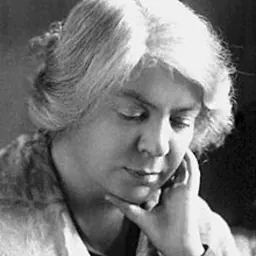
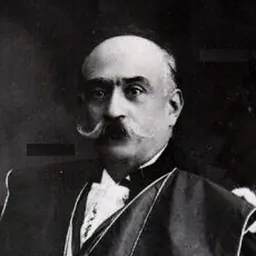

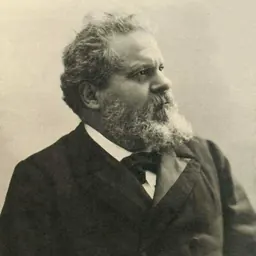

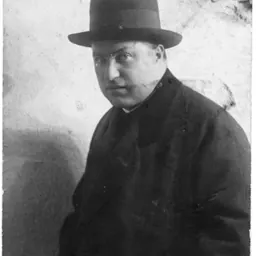
Related people
Same field, nearest in time
Contemporaries
People whose lives overlapped Isotta Gervasi's





Frequently asked questions
Who was Isotta Gervasi?
Italian physician (1889-1967)
When was Isotta Gervasi born?
Isotta Gervasi was born on 21 November 1889 in Cervia.
When did Isotta Gervasi die?
Isotta Gervasi died on 17 June 1967 in Modena.
What was Isotta Gervasi's occupation?
Isotta Gervasi was a physician and politician.
What nationality was Isotta Gervasi?
Isotta Gervasi was Italian.
Sources & further reading
Cite this page
APA: Biography.guide. (2026). Isotta Gervasi. https://biography.guide/isotta-gervasi/
MLA: "Isotta Gervasi." Biography.guide, https://biography.guide/isotta-gervasi/.
Chicago: "Isotta Gervasi." Biography.guide. https://biography.guide/isotta-gervasi/.
Data last updated: 2026-09-20 · Spot an error? Report a correction.
Page generated 2026-09-27 05:24 UTC