
Isobel Wylie Hutchison
Scottish Arctic traveller and botanist
About Isobel Wylie Hutchison
Lived 1889 – 1982 (aged 92). Isobel Wylie Hutchison was a British botanist, explorer, botanical collector, traveler, filmmaker and scientific collector.
Isobel Wylie Hutchison (30 May 1889 – 20 February 1982) was a Scottish Arctic traveller, filmmaker and botanist. Hutchison published poetry, books describing her travels to Iceland, Greenland, Alaska, and the Aleutian Islands, and articles in National Geographic and other magazines. She lectured frequently, using her films, photographs, and paintings to illustrate her talks.
Many of the plants Hutchison collected during her life are in Kew Gardens, the Royal Botanic Garden Edinburgh In 1934, she became the first woman to receive the Mungo Park Medal from the Royal Scottish Geographical Society. and was well-established in the wine wholesaling trade, and his father-in-law had been a successful farmer; his wealth enabled him to spend a great deal of time with Isobel, teaching her about botany and gardening. She also received a private education from a governess, and was active physically at croquet, tennis, archery, skating, hiking, cycling, Scottish country dancing, and walking.
From 1900, she attended school in Edinburgh, where she studied a curriculum suited for a Victorian gentlewoman. After her sister married a naval officer and saw little of him for long periods, Isobel decided that marriage would restrict her life.
Hutchison confessed to wanting to be a poet and started writing while young. She began keeping a diary as early as 1899 and continued to do so for most of her life. She edited The Scribbler, a magazine created by the family, which she continued to write even into her 20s. A polyglot, by the time she was an adult, she could speak Italian, Gaelic, Greek, Hebrew, Danish, Icelandic, Greenlandic, and some Inuit words. Another brother, Walter, was killed in the First World War. She was sustained by the continued success of her writing; her poetry was acclaimed by The Scotsman, and she began writing a novel. She supplemented her legacy from her father with the fees she received.
In 1924, Hutchison was invited to join a well-off Edinburgh acquaintance on a tour to Spain, Morocco, Egypt, and Palestine, arranged by Thomas Cook. She found her female companion rather overprotective, causing Hutchison to resolve to travel alone in the future. In later life, she traveled alone or with men, but never married.
On her return to Scotland, she spent some time walking on Barra, North and South Uist, Harris, Scotland, and Lewis, and completed a trek. She wrote an article for the National Geographic and received $250, which partially paid for her trip to Iceland.
Arctic adventures
Iceland
Hutchison got the idea of travelling to Iceland in 1924, while sitting on the beach at the Butt of Lewis. This started out much as a holiday tour. She went to Reykjavík for about a month and looked at the geysers and other tourist sights. After attending a lecture by Jean-Baptiste Charcot, she decided to walk around Iceland.
This was unheard of by the local guides, who refused to organise a trip. Eventually, one guide did give her a route to follow, on which she frequently got lost. However, the Icelanders were hospitable and helped her by lending her ponies, for which they often refused to accept payment. Although she was impressed with the flowers on Iceland, she was not collecting seriously on this visit. After returning to Scotland, she wrote another article for National Geographic, which they published as a major 30-page feature.
Greenland Greenland was not so easy to visit as Iceland. The Danish authorities closely monitored visitors to the country, but as she was travelling on official permission to collect flowers for various organisations, she was granted a visa.
She travelled by sea and spent much time living on board while exploring the east of the country in July 1927. She did, however, visit and get to know many Greenlanders. She was careful to keep in with the Danish officials and their wives, as a large difference in status still existed between the Danes and the native people. Greenland had a thriving Christian community, which Hutchison, as a regular churchgoer, joined enthusiastically. Consequently, whenever a pastor was going to visit an outlying village, she would be offered a lift with him in his boat. This allowed her to see several ancient churches and cathedrals, of which there were a large number. At each stop, she would collect flowers and plants to send back home.
The town of Angmagssalik, founded in 1895, was still primitive when Hutchison arrived in 1927. She stayed there for four days and collected flowers, sailing in an umiak and visiting a Greenlandic tent home. She bought kamiker and thigh-length boots, and wore them to protect against biting insects.
Her next visit was to Augpilagtok, where cliffs rise thousands of feet out of the sea. She was shocked to see how poor the Greenlanders were. She gave one woman her last pair of spare socks
She left the town by aeroplane on 5 February, and after several legs, arrived in Winnipeg. From here, she caught the Alaunier and got back to Scotland in the beginning of March. Her exploits had gone before her to UK, and her activities were reported in the Times on 10 January.
Aleutian Islands
In the last week of May 1936, Hutchison left Scotland for Montreal, whence she travelled to Winnipeg and finally Seattle, where she caught the Yukon for a journey along the coast reaching Seward. She found that the information she had been given about ships and sailing times in Washington was theoretical, so had to adapt accordingly. She had booked a passage on the Starr, but this would be three weeks late, so she also booked on the Curaçao. This took her overnight to Kodiak, Alaska, where she booked into the Sunbeam Hotel. In the two weeks she spent waiting for the Starrs arrival, she explored the area and collected specimens. The Starr turned out to be quite a scruffy ship with limited room in the cabins, though she met several old friends whom she had got to know from her time on the north coast of Alaska.
At Unalaska she disembarked, as this was the limit of the Starr'''s voyage. She knew that she would have to trust to her luck to get any further west by small fishing and trading boats. She became well known in the area through her participation in the local church. Luckily, a small schooner called the Penguin was travelling on to St George Island, and she quickly booked a passage. She also managed to obtain further passage through her friend Commodore Ralf Dempwolf, who arranged transport for her on a cutter called the Chelan.
She continued her journey on the Penguin to Saint Paul Island, where she collected more specimens and took cine pictures of seals and their harems. She received a radio message that she could be picked up there by the Chelan and had to climb up a rope ladder to get on board. Because of the articles she had written in the National Geographic and other well-respected publications, she had quite a standing in the naval community. Once on board, she was treated handsomely and given a large cabin to herself. She dined with the officers, and the chef spent much time preparing high-quality meals for her. The ship had a duty to inspect Bogoslof Island each year, as it was constantly changing its shape. Hutchison was unable to land there due to the sea condition, but she took cine pictures of it. They then passed Umnak Island and the Island of the Four Mountains. Their first stop was at At, where the Aleut people had been living for over 2000 years. As well as collecting plants she was interested in everything about the inhabitants' way of life. Quite often, a member of the crew was detailed to look after Hutchison and help her collect specimens.
The ship continued westward to the isle of Amchitka. A submerged mountain range had been discovered here and the ship needed to chart it. The Chelan spent a week charting the waters round this area, which varied from , and had caused the losses of several coastguard ships.
Hutchison wanted, if possible, to land on Attu. For two days, this was impossible, but on the third day, it was safe to anchor and for her to go ashore with two sailors. If the weather got worse, they would be left onshore until the ship could come back. They worked hard and found 69 plants.
The people of Attu were friendly, and Hutchison often photographed them. Six years later, the Japanese attacked this island and killed many people. The rest were taken to a prison camp in Japan, where many died.
The ship then went on to Kiska, which had an American naval base. They stayed there several days, and Hutchison was able to climb the mountain south of the harbour, where she took photos, collected specimens, and wrote a poem. The Chelan then set sail back east. She had spent three weeks on board with a group of 90 sailors and had travelled 1000 miles in some of the most dangerous seas in the world. They were obviously impressed by her, as they made her an admiral's pennant inscribed with "Isobel Hutchison, Admiral of the Bering". When she got back to Alaska, she managed to visit nearly all her old friends and show them photos of her latest adventures.
Non-Arctic adventures
Hutchison carried on traveling for the rest of her life, recording a number of her travels for the National Geographic. 1936: Japan, China, Trans-Siberian Railway, Moscow, Poland, Berlin 1950: "stroll" from Innsbruck to Venice
In the late 1950s, she only made short journeys to Europe, as well as leading a National Trust cruise to the Fair Isle and St Kilda. By the '60s she had largely stopped travelling, but still cycled over from Carlowrie to Bettyhill, riding a day. Electricity was not installed until 1951.
In the summer of 1956, Hutchison helped to organise visits by National Geographic photographers, B. Anthony Stewart and David S. Boyer, to Falkland Palace, Abernethy, Kinross, Kirriemuir, and Braemar to illustrate her article "A Stroll to John o'Groats". In the same year, along with Kathleen Revis, the National Geographics first female staff photographer, she toured Scotland, visiting locations for a feature on the country's literary landmarks.
Death In later life, Hutchison suffered from arthritis, which eventually became debilitating. She is buried in the northern cemetery in Kirkliston, with her mother and her eldest sister, Hilda Scott Primrose Hutchison.
Academic honours and awards Isobel Wylie Hutchison was a valued member of the Royal Scottish Geographical Society. She served on its council from 1936 to 1940, as honorary editor of the Scottish Geographical Magazine from 1944 to 1953, and as the society's vice president from 1958 to 1970. to her great surprise. She was the third person and the first woman to receive the award. She explored widely and largely independently at a time when women were not expected to venture beyond the domestic sphere, and when their achievements were often dismissed or minimized. One reporter went so far as to write of her:
She gave over 500 lectures during the course of her life. The plant specimens she collected were sent to Kew Gardens, the Royal Botanic Garden Edinburgh and the British Museum. Her diaries, papers, photographs, films, and other materials are held in the collections of the National Library of Scotlandf the Mitchell Library in Glasgow and the Royal Scottish Geographical Society. Some of the artefacts she collected are on display in the National Museum of Scotland and the Scott Polar Research Institute, University of Cambridge.
Her life is documented at Carlowrie Castle, her family home. She is honoured with a blue plaque at Carlowrie Castle. Carlowrie Castle worked with the Royal Scottish Geographical Society and Edinburgh-based bespoke design studio Craft Design House to launch The Isobel Wylie Hutchison Collection, in honor of her 130th birthday.
In November 2022, Hutchison's work featured in the GLEAN exhibition at Edinburgh's City Art Centre of 14 early women photographers working in Scotland. The photographs and films also included Helen Biggar, Violet Banks, Christina Broom, Mary Ethel Muir Donaldson, Johanna Kissling, Margaret Fay Shaw, and Margaret Watkins
Books and articles Hutchison wrote six books of poems, seven books on her travels, and 12 articles for National Geographic.
PoetryLyrics from West Lothian. Private publication, 1916How Joy was found: A Fantasy in Verse in Five Acts. London: Blackie; New York: Frederick A. Stokes, 1917The Calling of the Bride. Stirling: E. Mackay, 1926The Song of the Bride. London: De La More, 1927The Northern Gate. London: De La More, 1927Lyrics from Greenland. London: Blackie, 1935
ProseOriginal Companions. London: Bodley Head, 1929The Eagle's Gift: Alaska Eskimo Tales. New York: Doubleday Doran, 1932Flowers and Farming in Greenland. Edinburgh: T. A. Constable, 1930On Greenland’s Closed Shore: The Fairyland of the Arctic. Edinburgh: William Blackwood, 1930North to the Rime-Ringed Sun: Being a Record of an Alaska-Canadian Journey Made in 1933-34. London: Blackie, 1934, 1935; New York: Hillman-Curl, 1937 With August Masik: Arctic Nights Entertainment: Being the Narrative of an Alaskan Estonian Digger, August Masik, as told to Isobel Wylie Hutchison. Glasgow: Blackie, 1935Stepping Stones from Alaska to Asia. London: Blackie, 1937
ArticlesNational Geographic:"Walking Tour across Iceland", April 1928 "Riddle of the Aleutians", December 1942 "Scotland in Wartime", June 1943 "Wales in Wartime", June 1944 "Bonnie Scotland, Post-war Style", May 1946 "2000 Miles through Europe’s Oldest Kingdom", February 1949 "A Stroll to London", August 1950 "A Stroll to Venice", September 1951 "Shetland and Orkney, Britain’s Far North", October 1953 "From Barra to Butt in the Hebrides", October 1954 "A Stroll to John o' Groats", July 1956 "Poets' Voices Linger in Scottish Shrines", October 1957
Hutchison also had several other articles published in journals and newspapers.
In 2022, Peak Beyond Peak: The Unpublished Scottish Journeys of Isobel Wylie Hutchison'', compiled and transcribed by Hazel Buchan Cameron, was published by Taproot Press.
Don’t just read it —
keep it.
Full-length biographies made to live with: read them, listen on the way to work, watch them tonight.
- E-book
- Audio
- Video
Instant download · yours to keep · every purchase keeps this site free
Important facts
People in Isobel Wylie Hutchison's life
Named in this biography and alive at the same time





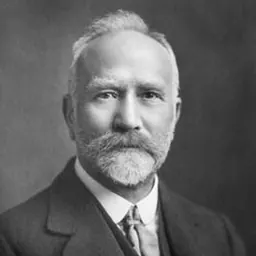
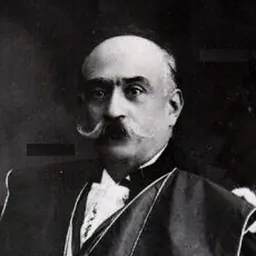
Related people
Same field, nearest in time


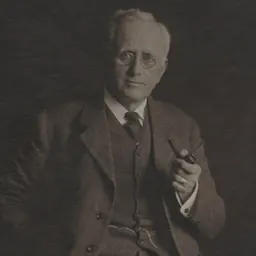
Contemporaries
People whose lives overlapped Isobel Wylie Hutchison's



Frequently asked questions
Who was Isobel Wylie Hutchison?
Scottish Arctic traveller and botanist (1889-1982)
When was Isobel Wylie Hutchison born?
Isobel Wylie Hutchison was born on 30 May 1889.
When did Isobel Wylie Hutchison die?
Isobel Wylie Hutchison died on 20 February 1982.
What was Isobel Wylie Hutchison's occupation?
Isobel Wylie Hutchison was a botanist, explorer, botanical collector, traveler, filmmaker and scientific collector.
What nationality was Isobel Wylie Hutchison?
Isobel Wylie Hutchison was British.
Sources & further reading
· Wikipedia: Isobel Wylie Hutchison
· DBpedia: Isobel Wylie Hutchison
Cite this page
APA: Biography.guide. (2026). Isobel Wylie Hutchison. https://biography.guide/isobel-wylie-hutchison/
MLA: "Isobel Wylie Hutchison." Biography.guide, https://biography.guide/isobel-wylie-hutchison/.
Chicago: "Isobel Wylie Hutchison." Biography.guide. https://biography.guide/isobel-wylie-hutchison/.
Data last updated: 2026-09-20 · Spot an error? Report a correction.
Page generated 2026-09-27 05:30 UTC