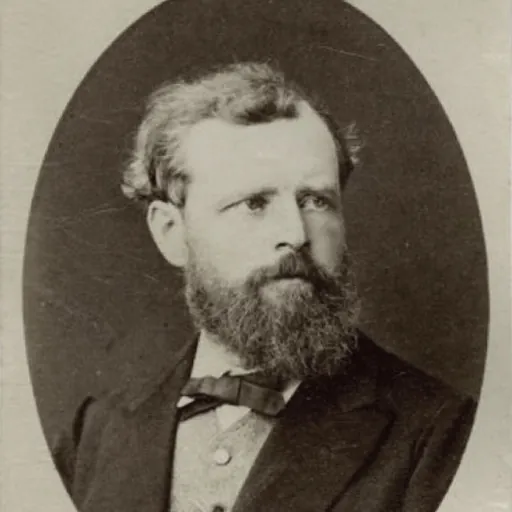
About Isidore Bonheur
Lived 1827 – 1901 (aged 74). Isidore Bonheur was a French sculptor and painter.
Isidore Jules Bonheur (Bordeaux 15 May 1827 – 10 November 1901 Paris), best known as one of the 19th century's most distinguished French animalier sculptors. Bonheur began his career as an artist working with his elder sister Rosa Bonheur in the studio of their father, drawing instructor Raymond Bonheur. Initially working as a painter, Isidore Jules Bonheur made his Salon debut in 1848. "It is I who first gave modeling and sculpture lessons to my brother Isidore" (Rosa Bonheur)
In Bordeaux his father had been friends with Francisco Goya who was living there in exile. In 1828 Bonheur moved to Paris with his mother and brothers and sister, his father having gone ahead of them to establish a residence and income.
He studied painting at first, enrolling in 1849 at the École nationale supérieure des Beaux-Arts, though he made his debut at the Salon (Paris) in 1848 (a Cavalier nègre attaqué par une lionne, plaster, and a drawing of the same subject) and exhibited regularly until 1899. He won medals in 1859, 1865, 1869, took part in the Exposition Universelle (1855), exhibited in London at the Royal Academy of Arts in the 1870s, where he gained great success with equine figures and groups, and won the coveted Médaille d'Or (gold medal) with a sculpture entitled Cavalier Louis XV at the Exposition Universelle (1889). He won a silver medal at l'Exposition [Historique?] de Madrid in 1892, a gold medal at the Exposition Internationale d'Anvers (1894).
Also in 1894, Bonheur was awarded the status of Knight in the Order of the Immaculate Conception of Vila Viçosa (Cavaleiro da Ordem de Nossa Senhora da Conceição de Vila Viçosa), Portugal. In 1895 he was named Chevalier (Knight) of the Order of Isabella the Catholic, Spain.
He had given up painting in favor of sculpture early on in his career, though he was noted primarily for his small animalier groups. His studio (atelier) was located at l'Impasse du Moulin Joly, on the corner of rue du Faubourg-du-Temple in Paris.
Isidore Bonheur found a greater market for his work in the mid-nineteenth century in England versus France. In 1870 he gained representation at the Royal Academy and produced a variety of work that catered to English collectors.
Many of his bronzes were edited by the founder Hippolyte Peyrol, Bonheur's brother-in-law by marriage to Juliette Bonheur (Isidor's youngest sister). The Peyrol casts for both Rosa and Isidore Bonheur are exceptionally well executed, which suggests a strong working relationship between the founder and sculptor. There is little doubt that Isidore Bonheur was an acute observer of nature; his animals were not anthropomorphized, but modelled to catch movement or posture characteristic of the particular species. He achieved this most successfully with his sculptures of horses, which are usually depicted as relaxed rather than spirited, and which are among his most renowned works. sur le site Culture.gouv.fr – On remarque les deux taureaux d'Isidore Bonheur et une réduction du Vercingétorix d'Aimé Millet. Exhibited at l'Exposition Universelle (1878), cast iron, Fonderie du Val d'Osne, now at the entrance of the parc Georges-Brassens, Paris. A life-size replica was made for Juan Vicente Gómez and is located in northern Maracay, Venezuela. Gladiateur à cheval, 1866, posthumous cast, 1902, Hôpital Sainte-Anne, Paris Deux Lions, 1867, stone, commissioned by the Ministère d'État for the facade of the Palais de Justice, place de Harley Pépin-le-Bref dans l'arène, 1873 Lion vainqueur d'un serpent, 1876 Le Dénicheur de tigres, 1877 Un cavalier sous Louis XV, 1879 Cavalier romain, 1880, bronze, Salon de la Société nationale des Beaux-Arts, 1883 (no. 895), Archives nationales, site de Pierrefitte-sur-Seine Cavalier romain, 1880, bronze, Salon de la Société des artistes français, 1882 (no. 4131), Archives nationales, site de Pierrefitte-sur-Seine Un cavalier sous Henri II, 1884 Cerf faisant tête, 1885 Trompette sous Louis XIII, 1886 Le Saut de la haie, and Portrait du cheval jongleur, 1889 (exhibited at the Exposition Universelle (1889)) Cavalier Louis XV, (Gold medal Exposition Universelle (1889)) Cerf aux écoutes, and Sanglier coiffé par un chien, 1894 Un Chien, bronze, Musée des Beaux-Arts, Bordeaux Chienne, bronze, musée municipal, Saint-Dizier Un Lion, bronze, Musée des Beaux-Arts de Nantes Une Lionne, bronze, Musée des Beaux-Arts de Nantes Deux paysages, oil on canvas, Musée des Beaux-Arts, Bordeaux Renard à l'affût, bronze, provenance: Rothschild, Alphonse, baron de, Musée des Beaux-Arts, Bordeaux Un taureau, wax, Musée des Beaux-Arts, Bordeaux Lion Marchant, bronze, Musée d'Orsay, Paris, now at Bétail au pâturage, bronze, Musée d'Art et d'Histoire de Toul Cavalier arabe tenant deux lionceaux, bronze, Musée d'Orsay, Paris Ours, bronze, Musée d'Orsay, Paris, and Musée des Arts décoratifs, Nantes Chasseurs de fauves, bronze, Musée du quai Branly Brilliant 1271 (755), bronze, Rahr West Art Museum
Don’t just read it —
keep it.
Full-length biographies made to live with: read them, listen on the way to work, watch them tonight.
- E-book
- Audio
- Video
Instant download · yours to keep · every purchase keeps this site free
Important facts
People in Isidore Bonheur's life
Named in this biography and alive at the same time




Related people
Same field, nearest in time



Contemporaries
People whose lives overlapped Isidore Bonheur's





Frequently asked questions
Who was Isidore Bonheur?
French sculptor (1827-1901)
When was Isidore Bonheur born?
Isidore Bonheur was born on 15 May 1827 in Bordeaux.
When did Isidore Bonheur die?
Isidore Bonheur died on 10 November 1901 in Bordeaux, 11th arrondissement of Paris.
What was Isidore Bonheur's occupation?
Isidore Bonheur was a sculptor and painter.
What nationality was Isidore Bonheur?
Isidore Bonheur was French.
Sources & further reading
Cite this page
APA: Biography.guide. (2026). Isidore Bonheur. https://biography.guide/isidore-bonheur/
MLA: "Isidore Bonheur." Biography.guide, https://biography.guide/isidore-bonheur/.
Chicago: "Isidore Bonheur." Biography.guide. https://biography.guide/isidore-bonheur/.
Data last updated: 2026-09-20 · Spot an error? Report a correction.
Page generated 2026-09-27 05:10 UTC