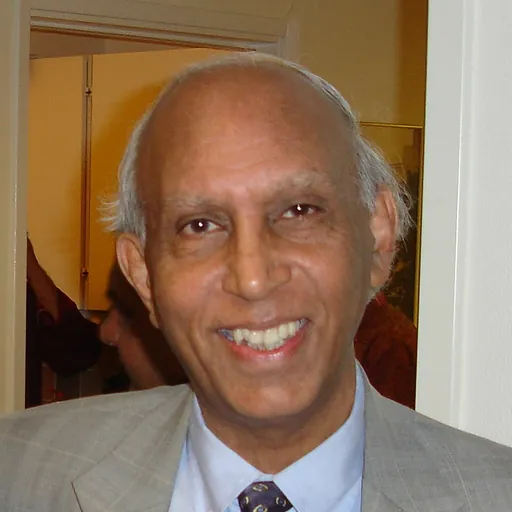
About Ishtiaq Ahmed
Born 1947. Ishtiaq Ahmed is a Swedish political scientist, writer and university teacher.
Ishtiaq Ahmed (; born 24 February 1947) is a Pakistani-Swedish political scientist, academic, and author. He is Professor Emeritus of Political Science at Stockholm University, Sweden. Ahmed is known for his research on the political history of South Asia, particularly the partition of India in 1947. His scholarly work examines the ideological foundations and consequences of the partition, with a focus on the role of Muhammad Ali Jinnah and the Two-Nation Theory.
Ahmed’s research integrates themes of religion, ethnicity, language, and identity in South Asian politics. His academic contributions include books such as The Punjab Bloodied, Partitioned and Cleansed, which received the Best Non-Fiction Book Award at both the Karachi and Lahore Literature Festivals in 2013, and Jinnah: His Successes, Failures and Role in History.
In addition to his academic publications, Ahmed has been a visiting professor at institutions including the National University of Singapore, Lahore University of Management Sciences (LUMS), and Government College University Lahore. His views on nationalism, religious politics, and the garrison state model of Pakistan have been featured in South Asian newspapers and journals.
Early life and education Ishtiaq Ahmed was born on 24 February 1947 in Lahore, within the Punjab Province of British India (now in Punjab, Pakistan) into the Arain community of Punjabis. He grew up in the Mozang area of Lahore; his father Mian Ghulam Muhammad Ghazi represented Forman Christian College in hockey and kabaddi and finished second in the one-mile race at the annual Punjab University sports competition held on 18–19 November 1932. Ahmed also studied at the Forman Christian College, where from 1964 to 1968 he received an honorable mention each year and in 1968 he was awarded the Mehta Chunni Lal Gold Medal for securing the highest marks in English and History at the same institution.
In his early life he was close to socialist ideologies, including Marxism and Maoism, having been a co-founder of the National Students Federation (NSF).
Fond of Hindi film music from the 1940s to the 1960s, during his college days he won several awards as a singer in youth festivals. His father introduced him to music when he asked him to recit a na'at (poetry in the praise of prophet Mohammed) from Mohammed Rafi. Ahmed has also given lectures in various institutions including the University of Central Punjab (UCP), where he discussed politics, the Kashmir issue and the economy of Pakistan.
Views and opinions
State of Punjabi language in Pakistan Irfan Aslam in his article Punjabis themselves are oppressing their own language, about the persecution of Punjabi language in Pakistan, argues that Ishtiaq Ahmed asserts that the Punjabi bureaucracy and politicians are responsible for oppressing the Punjabi language, and imposing Urdu as the national language.
Two Nation Theory Ishtiaq Ahmed has provided a critique of the Two-Nation Theory by quoting Mohammad Ali Jinnah to the effect that the founder of Pakistan consistently argued that Hindus and Muslims could not live in peace together in one state and therefore India must be partitioned to create Pakistan.
Quoting from March 22, 1940 onwards Jinnah’s speeches, statements and messages Ishtiaq Ahmed demonstrates that Jinnah’s two – nation theory was deployed by him to argue that Hindus and Muslims can never constitute a cohesive and coherent nation. Rather, both were the antithesis of one another. Upon such a basis, he took an uncompromising stand on the absolute imperative of partitioning India to create Pakistan, and rejected out of hand that he was using the demand for Pakistan as a bargaining chip to achieve a power-sharing deal with the Indian National Congress.
Military meddling in Pakistan's politics Ahmed has written about military spending in Pakistan. In his article "Garrison state: Academic urges government to cut back on military spending", he urges the Pakistani government to reduce military spending.
Jinnah In his article "Many Promises of Jinnah", Ahmed discusses various promises and pledges of Jinnah. He criticises many scholars' tendency to absolve Jinnah of responsibility for the Partition of India. He argues that these scholars focus on one speech by Jinnah, ignoring his consistent assertion from 1940 to 1947 that Hindus and Muslims could never be one nation. He later wrote a book entitled Jinnah: His Successes, Failures, and Role in History, which was critically acclaimed and won an international literary award. His scholarship was subsequently the basis for a multimedia timeline of the Partition of India and the broader history of the Hindu-Muslim divide in India.
Partition of Punjab
Ahmed has conducted research on the partition of Punjab in 1947, examining the events and consequences surrounding the division of the region. In his book The Punjab: Bloodied, Partitioned and Cleansed, he presents an account of the communal violence, migrations, and political decisions that shaped the partition of Punjab. He explores how the division of Punjab led to significant human displacement and loss of life, and analyses the political and social factors that contributed to the escalation of violence.
Ahmed argues that violence in Punjab was not inevitable and highlights the role of various political actors in the unfolding events. His work has been cited in discussions of the partition's legacy and its long-term impact on South Asian history.
Books
Honours and awards
1964–1968 — Honorable mention each year at Forman Christian College, Lahore. 1968 — Mehta Chunni Lal Gold Medal for highest marks in English and History at Forman Christian College, Lahore. 2013 — The Punjab Bloodied, Partitioned and Cleansed awarded the Best Non-Fiction Book Award at the Karachi Literature Festival, Pakistan. 2013 — The Punjab Bloodied, Partitioned and Cleansed awarded the Best Non-Fiction Book Award at the Lahore Literature Festival, Pakistan. 2021 — Jinnah: His Successes, Failures, and Role in History awarded for English non-fiction by Valley of Words International Literature and Arts Festival.
Don’t just read it —
keep it.
Full-length biographies made to live with: read them, listen on the way to work, watch them tonight.
- E-book
- Audio
- Video
Instant download · yours to keep · every purchase keeps this site free
Important facts
People in Ishtiaq Ahmed's life
Named in this biography and alive at the same time

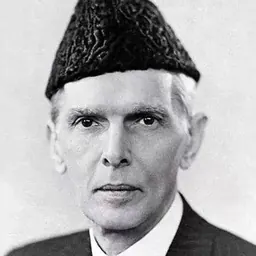
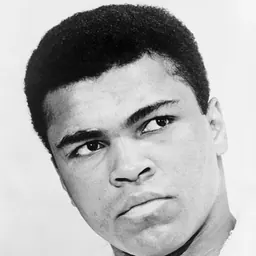
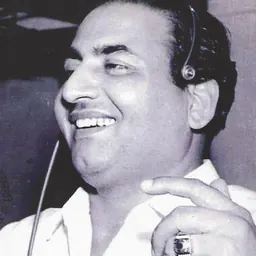


Related people
Same field, nearest in time


Contemporaries
People whose lives overlapped Ishtiaq Ahmed's

Frequently asked questions
Who is Ishtiaq Ahmed?
Pakistani-Swedish writer
When was Ishtiaq Ahmed born?
Ishtiaq Ahmed was born on 24 February 1947 in Lahore.
What is Ishtiaq Ahmed's occupation?
Ishtiaq Ahmed is a political scientist, writer and university teacher.
What nationality is Ishtiaq Ahmed?
Ishtiaq Ahmed is Swedish.
Sources & further reading
· DBpedia: Ishtiaq Ahmed (political scientist)
Cite this page
APA: Biography.guide. (2026). Ishtiaq Ahmed. https://biography.guide/ishtiaq-ahmed-political-scientist/
MLA: "Ishtiaq Ahmed." Biography.guide, https://biography.guide/ishtiaq-ahmed-political-scientist/.
Chicago: "Ishtiaq Ahmed." Biography.guide. https://biography.guide/ishtiaq-ahmed-political-scientist/.
Data last updated: 2026-09-28 · Spot an error? Report a correction.
Portrait: Wikimedia Commons · author & licence
Page generated 2026-10-04 12:57 UTC