
Isabella Ford
English campaigner for socialism, the labour movement and women's suffrage
About Isabella Ford
Lived 1855 – 1924 (aged 69). Isabella Ford was a British writer, trade unionist and suffragette.
Isabella Ormston Ford (23 May 1855 – 14 July 1924) was an English social reformer, suffragist and writer. She became a public speaker and wrote pamphlets on issues related to socialism, feminism and workers' rights. After becoming concerned with the rights of female mill workers at an early age, Ford became involved with trade union organisation in the 1880s. A member of the National Administrative Council of the Independent Labour Party, she was the first woman recorded as speaking at a Labour Representation Committee (which became the British Labour Party) conference.
Early life Isabella Ford was on born 23 May 1855 in Headingley, Leeds, in the north of England. She was the youngest of eight children of Quakers Robert Lawson Ford and Hannah (née Pease). Her parents financed a night school for mill girls in the East End of Leeds, where she began working when she was 16.
Activism Following the example of her radical parents, Isabella campaigned for several causes during her life.
Trade unions In the 1880s, Ford became involved with trade unions. She was also asked to stand for Parliament and was suggested as a candidate for Lady Lord Mayor of Leeds, but she refused to do so. She was an anti-vivisectionist and was Chair of Leeds RSPCA. In 1896, Ford signed the Humanitarian League's petition against vivisection.
Women's suffrage Following a 1904 debate with future politician Margaret Bondfield, Sylvia Pankhurst described Ford as "a plain, middle-aged woman, with red face and turban hat crushed down upon her straight hair, whose nature yet seemed to me ... kindlier and more profound than that of her younger antagonist". and in Leeds she set up a branch of the Women's International League and of the Women’s Peace Crusade.
Personal life Ford formed friendships with Labour politician Philip Snowden, writer Ethel Snowden, Leeds educationalist Frances Lupton, socialist writer Edward Carpenter, poet Walt Whitman, Josephine Butler, Millicent Fawcett and Olive Schreiner.
Isabella was concerned with animal welfare and was a vegetarian. She was also an accomplished pianist and helped her sister Bessie to run free concerts of classical music for working class people in Leeds.
Ford's name is one of those featured on the sculpture Ribbons, unveiled in 2024.
Selected publications
Miss Blake of Monkshalton (1890)
On the Threshold (1895) Mr Elliott (1901)
Don’t just read it —
keep it.
Full-length biographies made to live with: read them, listen on the way to work, watch them tonight.
- E-book
- Audio
- Video
Instant download · yours to keep · every purchase keeps this site free
Important facts
People in Isabella Ford's life
Named in this biography and alive at the same time
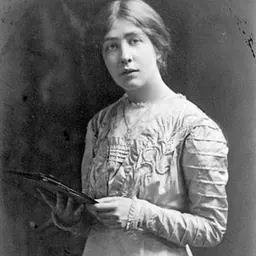
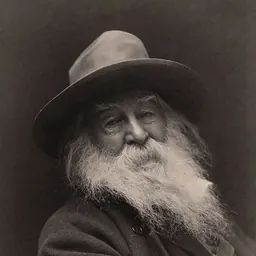



Related people
Same field, nearest in time

Contemporaries
People whose lives overlapped Isabella Ford's





Frequently asked questions
Who was Isabella Ford?
English campaigner for socialism, the labour movement and women's suffrage
When was Isabella Ford born?
Isabella Ford was born on 23 May 1855 in Headingley.
When did Isabella Ford die?
Isabella Ford died on 14 July 1924 in Leeds.
What was Isabella Ford's occupation?
Isabella Ford was a writer, trade unionist and suffragette.
What nationality was Isabella Ford?
Isabella Ford was British.
Sources & further reading
Cite this page
APA: Biography.guide. (2026). Isabella Ford. https://biography.guide/isabella-ford/
MLA: "Isabella Ford." Biography.guide, https://biography.guide/isabella-ford/.
Chicago: "Isabella Ford." Biography.guide. https://biography.guide/isabella-ford/.
Data last updated: 2026-09-20 · Spot an error? Report a correction.
Page generated 2026-09-27 05:20 UTC