
About Isaac Luria
Lived 1534 – 1572 (aged 37–38). Isaac Luria was a Turkish rabbi, kabbalist and mystic.
Isaac ben Solomon Ashkenazi Luria (; born died July 25, 1572 Ha'ari Hakadosh or Arizal', was a leading rabbi and Jewish mystic in the community of Safed in the Galilee region of Ottoman Palestine, now Israel. He is considered the father of contemporary Kabbalah. His teachings are referred to as Lurianic Kabbalah.
His direct literary contribution to the Kabbalistic school of Safed was extremely minute (he wrote only a few poems), however his spiritual fame led to their veneration and the acceptance of his authority. Luria's disciples compiled his oral teachings into their writings, and every custom of Luria was scrutinized; many were accepted, even against previous practice. The Ari Ashkenazi Synagogue, also located in Safed, was built in memory of Luria during the late 16th century.
Early life
Luria was born in 1534 in Jerusalem
While still a child, Luria lost his father and was raised by his rich maternal uncle Mordechai Frances, a mültazim (tax farmer) from Cairo in Ottoman Egypt. His uncle placed him under the best Jewish teachers, including the leading rabbinic scholar David ben Solomon ibn Abi Zimra.
At the age of fifteen, he married a cousin, the daughter of Mordechai Frances, and, being amply provided for financially, he was able to continue his studies. Around the age of twenty-two, he became engrossed in the study of the Zohar, a significant work of the Kabbalah that had recently been printed for the first time, and adopted the life of a recluse. Retreating to the banks of the Nile for seven years, he secluded himself in an isolated cottage, giving himself up entirely to meditation. He visited his family only on Shabbat. But even at home, he would not utter a word, even to his wife.
Teachings Ark in the Ari Ashkenazi Synagogue. Luria was called Ha'ari, "the Lion".
In 1569, Luria moved back to the Jerusalem Sanjak, and after a short sojourn there, where his new kabbalistic system seemed to have met with little success, he settled in the Safed Sanjak. Safed in the Galilee had become a center for kabbalistic studies over the previous decades, led by Moses ben Jacob Cordovero. There is evidence that Luria also regarded Cordovero as his teacher: Joseph Sambari (1640–1703), an Egyptian chronicler, testified that Cordovero was "the Ari's teacher for a very short time". Luria probably arrived in early 1570, and Cordovero died on June 27 that year (the 23d day of Tammuz). Bereft of their most prominent authority and teacher, the community looked for new guidance, and Luria helped fill Cordovero's former role.
Soon Luria had two classes of disciples: novices, to whom he expounded elementary kabbalah, and initiates, who became the repositories of his secret teachings and the formulas and intentions of prayer. The most renowned of the initiates was Hayyim ben Joseph Vital, who, according to his master, possessed a soul that Adam's sin had not soiled.
Luria delivered his lectures spontaneously, without ever writing down his ideas (with a few exceptions, including kabbalistic poems in rabbinical Aramaic for the Shabbat table). The foremost advocate of his kabbalistic system was Vital, who collected all the disciples' lecture notes. Numerous works were produced from these notes, the most important of which was the Etz Chaim'', "Tree of Life", in eight volumes (see below). Originally, it circulated only in manuscript copies. Each of Luria's disciples had to pledge—under pain of excommunication—not to allow any copy be made for a foreign country, so that for a time all the manuscripts remained in Ottoman Syria. Eventually, one was brought to Europe and was published at Zolkiev in 1772 by Isaac Satanow. In this work, both the theoretical and the devotional-meditative teachings of Lurianic Kabbalah, based on the Zohar, are elaborated upon.
Tzimtzum was one of Luria's most important ideas that he stressed in his lectures.
Disciples Hayyim ben Joseph Vital Israel Sarug Samuel ben Isaac de Uçeda
Don’t just read it —
keep it.
Full-length biographies made to live with: read them, listen on the way to work, watch them tonight.
- E-book
- Audio
- Video
Instant download · yours to keep · every purchase keeps this site free
Important facts
People in Isaac Luria's life
Named in this biography and alive at the same time

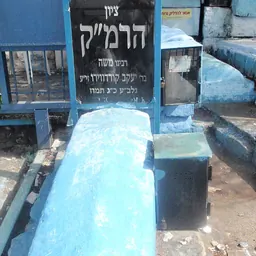
Related people
Same field, nearest in time


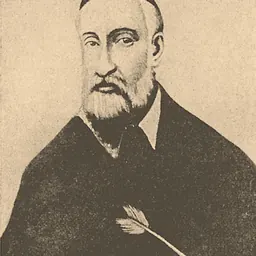
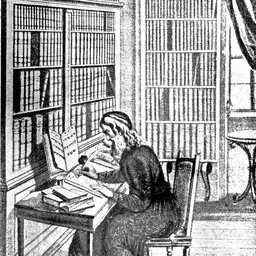
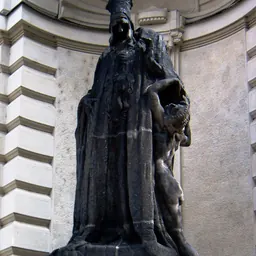
Contemporaries
People whose lives overlapped Isaac Luria's

Frequently asked questions
Who was Isaac Luria?
Ottoman rabbi in Egypt and Palestine
When was Isaac Luria born?
Isaac Luria was born in 1534 in Jerusalem.
When did Isaac Luria die?
Isaac Luria died on 25 July 1572 in Safed.
What was Isaac Luria's occupation?
Isaac Luria was a rabbi, kabbalist and mystic.
What nationality was Isaac Luria?
Isaac Luria was Turkish.
Sources & further reading
Cite this page
APA: Biography.guide. (2026). Isaac Luria. https://biography.guide/isaac-luria/
MLA: "Isaac Luria." Biography.guide, https://biography.guide/isaac-luria/.
Chicago: "Isaac Luria." Biography.guide. https://biography.guide/isaac-luria/.
Data last updated: 2026-09-20 · Spot an error? Report a correction.
Page generated 2026-09-27 05:17 UTC